
Developing logical thinking Normal Worksheets for Ages 5-8
4 filtered results
Difficulty Level
Grade
Age
-
From - To
Subject
Activity
Standards
Unlock your child's potential with our engaging Developing Logical Thinking Worksheets tailored for ages 5-8. These interactive worksheets promote critical thinking skills through fun exercises that challenge young minds. Designed to enhance reasoning and problem-solving abilities, each activity encourages kids to recognize patterns, categorize objects, and think analytically. With colorful graphics and age-appropriate content, children will be motivated to explore concepts while enjoying the learning process. Ideal for both classroom and home use, our worksheets provide a solid foundation for future academic success. Start your child's journey toward becoming a confident thinker today with our carefully crafted logical thinking resources!
Favorites
With answer key
Interactive
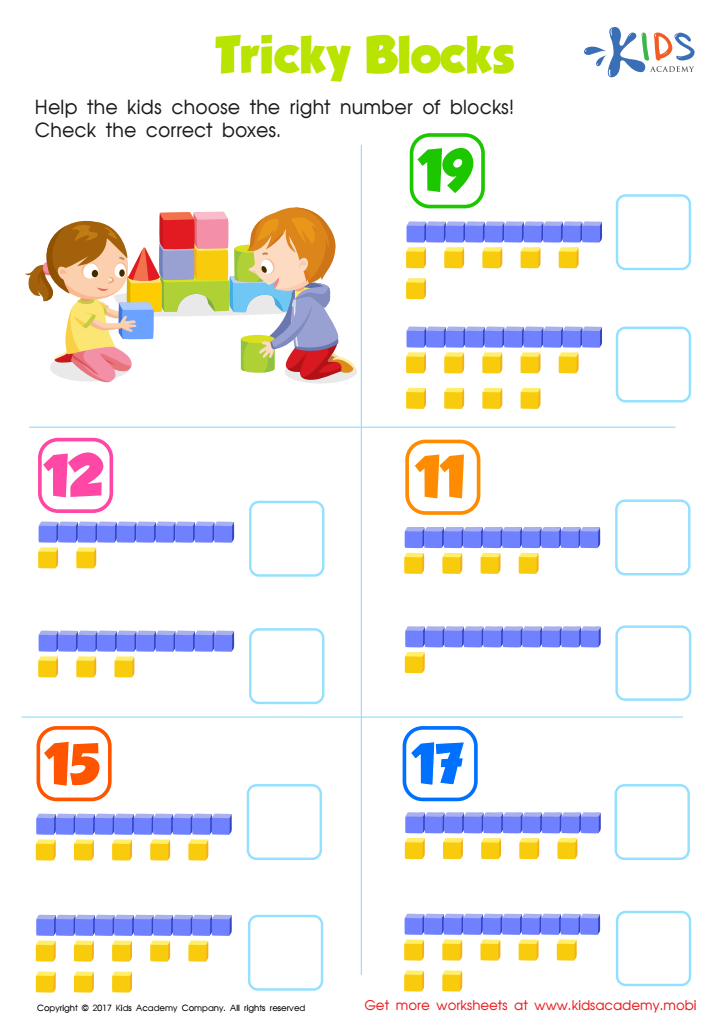
Tricky Blocks Worksheet
Help your child count with this printable worksheet. You'll be able to explain the technicalities of each answer as you work together to count the boxes and choose the correct number in the spaces provided. This will help your child better understand the concept and will go faster than if they do it alone.
 Assign to My Students
Tricky Blocks Worksheet
Worksheet
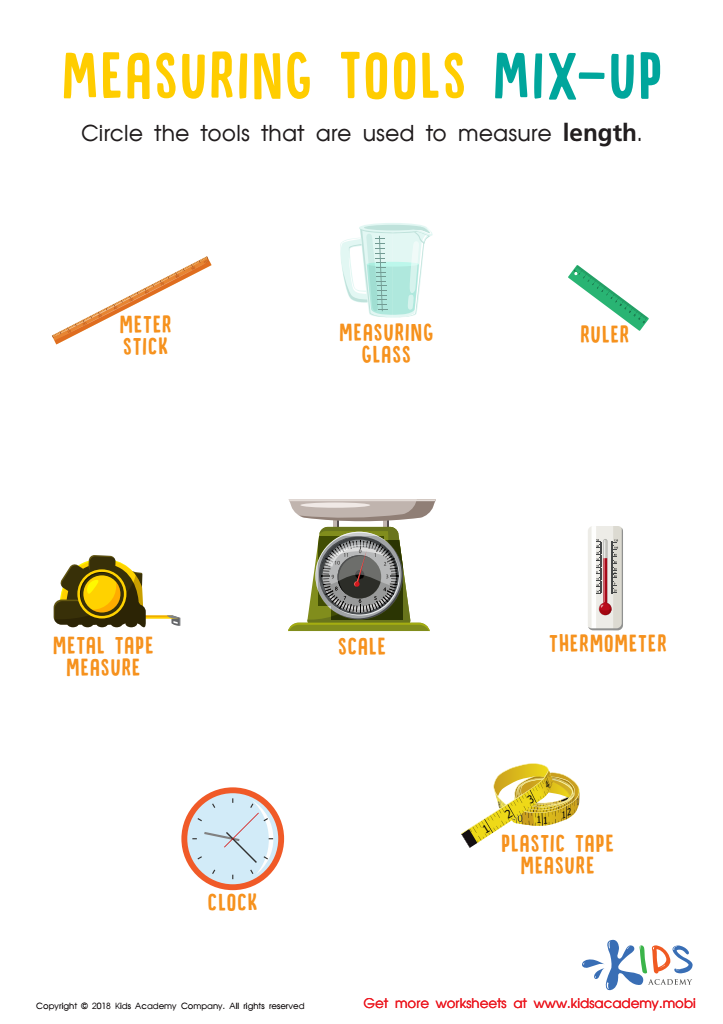
Measuring Tools Mix–up Worksheet
Test your child's knowledge of measuring instruments! In this worksheet, have them identify which items are used for measuring length. Talk through the items with them, then ask them to circle the right answer. Use this PDF to challenge your child and learn more about measuring tools.
Measuring Tools Mix–up Worksheet
Worksheet
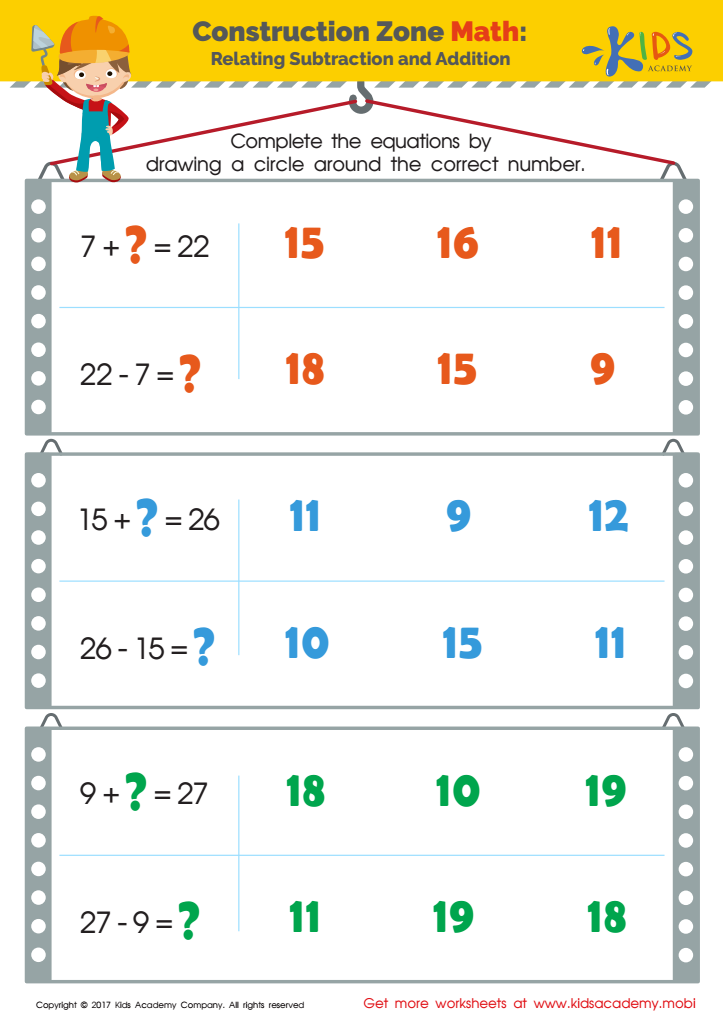
Related Addition and Subtraction Facts Worksheet
Help your child nurture their numeracy skills by introducing them to related addition and subtraction facts. Worksheets like this will give them a fun and easy way to learn how numbers work.
Related Addition and Subtraction Facts Worksheet
Worksheet
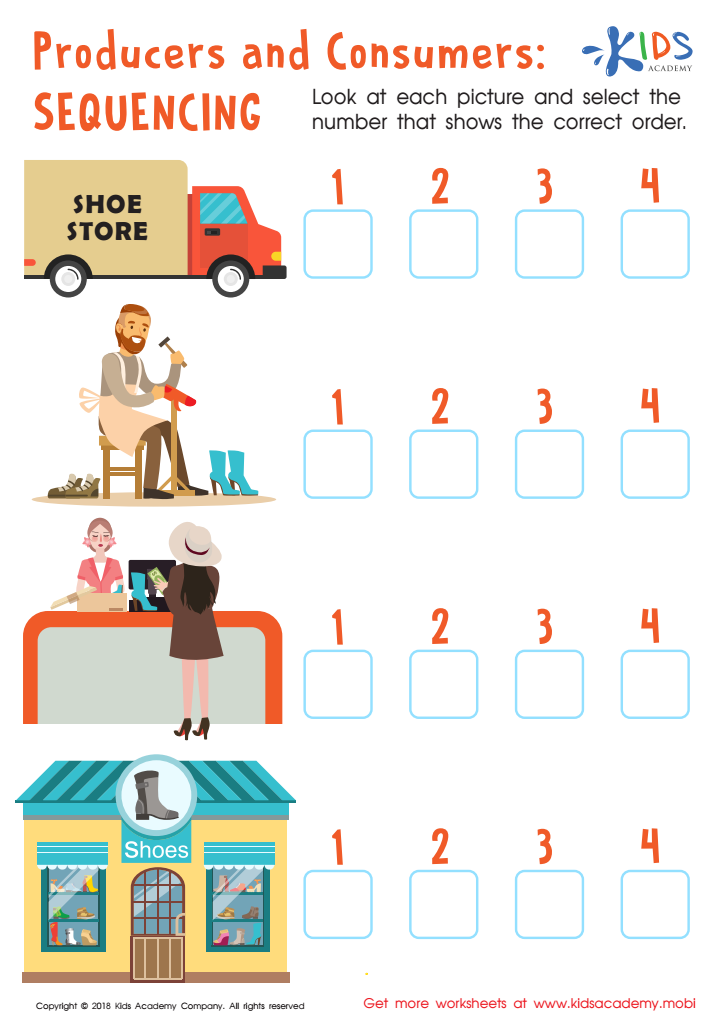
Producers and Consumers: Sequencing Worksheet
Ask your child: Who are producers? Can you give an example? Here's one: a shoe maker. What's happening in each picture? Can you arrange them in the right order? Select the number that shows the correct answer.
Producers and Consumers: Sequencing Worksheet
Worksheet
Learning Skills
Join Kids Academy for Free
Who is primarily going to use this learning content?






.jpg)
Developing logical thinking in children aged 5-8 is crucial for their cognitive, social, and emotional growth. At this developmental stage, children's brains are highly receptive, making it an opportune time to cultivate foundational reasoning skills. Logical thinking enhances problem-solving abilities, allowing children to navigate everyday challenges more effectively. When parents and teachers prioritize this development, they equip children with the tools to analyze situations, consider various perspectives, and make informed decisions.
Moreover, strong logical thinking skills foster independence. As children learn to reason through problems, they gain confidence in their abilities and feel motivated to tackle new tasks. This self-assurance is fundamental as they transition into more complex subjects in school, particularly in math and science.
Furthermore, logical thinking is intertwined with effective communication and collaboration. Children who can articulate their thoughts and reasoning are better prepared for group activities, skillfully share ideas, and listen to others, enhancing their social interactions.
In essence, fostering logical thinking lays the groundwork for lifelong learning and critical thinking. By supporting development in this area, parents and teachers prepare children not just academically but also socially, helping them thrive in an increasingly complex world.








