Differentiating shapes Normal Worksheets for Ages 5-8
3 filtered results
-
From - To
Explore our engaging Differentiating Shapes Normal Worksheets designed specifically for children ages 5-8. These worksheets enhance young learners' understanding of various shapes through fun and interactive activities. Each worksheet helps children identify, compare, and distinguish between different geometric shapes while building their critical thinking skills. Colorful illustrations and intuitive exercises make shape recognition enjoyable and accessible. Perfect for both classroom use and home study, these resources support early math learning and foster creativity. No matter the learning environment, our worksheets are ideal for nurturing foundational skills in a stimulating and supportive way. Get started today and watch your child's confidence soar!
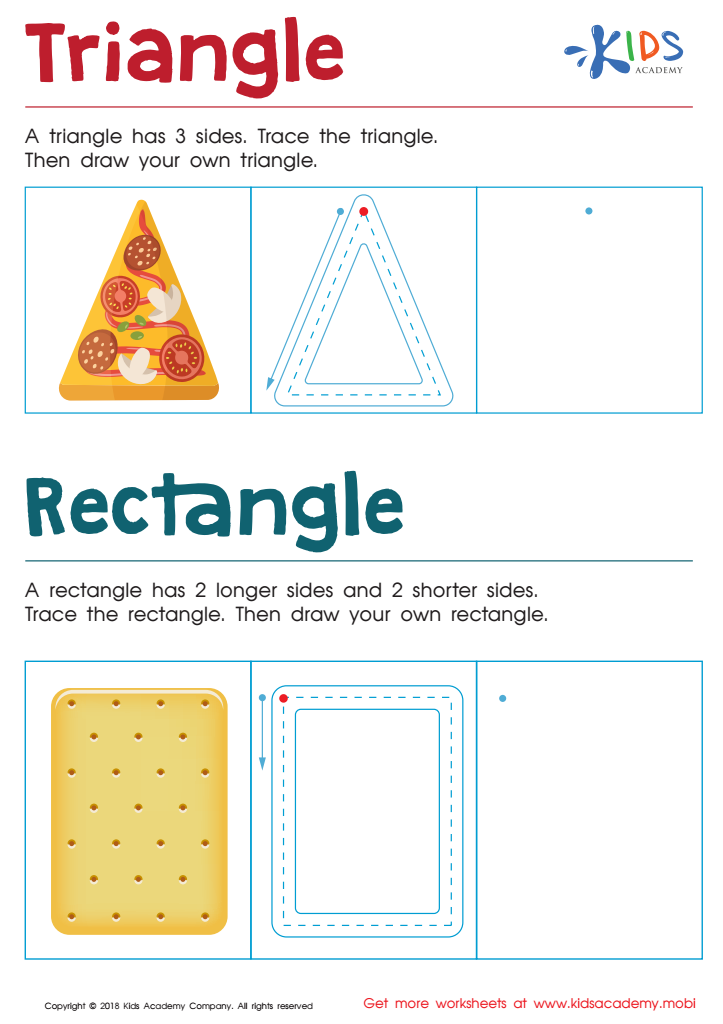
Triangle Rectangle Worksheet
 Assign to My Students
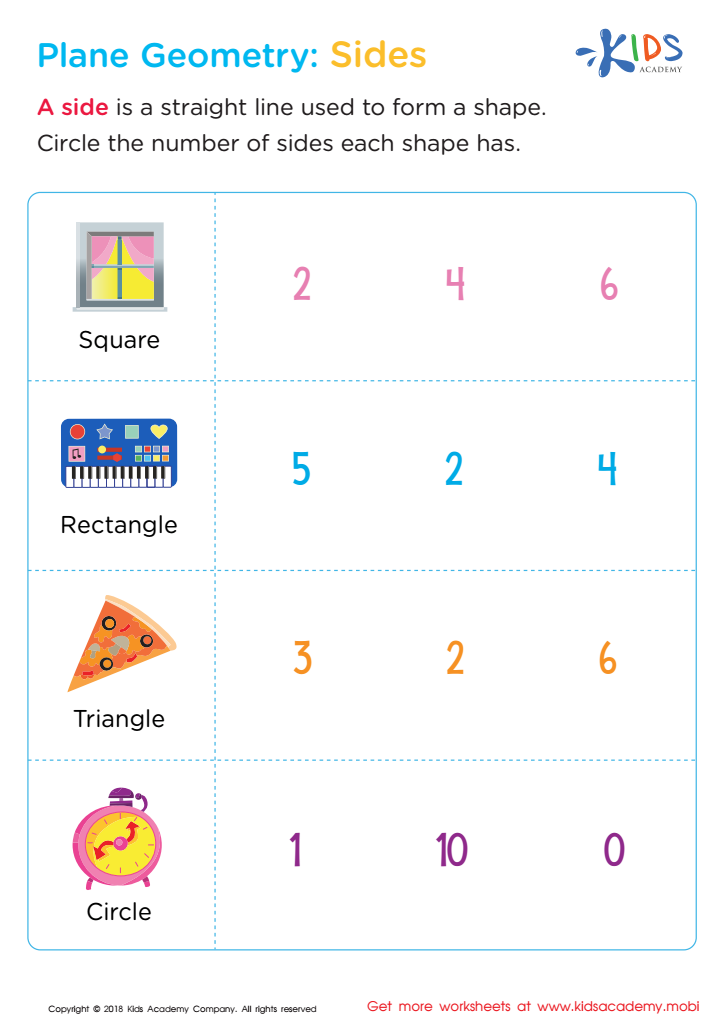
Plane Geometry: Sides Worksheet
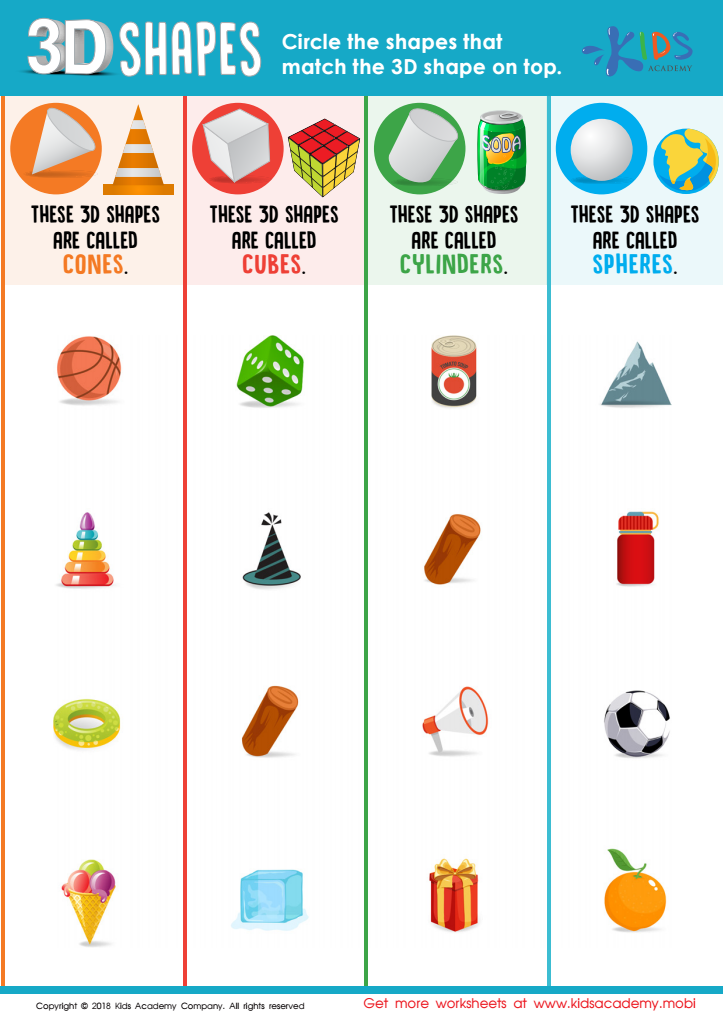
3D Shapes Worksheet







.jpg)
Differentiating shapes is crucial for children aged 5 to 8 as it lays the foundation for their geometric understanding and cognitive development. At this stage, children are naturally curious and eager to explore their environment. Teaching them to differentiate shapes helps develop critical thinking skills and spatial awareness, essential for everyday problem-solving.
When children learn to identify, describe, and categorize shapes, they enhance their mathematical vocabulary and ability to communicate about the world around them. This differentiation not only supports mathematics but also connects to art, science, and even physical education through activities involving building, drawing, or recognizing patterns. Moreover, activities that involve comparing and contrasting shapes can improve fine motor skills through hands-on experiences.
For parents and teachers, fostering skills in shape differentiation can lead to greater academic readiness as children transition into higher grades. Specifically, mastering these foundational concepts prepares students for more complex topics like geometry and measurement. This early exposure promotes a positive attitude towards math and builds confidence, helping prevent math anxiety in later years. Ultimately, investing time in differentiation not only enriches children's learning experiences but equips them with essential skills for future educational success.








