Geometry understanding Normal Worksheets for Ages 5-8
3 filtered results
-
From - To
Unlock your child's potential with our "Geometry Understanding Normal Worksheets for Ages 5-8" at Kids Academy. Designed to enhance young learners' spatial reasoning and critical thinking skills, these engaging worksheets cover essential geometry topics such as shapes, patterns, and symmetry. Perfectly tailored for early elementary students, our printable worksheets use fun illustrations and interactive activities to make learning geometry exciting and enjoyable. Whether your child is just starting with basic shapes or mastering more complex geometric concepts, our resources provide the perfect balance of challenge and support. Boost your child's confidence in mathematics with our expertly crafted geometry worksheets today!
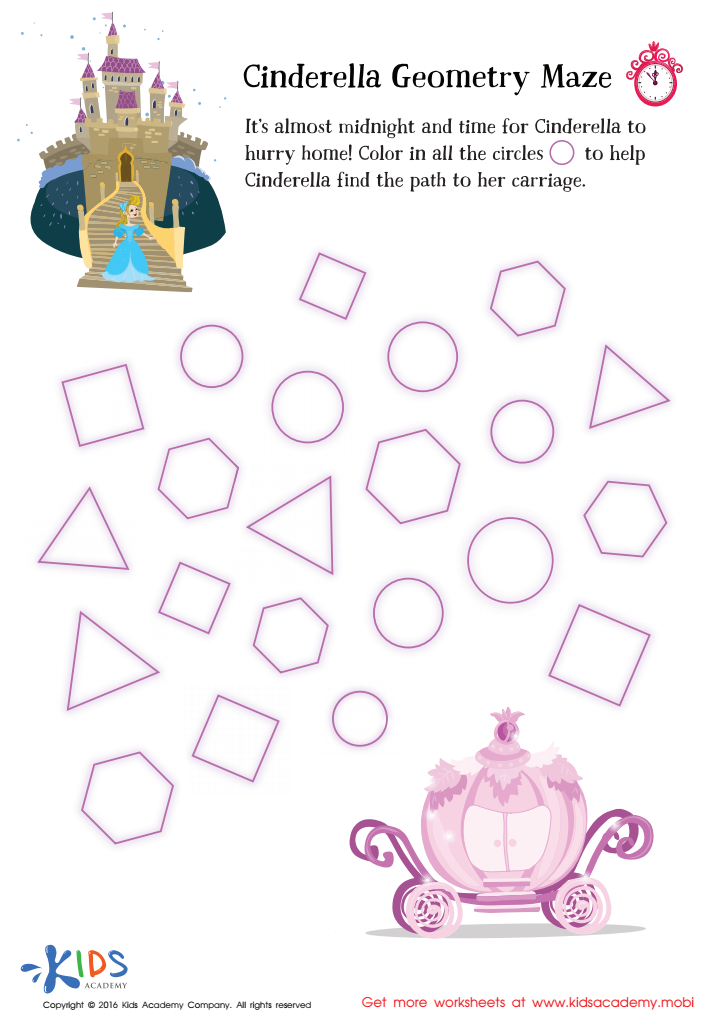
Cinderella Geometry Maze Worksheet
 Assign to My Students
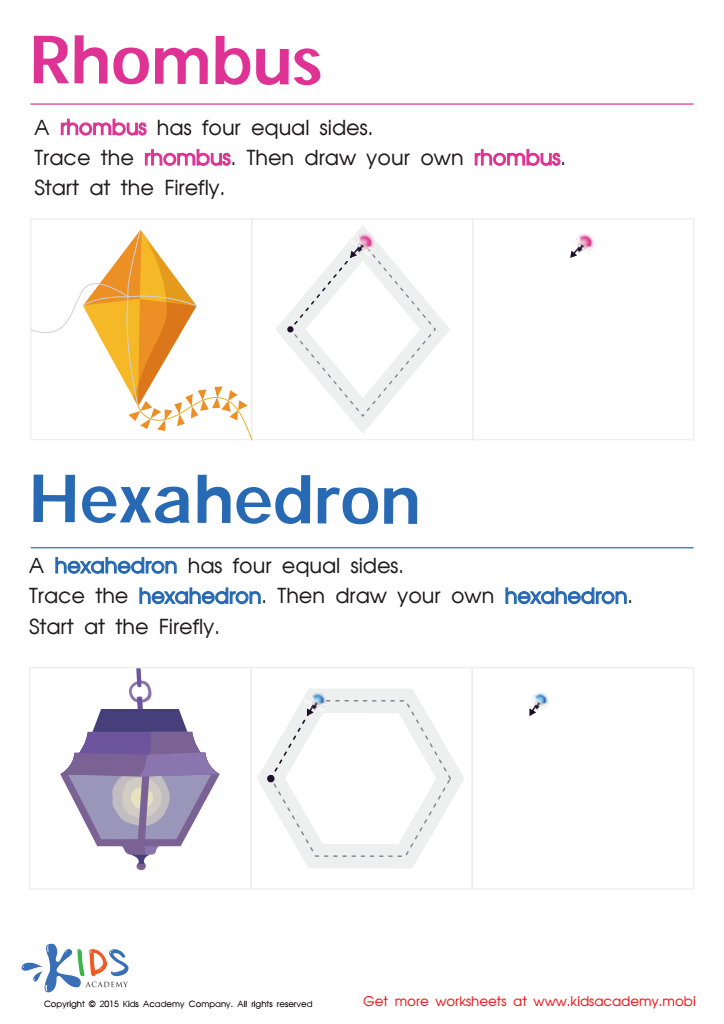
Draw a Rhombus And a Hexahedron Printable
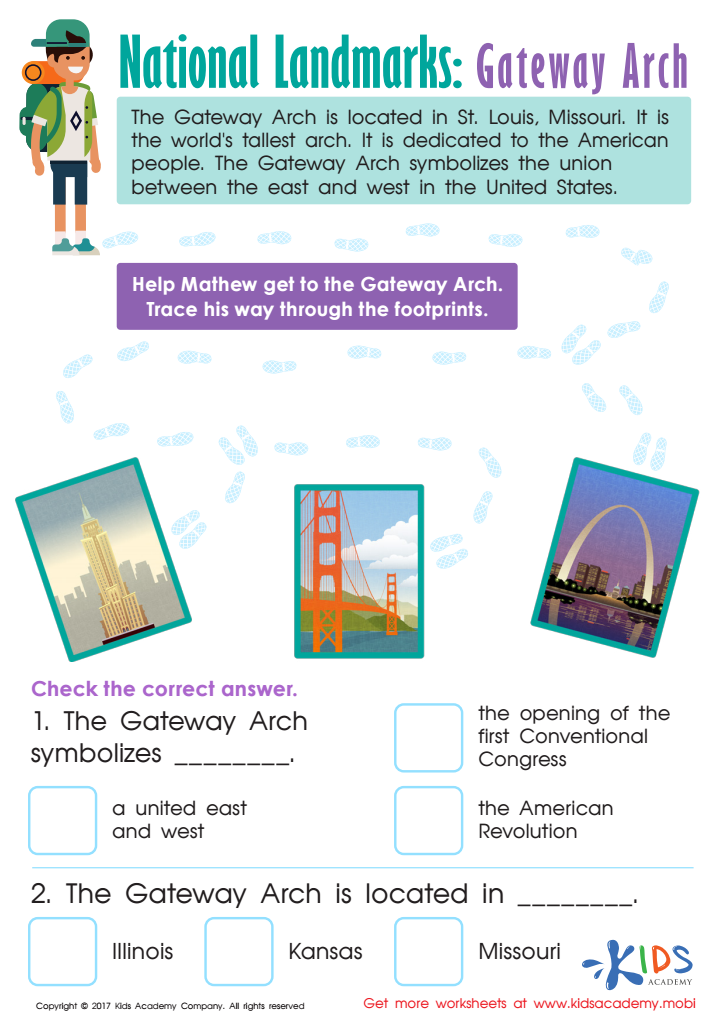
Gateway Arch Printable Worksheet








Understanding geometry is foundational for young children's cognitive development and overall learning. For ages 5-8, grasping basic geometric concepts plays a crucial role in developing spatial awareness and problem-solving skills. These skills are essential not just for mathematics but for succeeding in a variety of daily tasks and future learning endeavors.
Parents and teachers should care about children's understanding of geometry because it enhances their ability to recognize shapes and patterns, fostering critical thinking and visual perception. These abilities contribute significantly to reading and writing, as identifying shapes aids in letter recognition and differentiating objects. Early exposure to geometry helps children grasp the concepts of symmetry, sizes, and positional terminology like 'above,' 'below,' or 'beside,' which are essential for following directions and making sense of the world around them.
Moreover, studies indicate that children who develop a good understanding of geometry early on tend to perform better in more complex math subjects later, such as algebra and calculus. Therefore, through play, interactive activities, and hands-on learning, parents and teachers can nurture an interest in geometry, laying a strong mathematical foundation. This not only promotes academic achievement but also supports cognitive and social-emotional development, making it vital during these formative years.








