
Identifying patterns Normal Worksheets for Ages 5-8
3 filtered results
Difficulty Level
Grade
Age
-
From - To
Subject
Activity
Standards
Discover the exciting world of patterns with our engaging worksheets designed for children aged 5-8! Kids Academy offers a captivating collection of "Identifying Patterns" worksheets that enhance essential learning skills. These worksheets are perfect for promoting critical thinking and observation, helping children recognize and predict patterns through fun and interactive exercises. With colorful illustrations and a variety of activities, youngsters will enjoy learning while building a strong foundation in math and logic. Foster your child's natural curiosity and problem-solving abilities with our expertly crafted pattern identification worksheets. Prepare for educational success with Kids Academy today!
Favorites
With answer key
Interactive
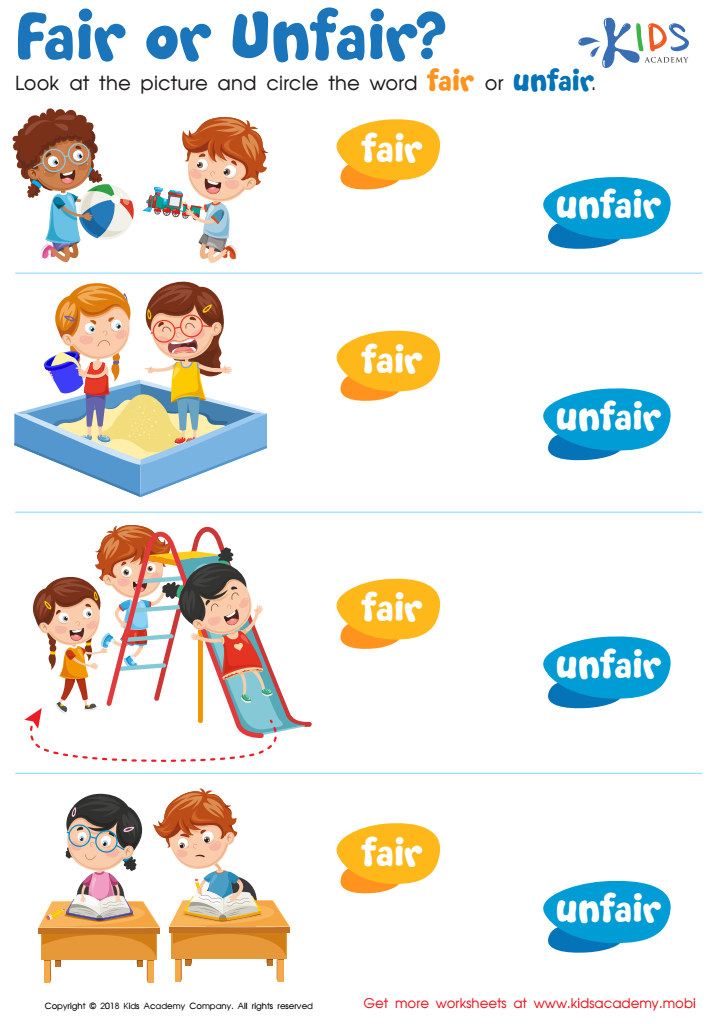
Fair or Unfair Worksheet
Look at the pictures in this worksheet with kids. Can they tell if the actions are fair or unfair? Help them decide and circle the appropriate option. When something causes harm to one person, it is unfair; when all parties benefit, it is fair.
 Assign to My Students
Fair or Unfair Worksheet
Worksheet
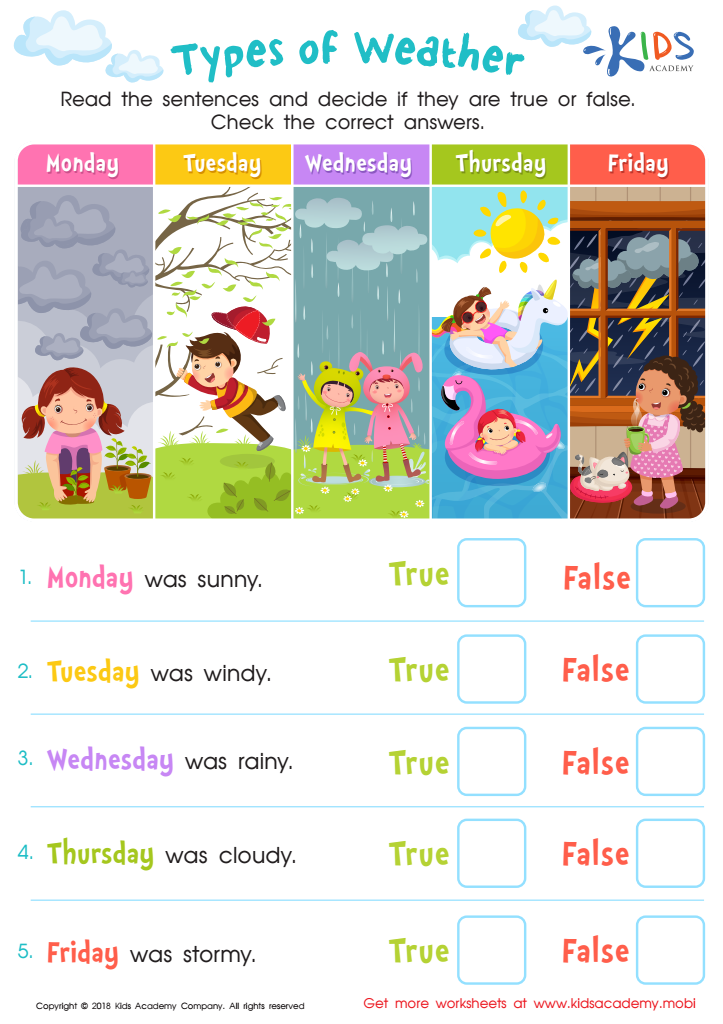
Types of Weather Worksheet
This worksheet will test your child's knowledge of the weather. Show them the pictures of five days of the week, each with a different weather and ask them to describe it. Then read the sentences and ask if they're true/false. Help them find the right answers.
Types of Weather Worksheet
Worksheet
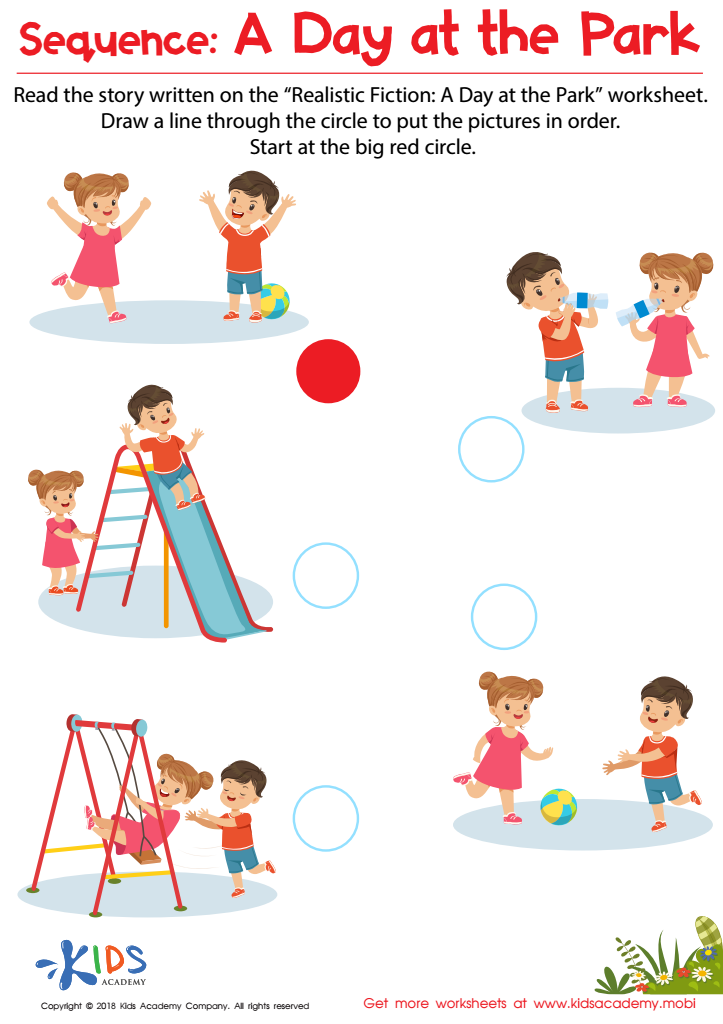
Sequence: A Day at the Park Worksheet
Help your child sequence the events of the story they just read with this activity! Start with the big red circle and draw lines to the other circles next to the images in the correct order. It's a great way to practice their reading skills! Try this downloadable worksheet today!
Sequence: A Day at the Park Worksheet
Worksheet
Join Kids Academy for Free
Who is primarily going to use this learning content?






Identifying patterns is a foundational mathematical skill that is crucial for children aged 5-8 as it significantly influences their cognitive development and sets a solid groundwork for future learning. Patterns help young children understand the world around them by organizing information and making predictions about outcomes. This early skill builds critical thinking and problem-solving abilities, facilitating the mastery of more complex subjects like math, science, and coding as they progress in their education.
For parents and teachers, recognizing and nurturing the ability to identify patterns aids in advancing a child's number sense and spatial awareness. These concepts are pivotal when children commence learning addition, subtraction, multiplication, and division. Moreover, understanding patterns boosts language skills as kids notice patterns in sounds, words, and rhythms, enhancing their reading and writing capabilities.
Caring about this skill also supports social development, as patterns include routine and sequences that children follow in their daily lives, which provides a sense of security and predictability. Whether it’s recognizing a pattern in a story, in a sequence of numbers, or even in their daily routine, identifying patterns fosters confidence and independence, empowering children to make informed decisions and gaining autonomy as thinkers and learners.
Investing time in activities that highlight patterns, such as sorting objects, sequencing cards, or rhythmic clapping, provides early learners with a versatile toolkit they will utilize across various disciplines throughout their academic journey and beyond.








