Interpreting data Normal Worksheets for Ages 5-8
4 filtered results
-
From - To
Unlock a world of knowledge for young learners with our "Interpreting Data Normal Worksheets for Ages 5-8". Developed by education experts, these engaging and age-appropriate printables are designed to build foundational data analysis skills through fun activities. Kids will explore, interpret, and visualize information using graphs, charts, and tables, enhancing their critical thinking and problem-solving capabilities. Each exercise is created to make learning intuitive and enjoyable, helping to develop confidence in handling data. Perfectly tailored for children aged 5-8, these worksheets are an essential tool for teachers and parents looking to give their students a head start in understanding data.
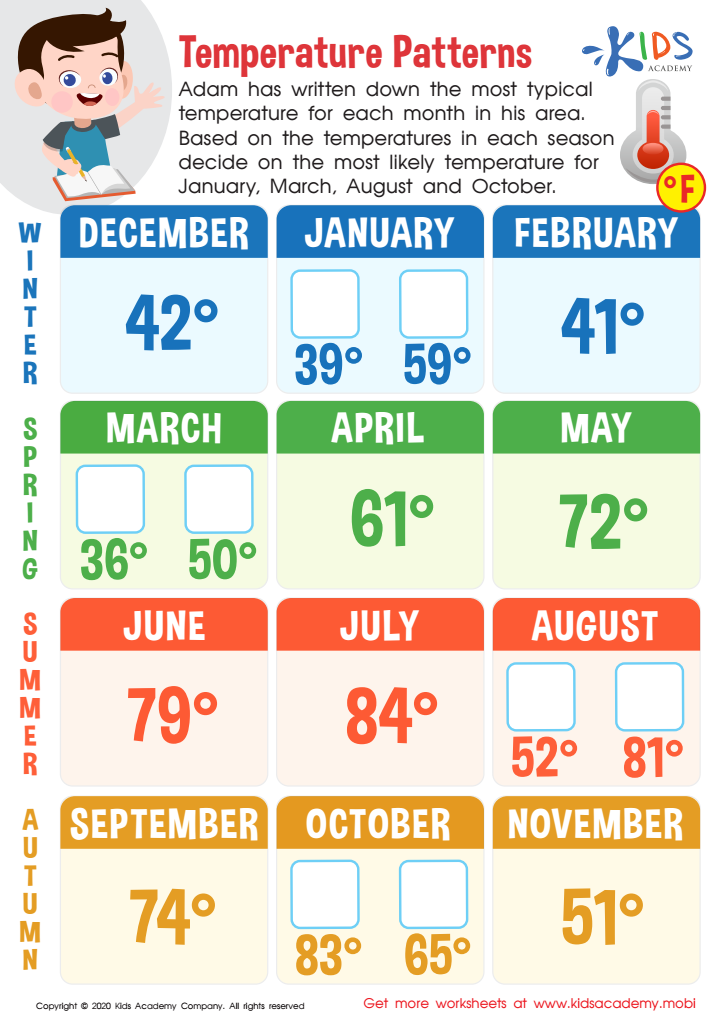
Temperature Patterns Worksheet
 Assign to My Students
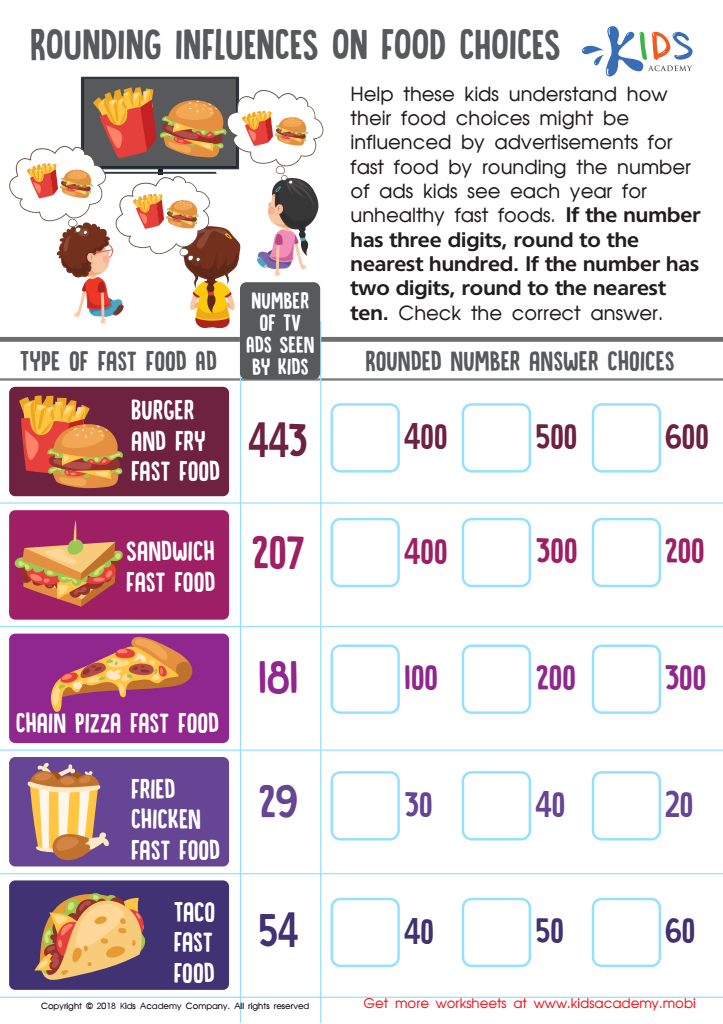
Rounding Influences Food Choices Worksheet
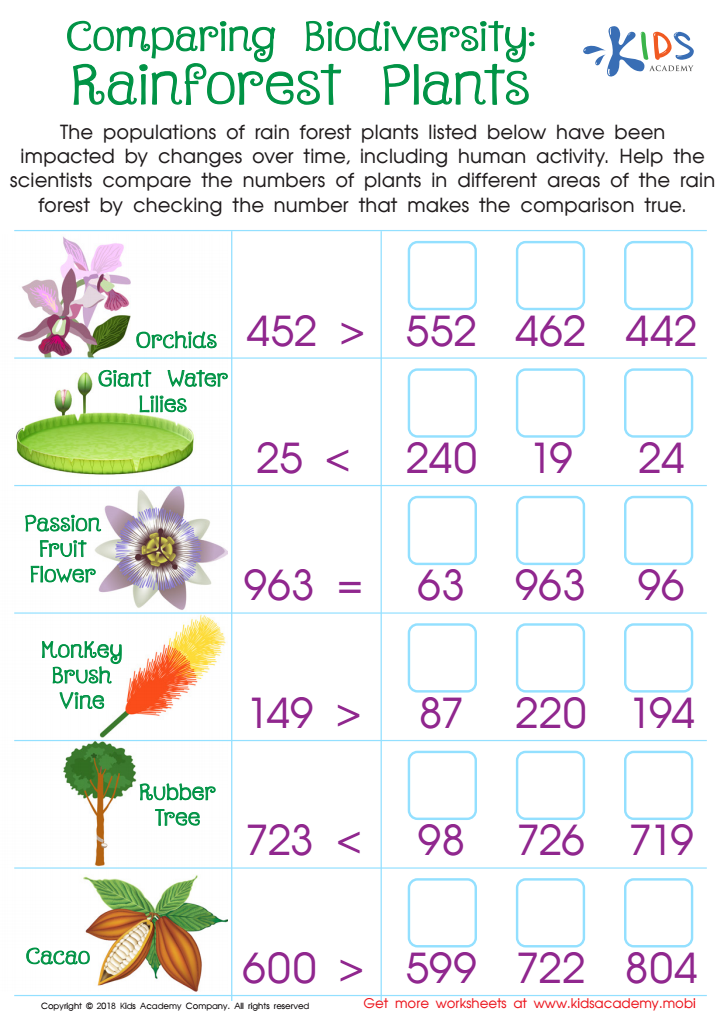
Comparing Biodiversity: Rainforest Plants Worksheet
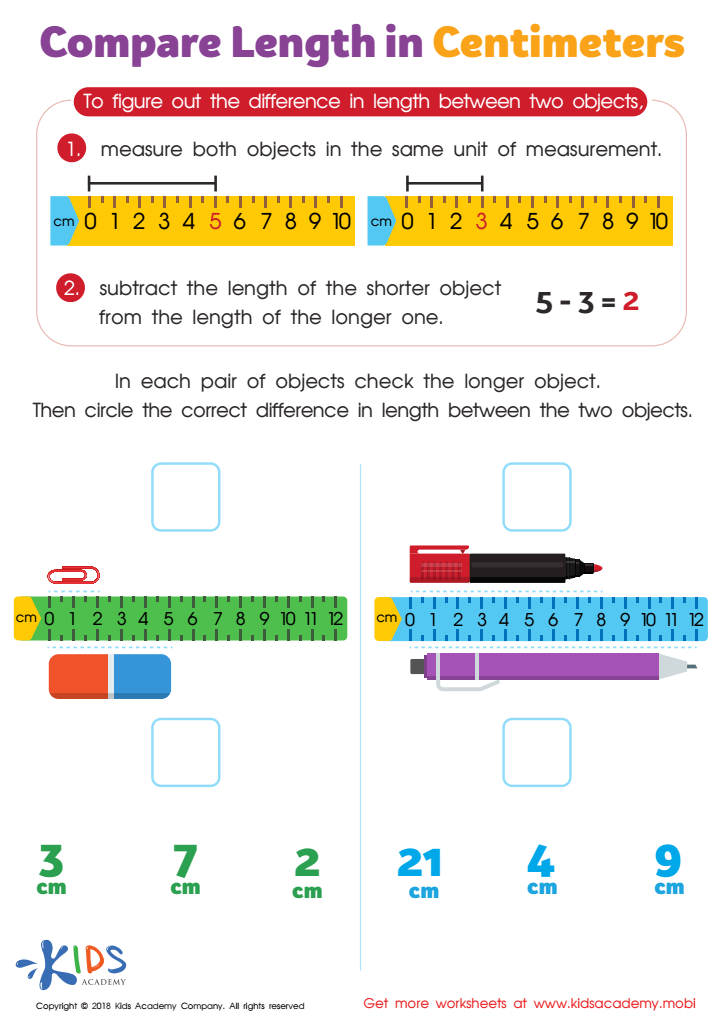
Compare Length in Centimeters Worksheet








Interpreting data is a crucial skill for children, even at a young age, because it lays the foundation for critical thinking and problem-solving abilities. For children aged 5-8, understanding how to interpret data can be transformative in several ways.
First, it nurtures logical thinking. When children learn to group objects, compare quantities, or analyze simple graphs and charts, they’re not just engaging with numbers, but also sharpening their reasoning skills. These activities require them to recognize patterns and make decisions based on evidence, which are essential for success in both academics and everyday life.
Second, interpreting data fosters a growth mindset. When children investigate and draw conclusions from data, they understand that making mistakes is a part of learning. A child might conclude that there are more red apples than green apples after counting them. If findings don’t align with initial guesses, it teaches adaptability and perseverance.
Third, it promotes literacy and communication skills. Explaining data findings encourages children to articulate their thoughts clearly. They learn to describe quantities, sequences, and comparisons which enriches their vocabulary and boosts verbal expression.
By caring about and integrating data interpretation in early education, parents and teachers proactively equip young minds with analytical skills, promoting curiosity and a lifelong love for learning.








