Knowledge application Normal Worksheets for Ages 5-8
6 filtered results
-
From - To
Discover our engaging Knowledge Application Normal Worksheets designed specifically for children ages 5-8! These printable resources offer a fun and interactive way for young learners to apply their knowledge across various subjects, enhancing critical thinking and problem-solving skills. With colorful illustrations and age-appropriate activities, these worksheets not only promote learning but also keep kids excited about education. Ideal for both homeschool and classroom settings, our worksheets cover key concepts in math, language arts, and more. Empower your child’s learning journey and watch them thrive as they develop essential skills through our carefully curated materials. Start exploring today!
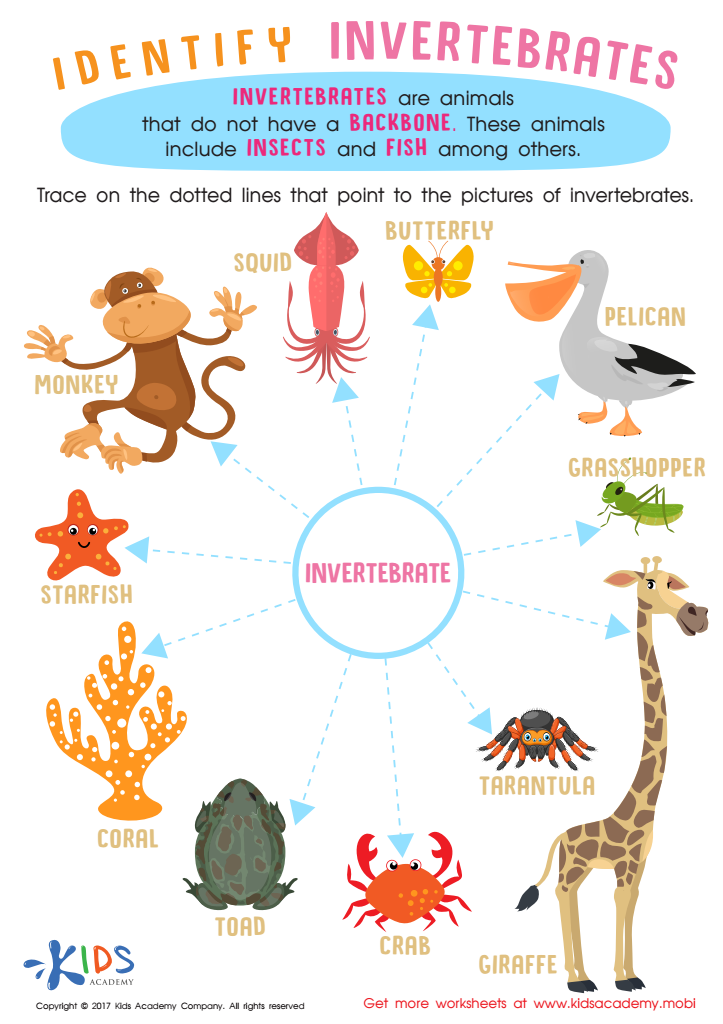
Invertebrates Worksheet for Grade 3
 Assign to My Students
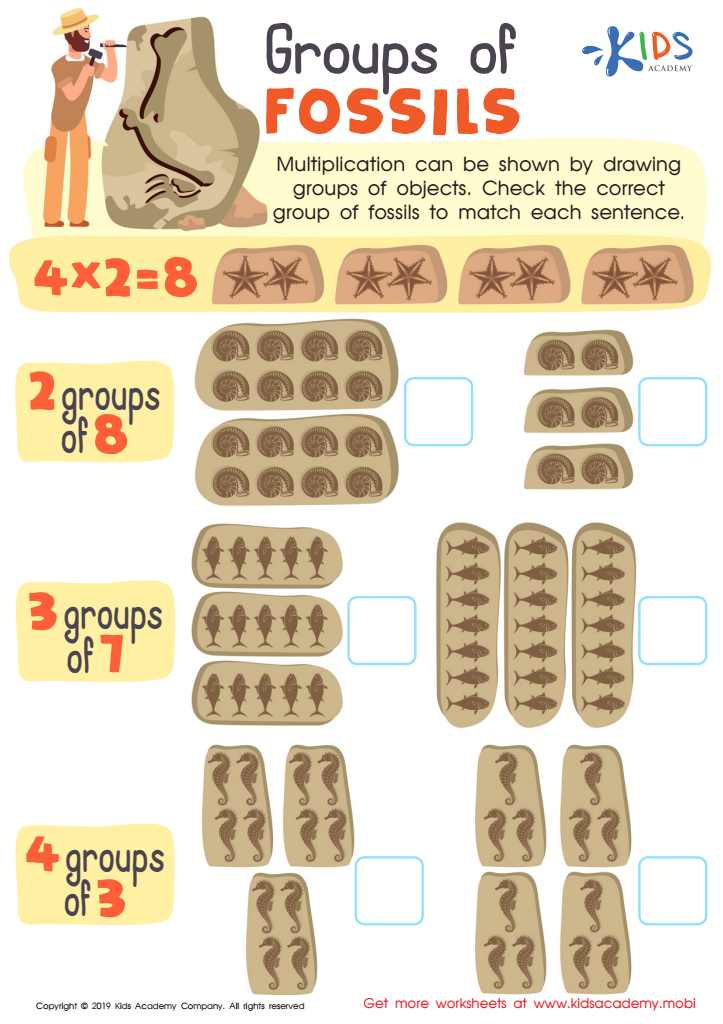
Groups of Fossils Worksheet
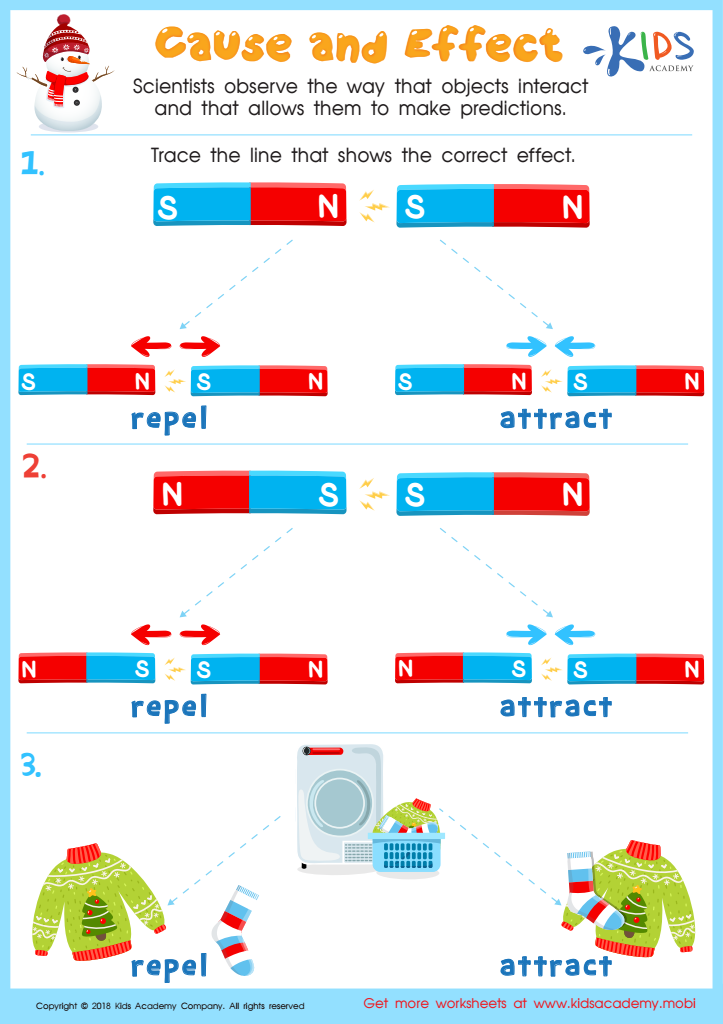
Repel and Attract Magnet Worksheet
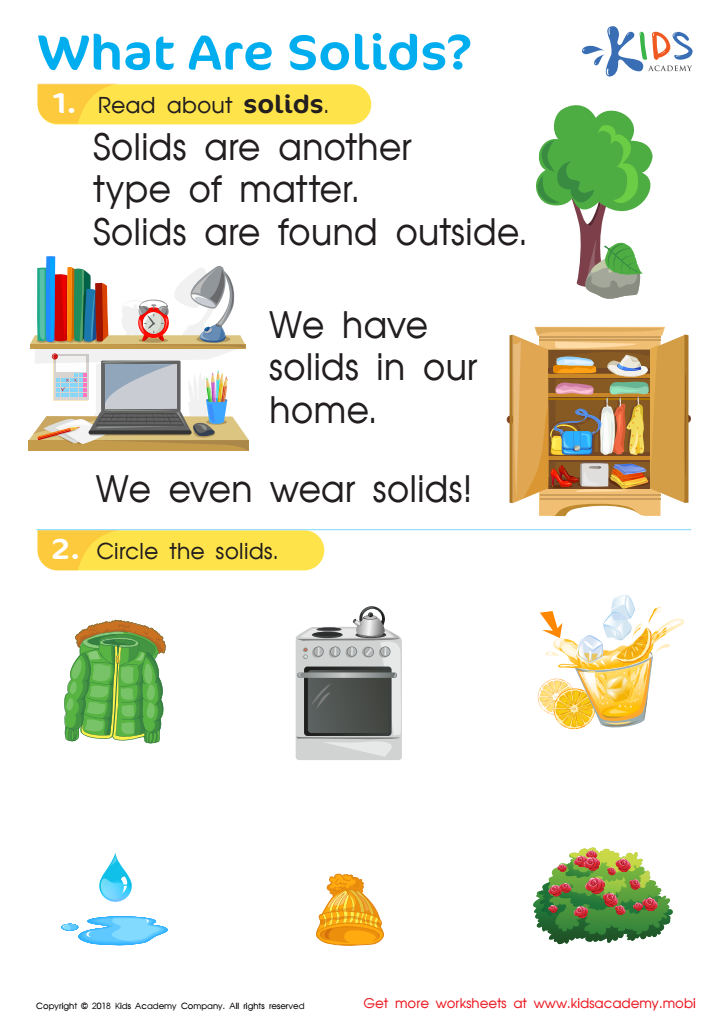
What Are Solids? Worksheet
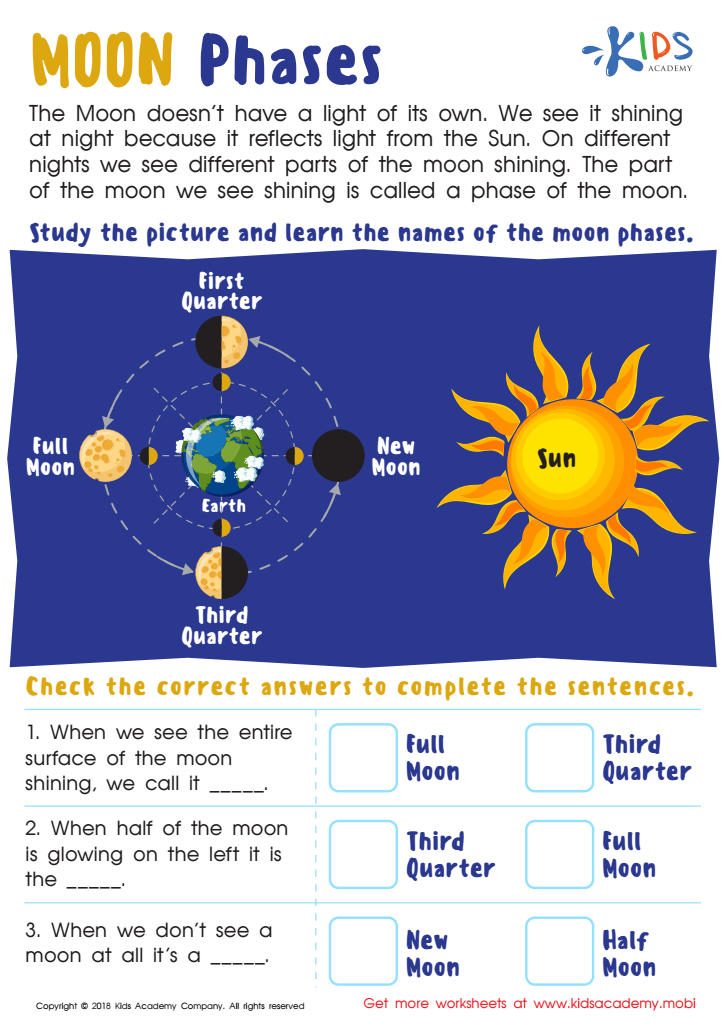
Moon Phases Worksheet
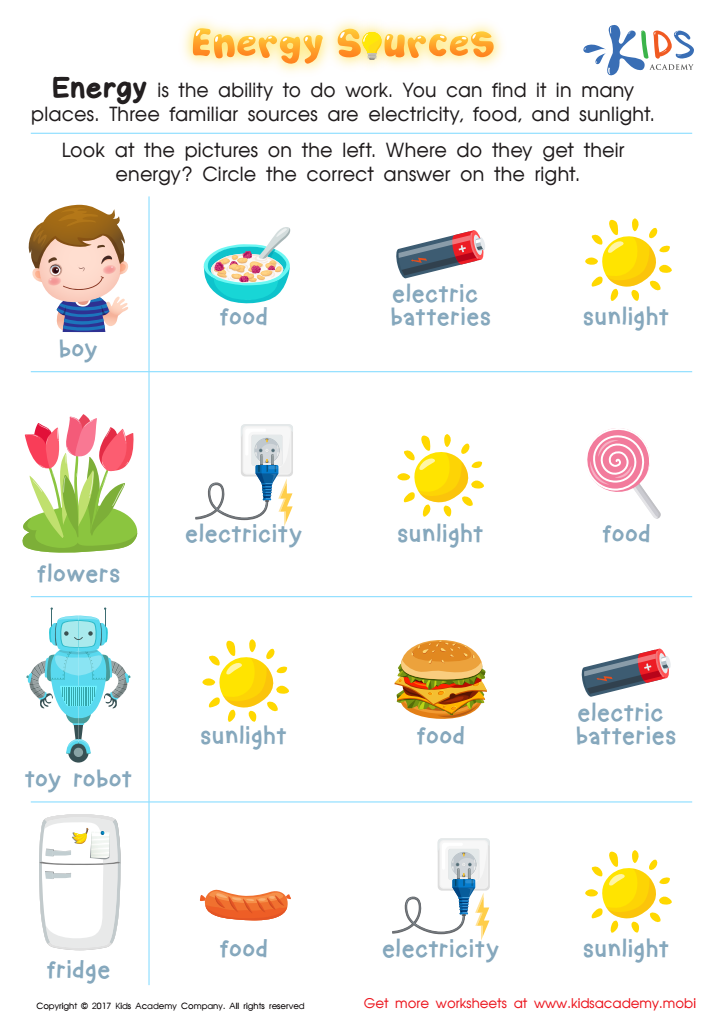
Energy Sources Printable







Knowledge application is a crucial concept for children aged 5-8, as it represents the transition from understanding information to utilizing it in real-world situations. Parents and teachers should care about this developmental stage for several reasons.
Firstly, applying knowledge fosters critical thinking skills. When children learn to connect concepts and apply them in practical scenarios, they enhance their ability to problem-solve and reason, which are essential skills for lifelong learning. By encouraging knowledge application, educators and parents help children develop a proactive approach to challenges.
Secondly, knowledge application lays the groundwork for emotional and social growth. Engaging in group activities or projects allows children to collaborate, communicate, and negotiate, enhancing their social skills and emotional intelligence. This collaborative learning environment builds teamwork and interpersonal skills, which are vital for personal and academic success.
Lastly, fostering knowledge application nurtures creativity and innovation. Children learn to experiment, make decisions, and explore different solutions, promoting a growth mindset. This empowers them to feel confident in their abilities and embrace learning as a continuous, enjoyable journey.
In summary, emphasizing knowledge application for children aged 5-8 supports their cognitive, social, and emotional development, setting the foundation for future learning and success.








