Reading development Normal Worksheets for Ages 5-8
5 filtered results
-
From - To
Enhance your child's reading skills with our engaging worksheets designed for ages 5 to 8! Our "Reading Development Normal Worksheets" provide a fun and interactive way for young learners to develop essential phonetic, vocabulary, and comprehension skills. Ideal for classrooms and home learning, these worksheets feature colorful illustrations and age-appropriate exercises that foster a love for reading. From simple word recognition to more complex sentence structure, each activity encourages creativity and critical thinking. Join us in making reading an exciting adventure as your child discovers new worlds through words. Download and support your child's reading journey today!
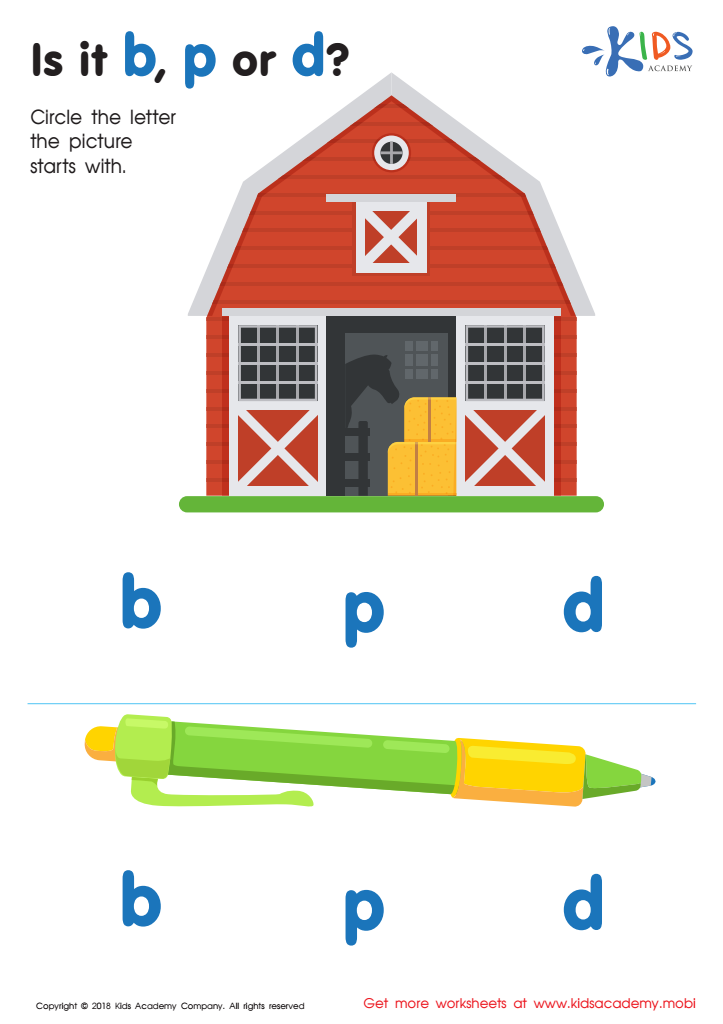
Is it b, p or d? Worksheet
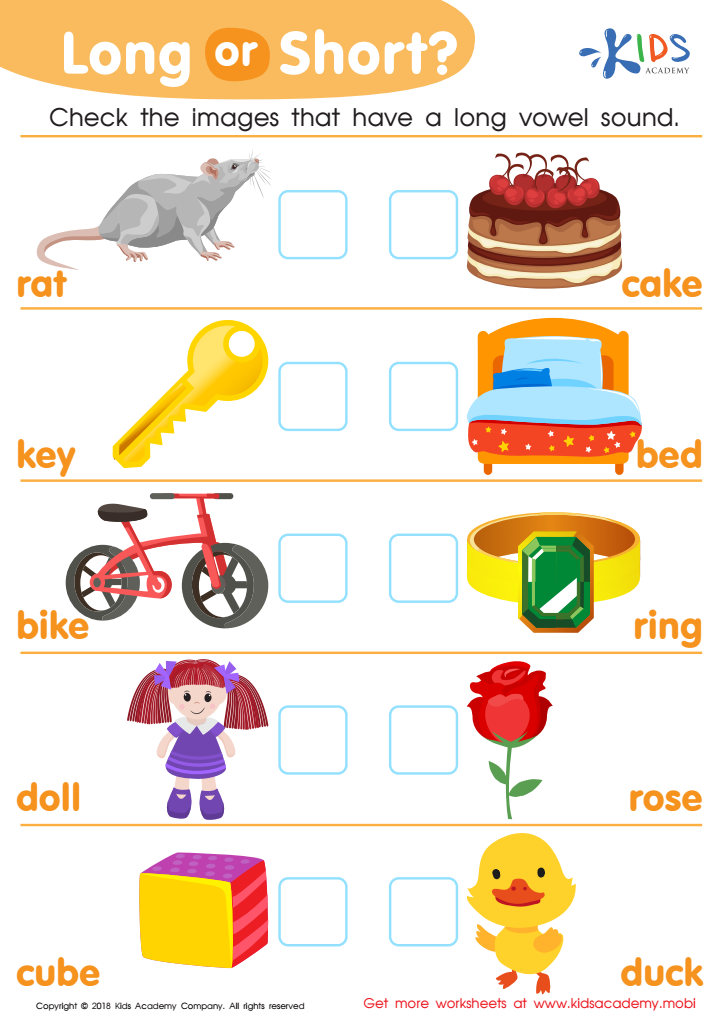
Long or Short Reading Worksheet
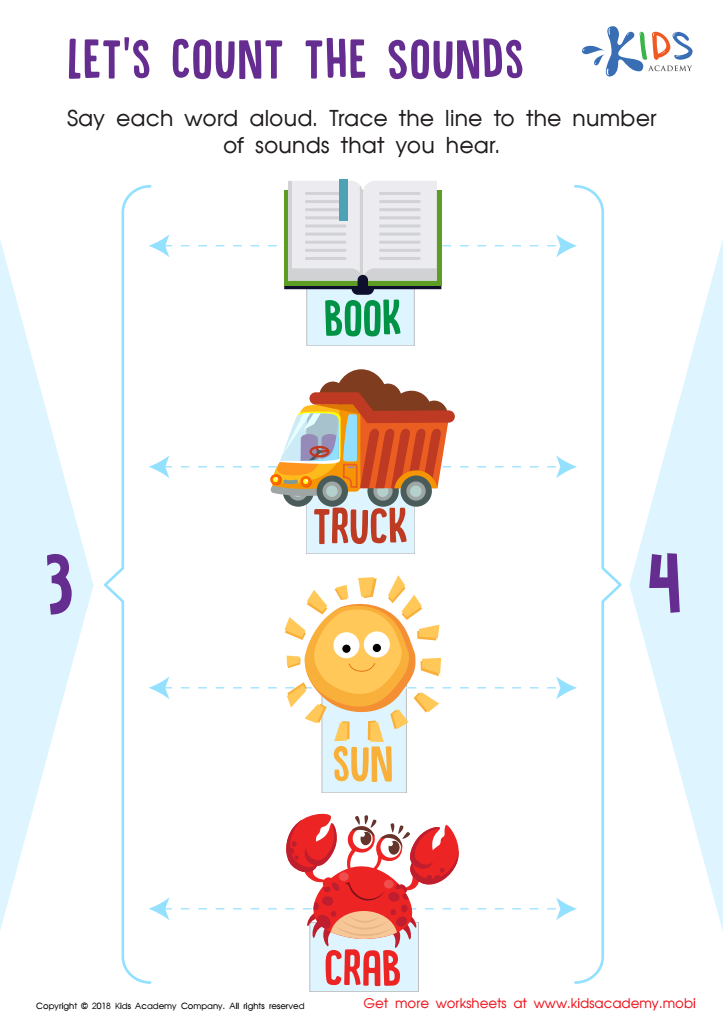
Let's Count the Sounds Worksheet
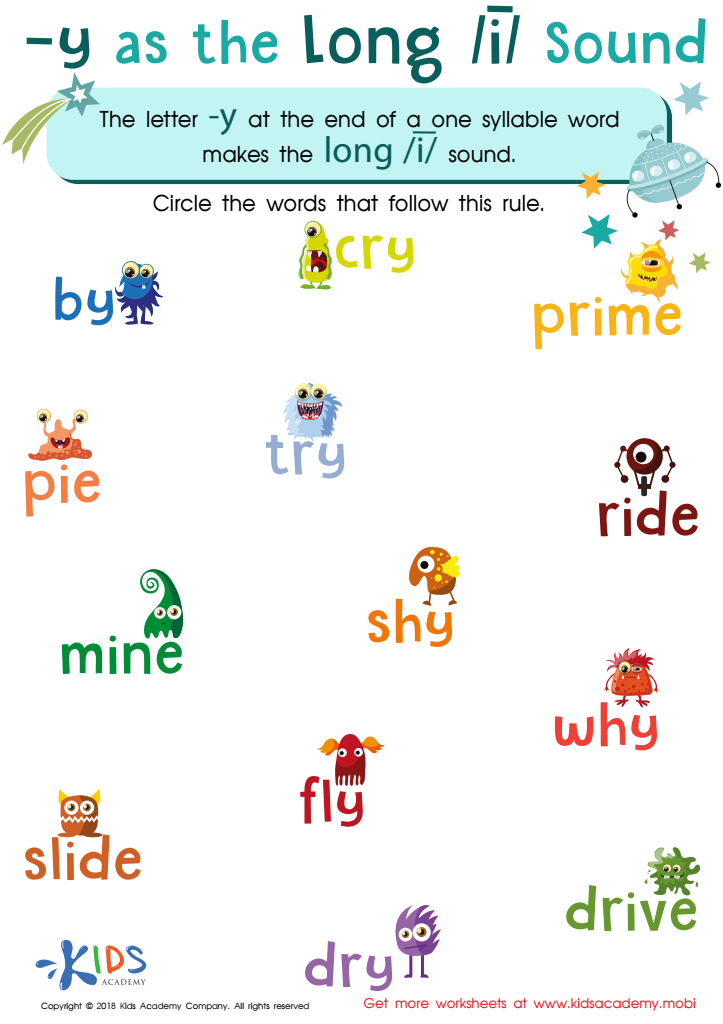
Reading: Y as Long I Worksheet
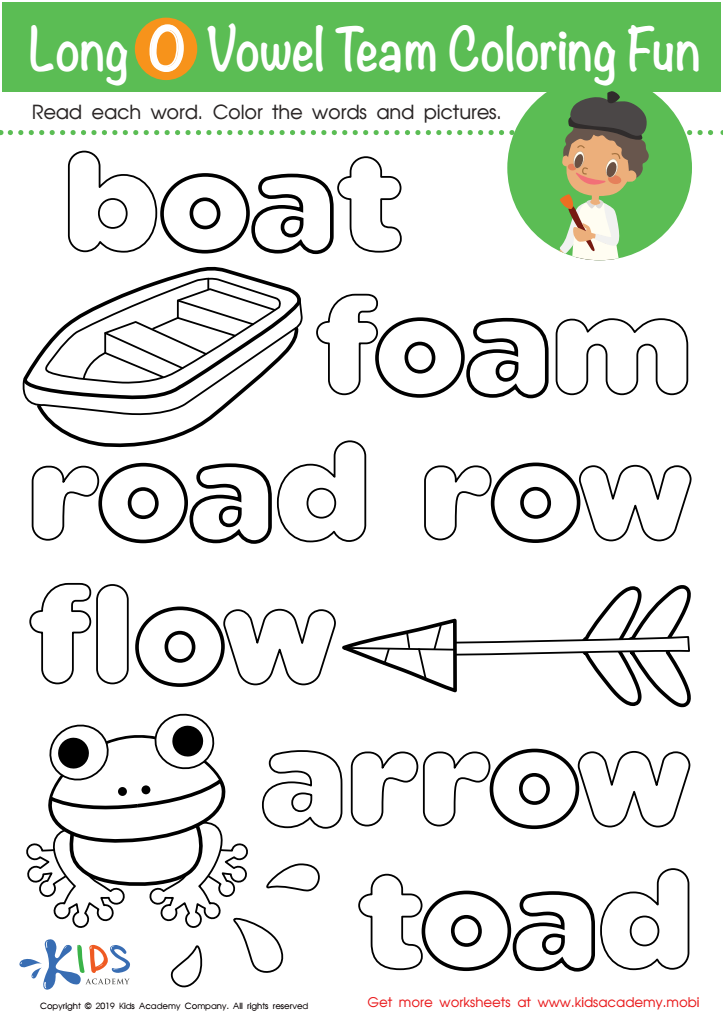
Long O Vowel Team Coloring Worksheet
 Assign to My Students








Reading development is crucial for children aged 5-8 as it forms the foundation for their future academic success and overall cognitive growth. At this stage, children are transitioning from learning to read to reading to learn. Effective reading skills enhance their comprehension abilities, allowing them to engage more deeply with a variety of subjects, from science to history. This age is marked by significant brain development, and practices such as shared reading and phonics instruction can promote neural connections that are vital for literacy.
Moreover, strong reading skills contribute to improved language acquisition, encouraging vocabulary growth and better communication. When parents and teachers are actively involved in nurturing reading development, they can foster a child's enthusiasm for books, helping to instill a lifelong love for reading.
Additionally, early reading proficiency has been linked to higher academic performance in later grades. Recognizing signs of delays or struggles in reading early on allows for timely interventions, ensuring each child's unique learning needs are addressed. Ultimately, prioritizing reading development not only boosts children's confidence but also equips them with essential tools they'll need throughout their educational journey and beyond.








