Shape Recognition Normal Worksheets for Ages 5-8 - Page 3
50 filtered results
-
From - To
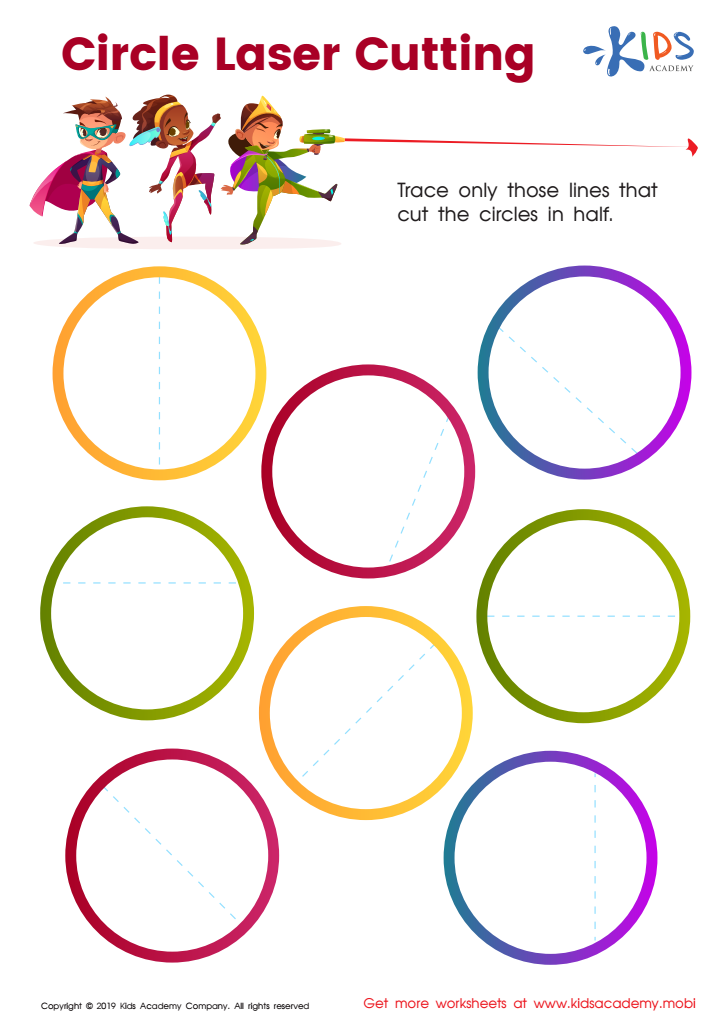
Circle Laser Cutting Worksheet
 Assign to My Students
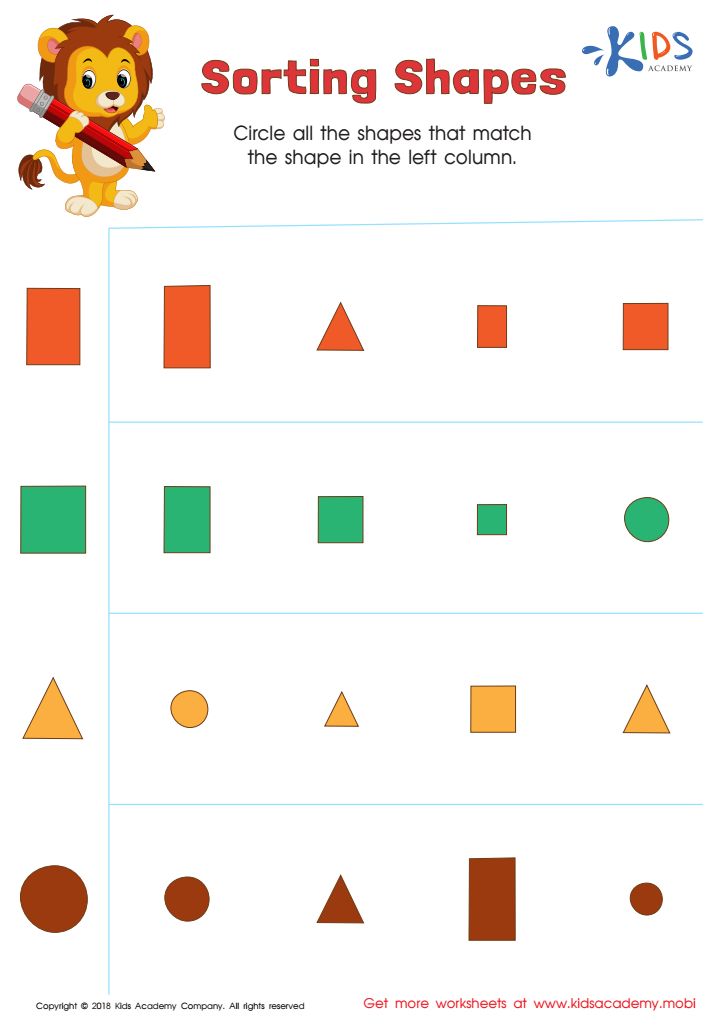
Sorting Shapes - Part 2 Worksheet








Shape recognition is a fundamental skill that lays the groundwork for a child's cognitive development, particularly for those aged 5-8. At this stage, children are rapidly developing their reasoning abilities and spatial awareness, which are crucial in fields such as mathematics, science, and even artistic endeavors. Understanding shapes helps them categorize and simplify the world around them, fostering critical thinking skills.
Parents and teachers should prioritize shape recognition because it serves as a foundation for more complex concepts like geometry, measurement, and problem-solving. When children learn to identify and differentiate between shapes, they enhance their observational skills and begin to understand how different shapes interact in their environment. Additionally, recognizing shapes supports literacy development, as it is often linked to grasping patterns in letters and numbers.
Moreover, engaging with shapes stimulates creativity and encourages exploration. Activities involving shape recognition—such as puzzles, building blocks, or drawing—promote fine motor skills and encourage collaborative play. By nurturing shape recognition, parents and teachers empower children with essential skills that contribute to lifelong learning and success in various academic and real-world scenarios. Therefore, investing in these foundational skills is vital for holistic child development.








