Spatial Orientation Normal Worksheets for Ages 5-8
4 filtered results
-
From - To
Discover our engaging Spatial Orientation Normal Worksheets for ages 5-8, designed to build crucial learning skills in young minds. Our expertly crafted worksheets help children develop the ability to understand and navigate spaces effectively. Featuring fun and interactive activities, these resources enhance critical thinking, improve visual perceptual skills, and boost problem-solving abilities. Perfect for home or classroom use, these worksheets provide a solid foundation for academic success. Introduce your child to the world of spatial awareness with dynamic exercises that make learning both enjoyable and educational. Dive in and watch your child thrive with our top-quality resources!
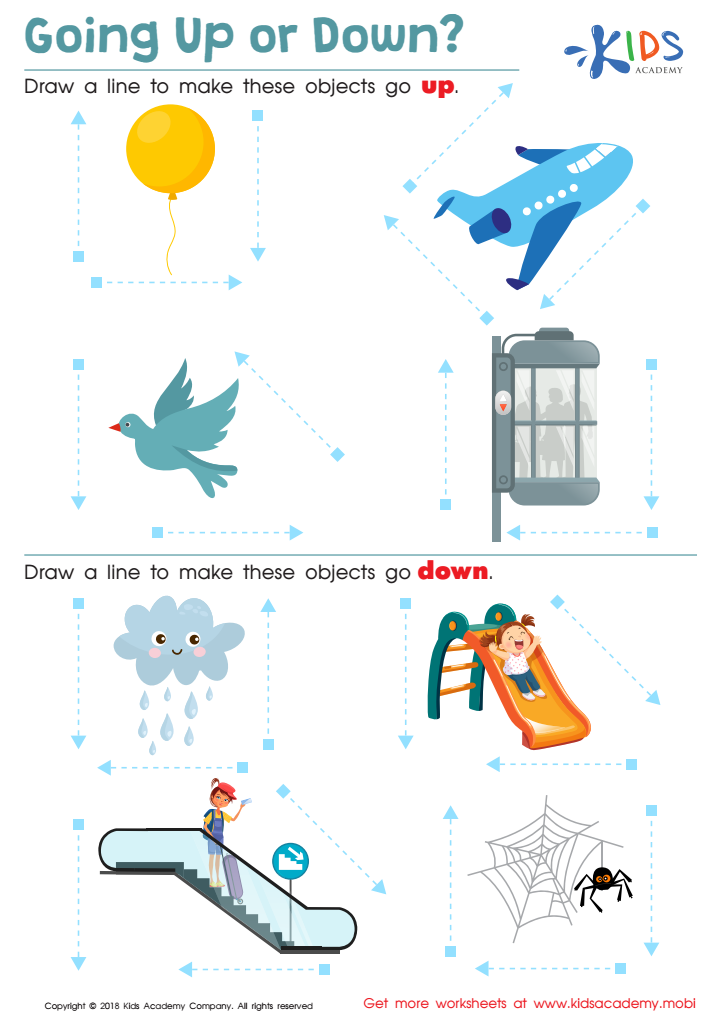
Going up or Down? Worksheet
 Assign to My Students
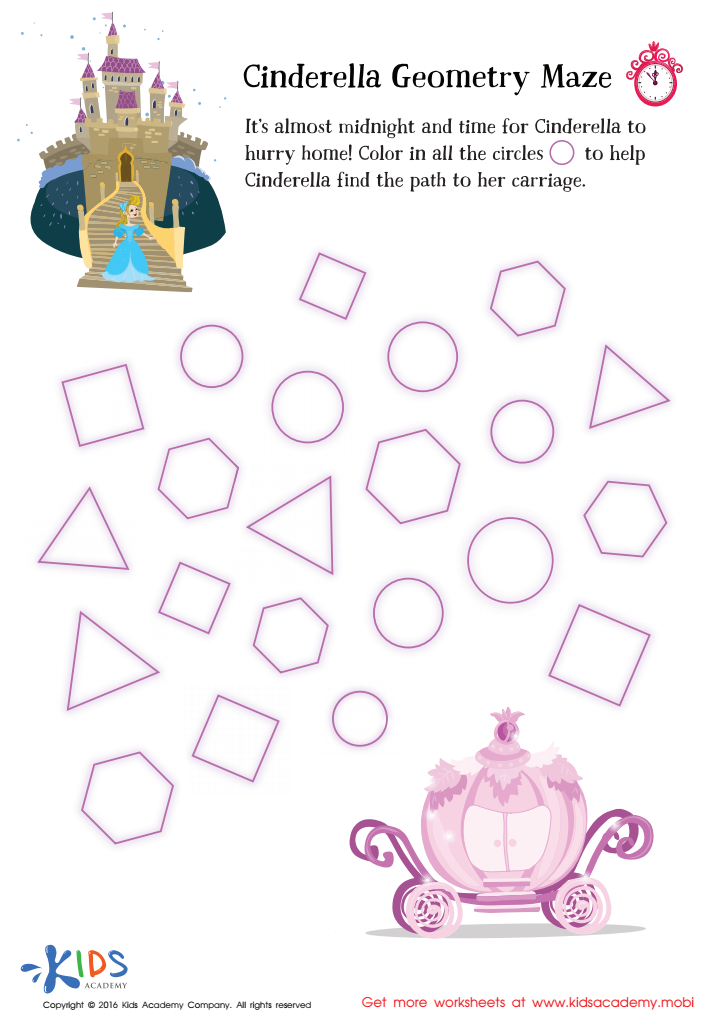
Cinderella Geometry Maze Worksheet
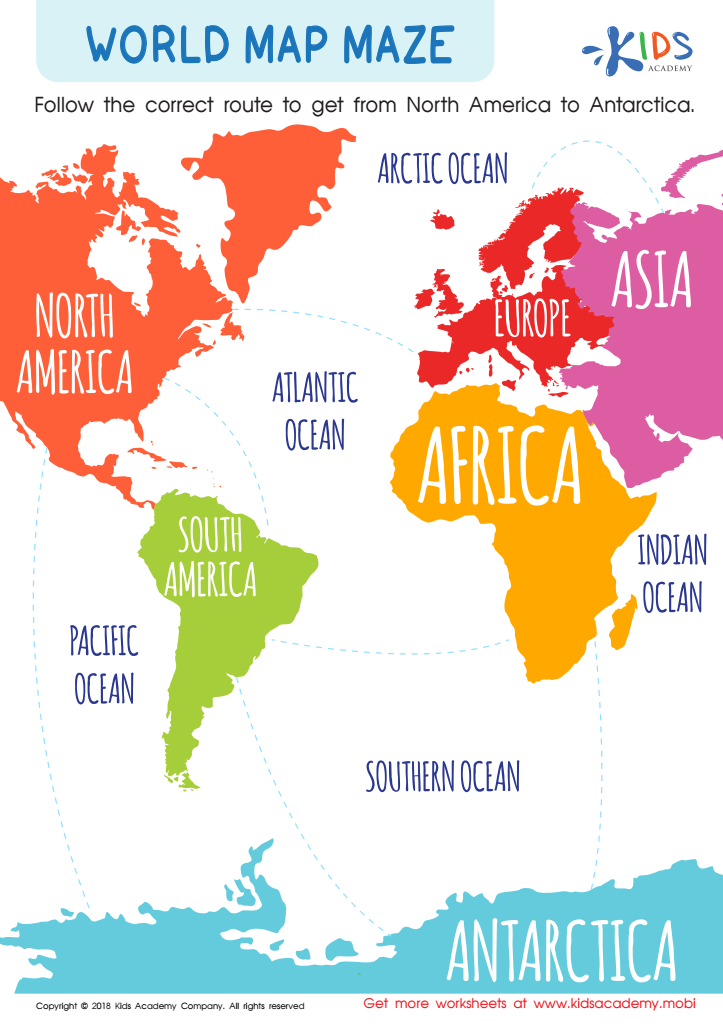
World Map Maze Worksheet
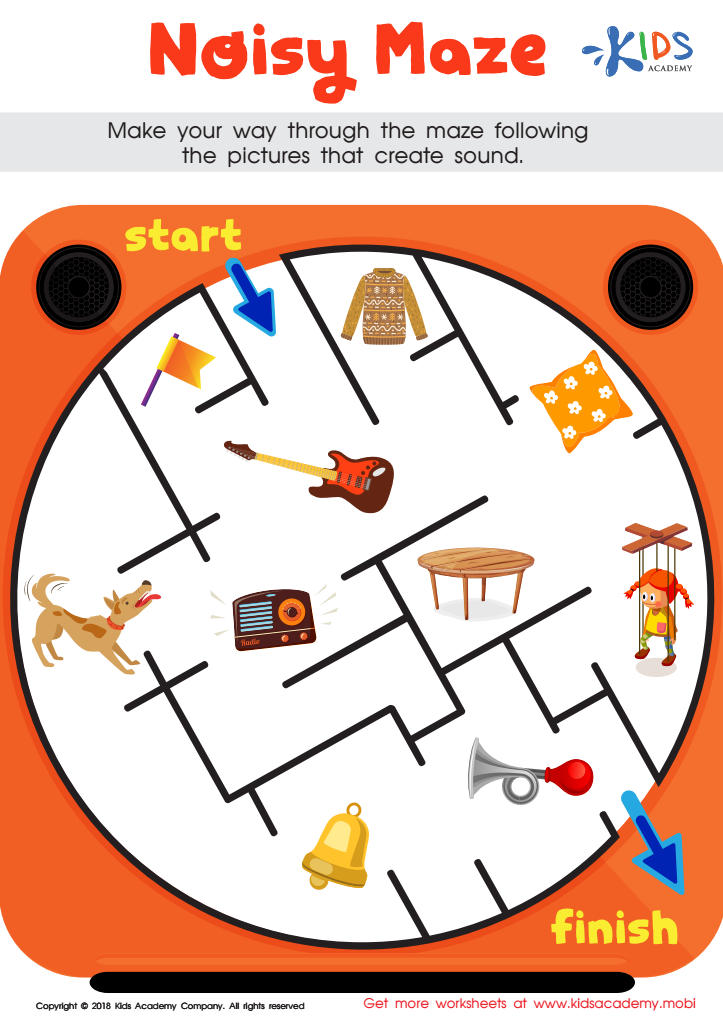
Noisy Maze Worksheet







Spatial orientation is a crucial developmental skill for children ages 5-8, and it's important for parents and teachers to pay attention to this aspect of growth. This skill involves understanding and operating within the spatial relationships between oneself and the environment, including understanding directions (left, right, up, down) and concepts of location, distance, and movement.
Caring about spatial orientation helps children in multiple capacities. Academically, it forms the foundation for geometry and other mathematical concepts, aiding in problem-solving and logical thinking. It also enhances their ability to follow directions, organize thoughts, and concentrate on tasks. Socially, children with strong spatial orientation can navigate through their environment more confidently, aiding in areas like participating in group activities, understanding games, and developing healthy motor skills.
Spatial orientation also boosts emotional development by providing children with a sense of security and independence as they learn to move effectively in their environment. It can reduce anxieties related to unfamiliar settings and provide children comfort in spaces outside their usual circle.
Therefore, integrating activities that promote spatial awareness, like puzzles, building blocks, and outdoor navigation tasks into a child's routine should be a priority for parents and teachers. In doing so, they are helping to build a robust foundation for a child's cognitive, emotional, and social growth.








