Time-telling skills Normal Worksheets for Ages 5-8
3 filtered results
-
From - To
Enhance your child's understanding of time with our engaging "Time-telling Skills Normal Worksheets" designed for ages 5-8. These worksheets provide a fun and interactive way for young learners to grasp the fundamentals of reading clocks and understanding both analog and digital time. Each worksheet is crafted to cater to varying skill levels, offering a mix of exercises that promote active learning and encourage independence. From identifying numbers on a clock to solving simple time-related problems, these resources aim to build confidence in your child’s time-telling abilities. Foster their love for learning while mastering an essential life skill today!
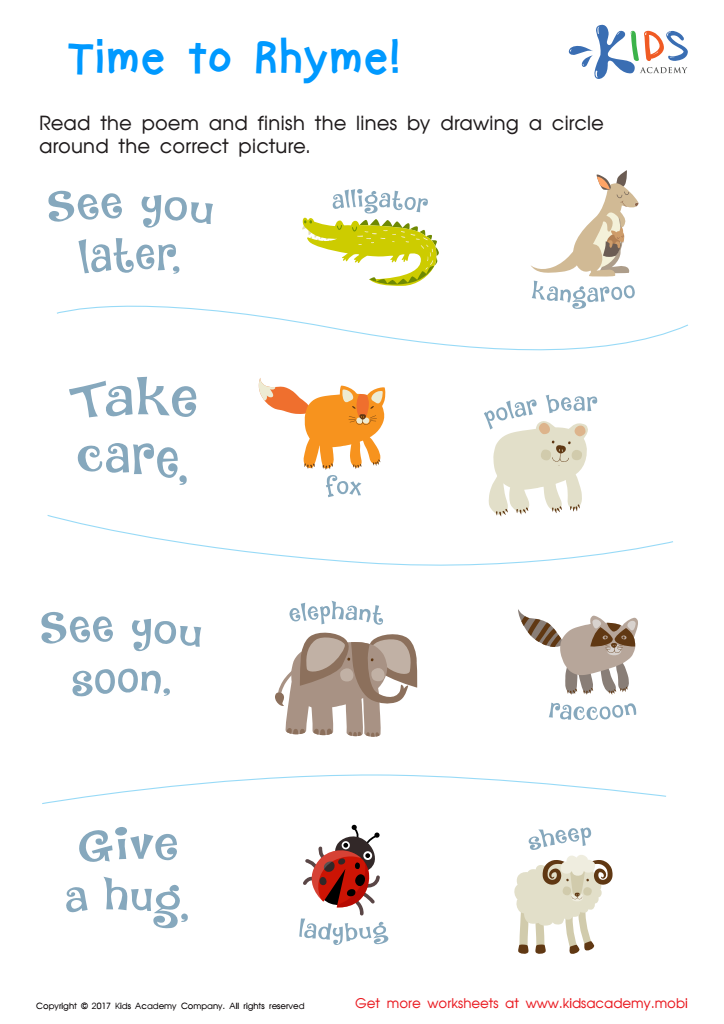
Time to Rhyme Rhyming Worksheet
 Assign to My Students
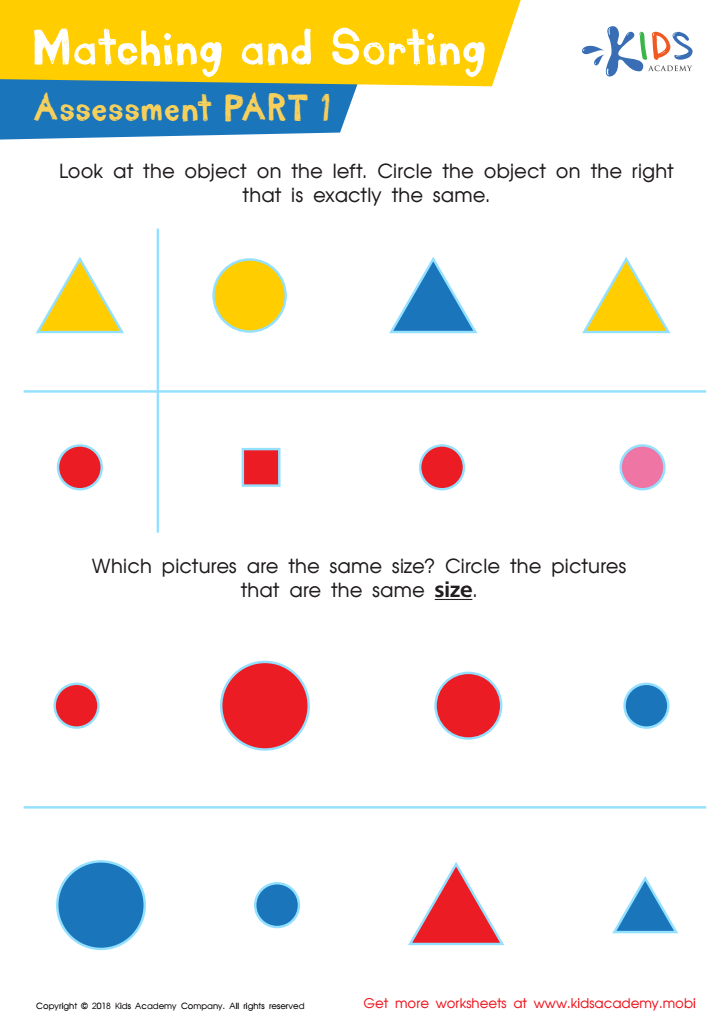
Matching and Sorting for Kindergarten: Assessment 1 Worksheet
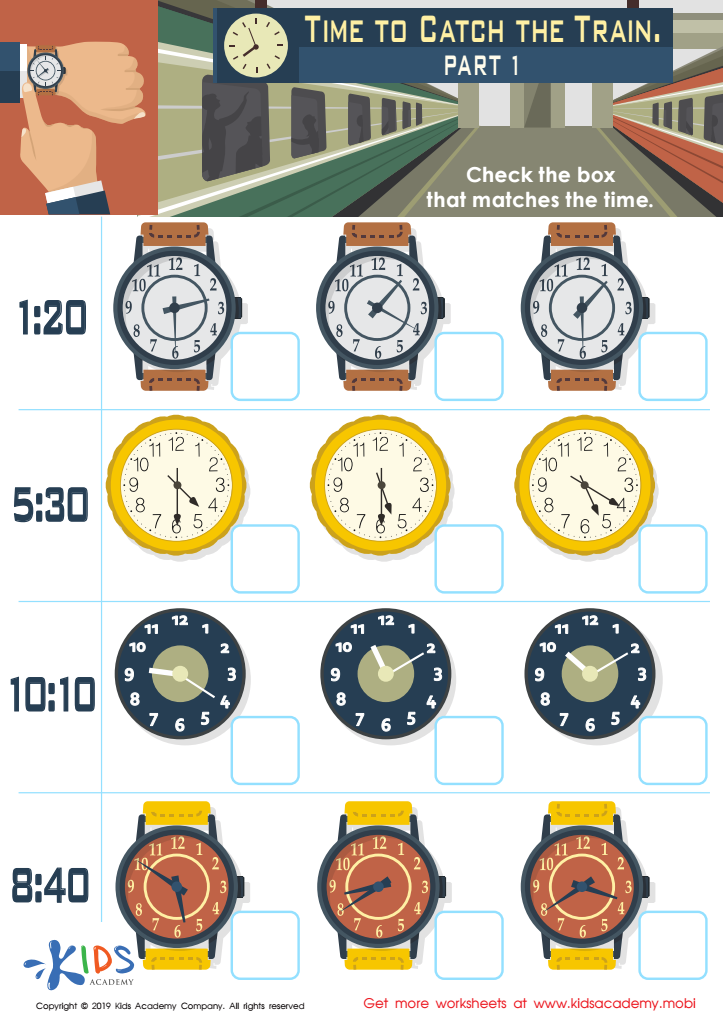
Time to Catch the Train Part 1 Worksheet







Time-telling skills are crucial for children aged 5 to 8, as they form the foundation for important life skills, independence, and academic success. First, understanding how to tell time helps children develop a sense of routine and responsibility. Knowing when to wake up, go to school, and complete homework fosters accountability and can reduce anxiety around transitions.
Moreover, time-telling skills enhance a child’s mathematical abilities. The concept of time involves numbers, addition, and problem-solving, engaging children in practical applications of mathematics. Learning to read both analog and digital clocks improves their cognitive development and reinforces pattern recognition.
For parents and teachers, promoting time-telling also nurtures effective communication. When children can indicate time verbally, it opens discussions about schedules and planning activities, encouraging social interaction and cooperation.
Additionally, mastering time-telling contributes to self-management. As children learn to monitor their time, they become better at prioritizing tasks, a skill crucial for academic and personal success. In an increasingly fast-paced world, equipping children with the ability to navigate time fosters confidence, autonomy, and essential life skills that will benefit them throughout their lives. Focusing on time-telling is therefore a vital aspect of early education and development.








