Understanding plant growth Normal Worksheets for Ages 5-8
3 filtered results
-
From - To
Unlock the wonders of nature for young minds with our "Understanding Plant Growth" Normal Worksheets, perfect for kids aged 5-8. These printable activities from Kids Academy help children explore how plants grow through hands-on learning and engaging exercises. Designed to support early learning skills, the worksheets cover key concepts such as seed germination, plant lifecycle, and what plants need to thrive. Foster a love for science and nature while boosting comprehension and observational abilities. Ideal for classroom or homeschool settings, our worksheets provide an interactive way to understand and appreciate the beauty of plant growth.
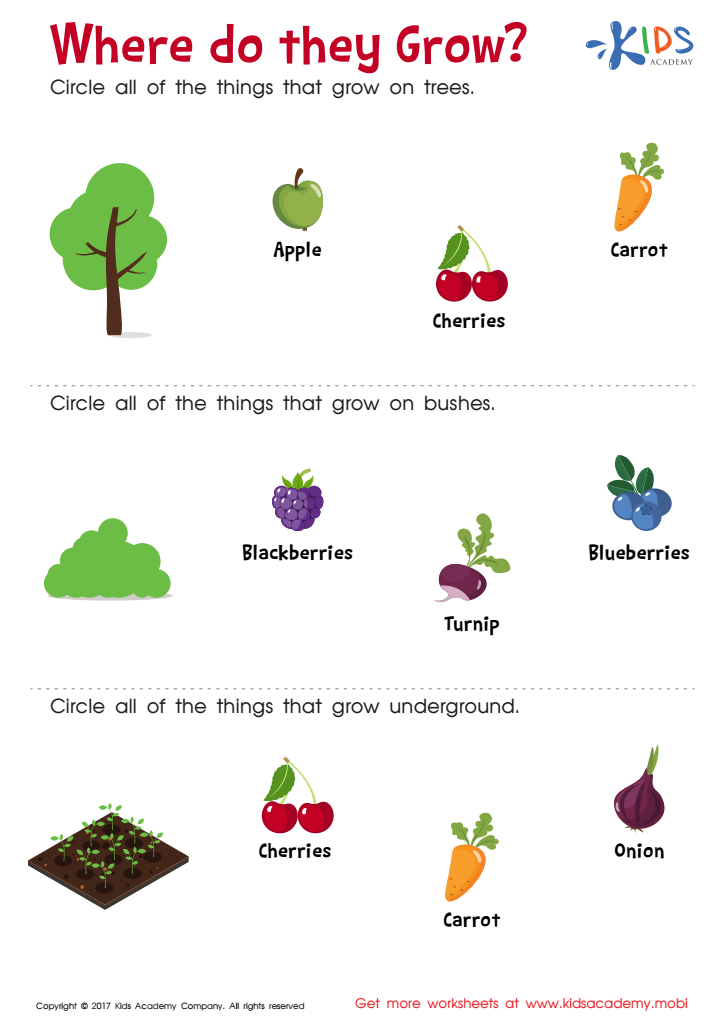
Where Do They Grow Worksheet
 Assign to My Students
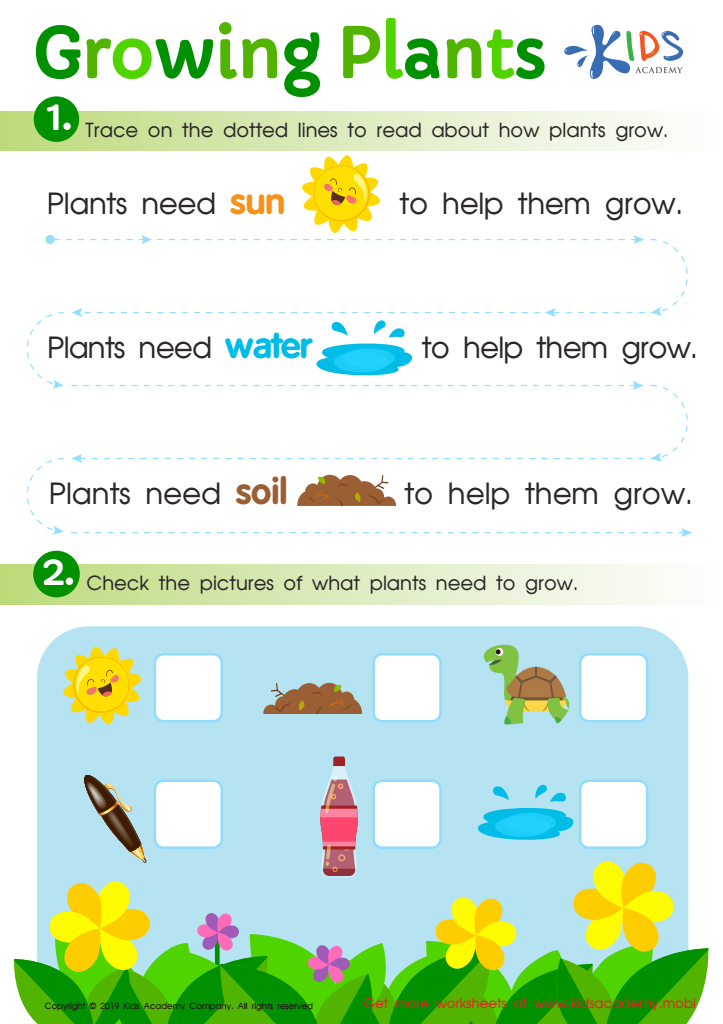
Growing Plants Worksheet
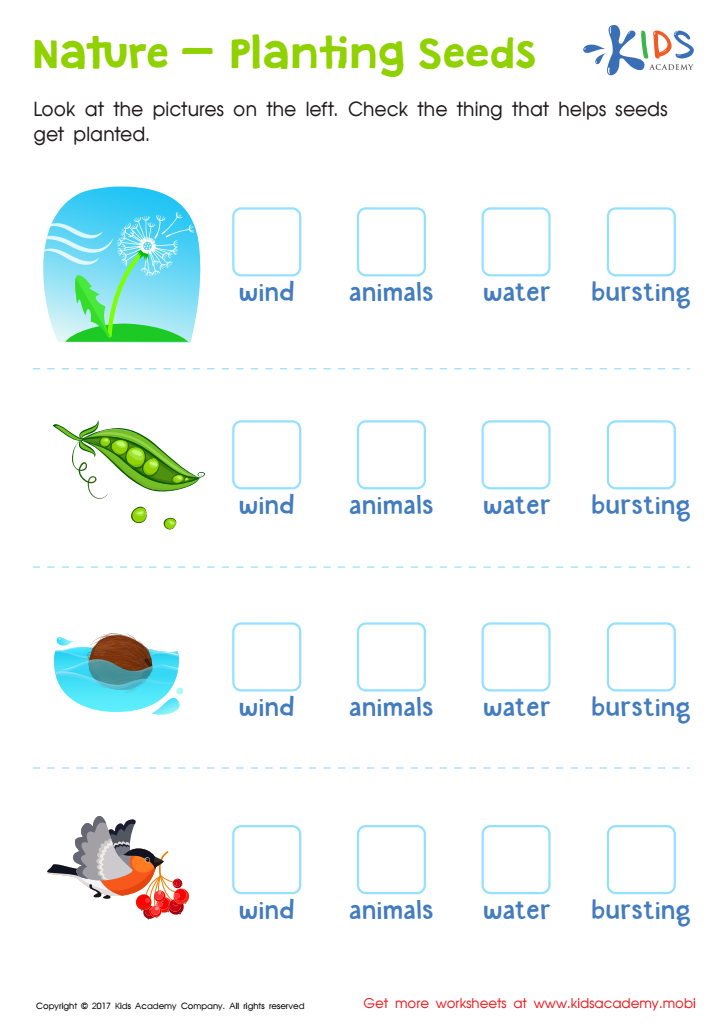
Nature Planting Seeds Worksheet



.jpg)


Understanding plant growth is beneficial for children ages 5-8 because it taps into their natural curiosity about the world around them, enriching their learning experiences. For parents and teachers, emphasizing this topic fosters critical thinking by connecting basic biology with everyday observations. Observing how plants grow from seeds into full-grown plants instills a sense of responsibility and patience as children care for their living "projects."
Teaching about plant growth aligns well with early science education standards by introducing fundamental concepts such as life cycles, the needs of living things, and the impact of environment on growth. Activities like planting seeds and tracking their development enhance fine motor skills and provide hands-on learning opportunities, making abstract concepts tangible.
Additionally, this subject offers cross-curricular links, incorporating math (by measuring growth) and art (by illustrating plant stages), ensuring a holistic educational approach. Understanding the importance of plants also introduces environmental consciousness at an early age, fostering a sense of stewardship for the planet.
Parents seeing this process at home can support and extend learning, creating a unified educational approach between home and school. Ultimately, knowing the basics of plant growth equips children with basic knowledge of biology while nurturing a lifelong appreciation for nature.








