Enhance your child's language skills with our "Understanding Suffixes" worksheets designed for ages 5-8. These engaging and educational worksheets help young learners grasp the concept of suffixes and how they transform base words. Through fun activities and clear examples, kids will develop a solid understanding of common suffixes like -ing, -ed, and -ly, laying the foundation for improved reading and writing skills. Perfect for both classroom and home use, these worksheets are crafted to make learning enjoyable and effective. Download today and watch your child's vocabulary and language abilities flourish!

Check out this FREE "Understanding suffixes" Trial Lesson for age 5-8!

Identify Common Suffixes

Favorites
With answer key
Interactive
  • 5-8
  • Understanding suffixes
  • Normal
Reading: Words With Suffixes Worksheet

Reading: Words With Suffixes Worksheet

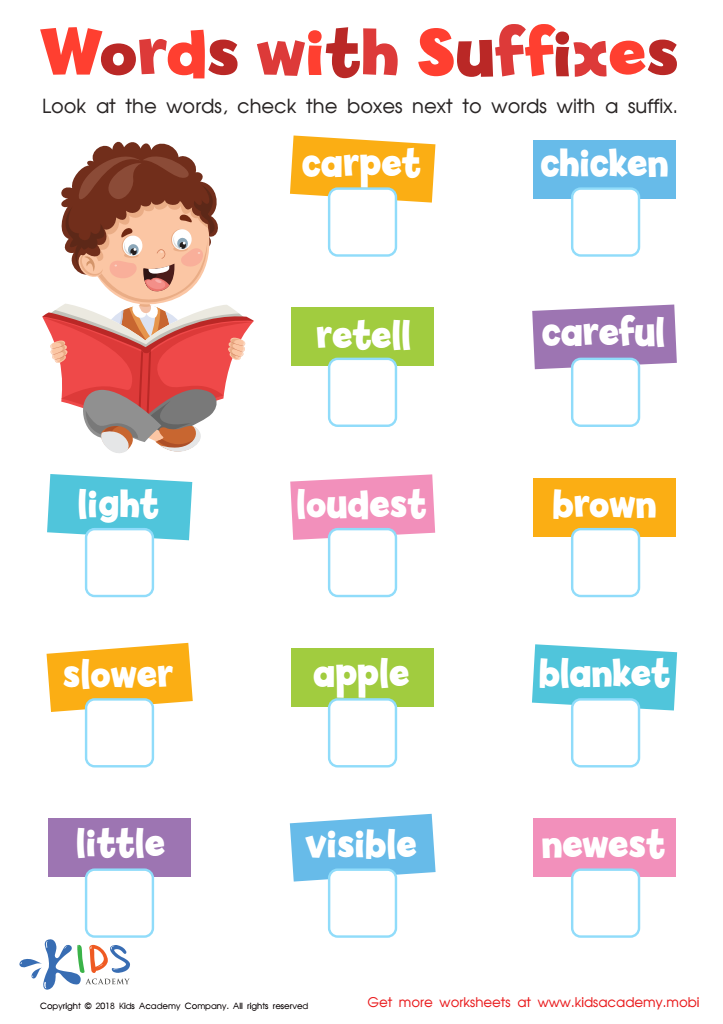
Help your students understand suffixes and build reading fluency with this worksheet. Have them read each word, then choose the ones with a suffix. Practicing this will lead to better comprehension and more confident reading. Save it for future use in language and reading classes.
Reading: Words With Suffixes Worksheet
Worksheet
Suffix Ness Worksheet PDF

Suffix Ness Worksheet

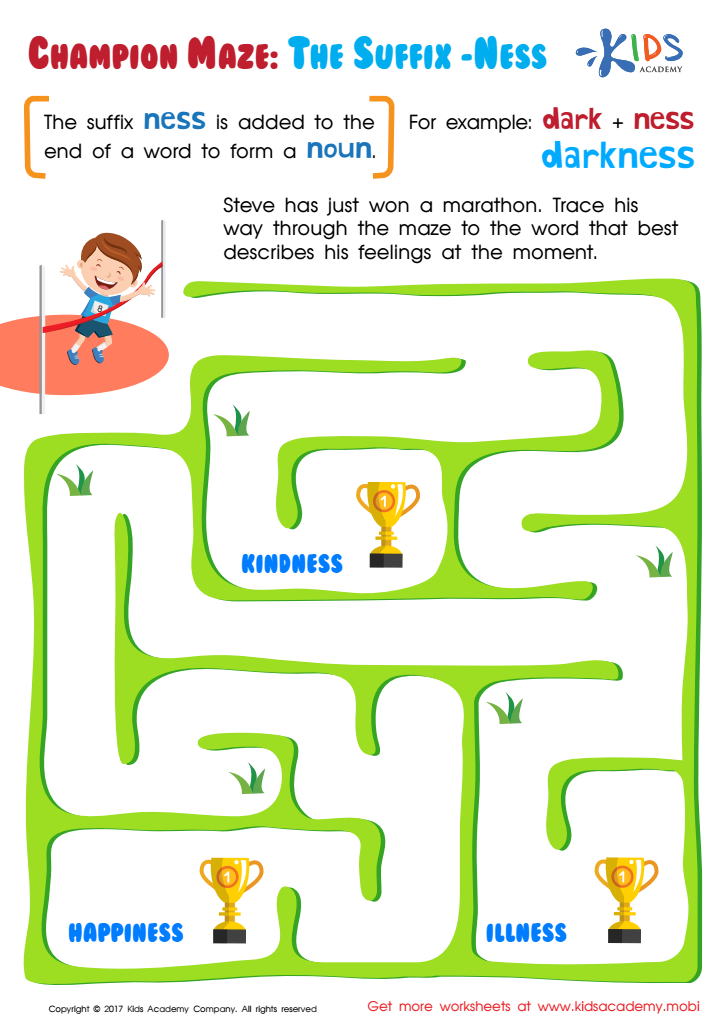
Words are amazing! Add an ending and they can change part of speech. Make nouns out of adjectives with -ness. This worksheet has a fun maze to help learners increase vocabulary and language skills.
Suffix Ness Worksheet
Worksheet
Prefix pre and suffix ful worksheet

Prefix pre– and Suffix ful– Worksheet
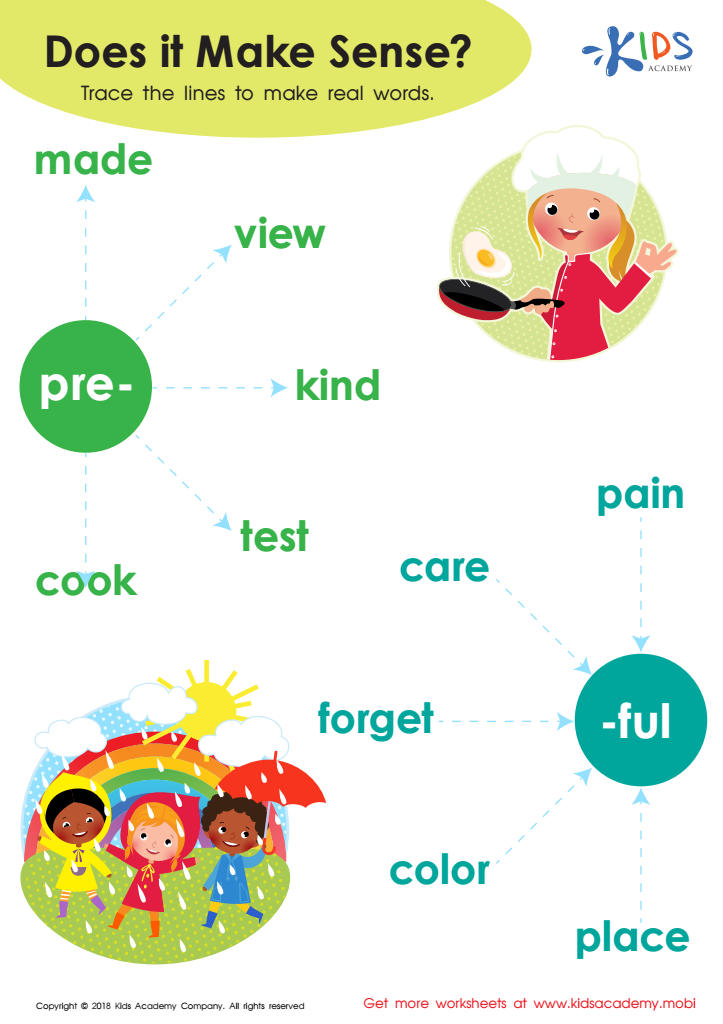
Can't preforget something! This worksheet helps kids learn how to attach prefixes and suffixes to root words, forming new words that make sense. With this activity, they'll evaluate how the root words change when adding the prefix or suffix.
Prefix pre– and Suffix ful– Worksheet
Worksheet
Suffix -Able Worksheet

Suffix -Able Worksheet

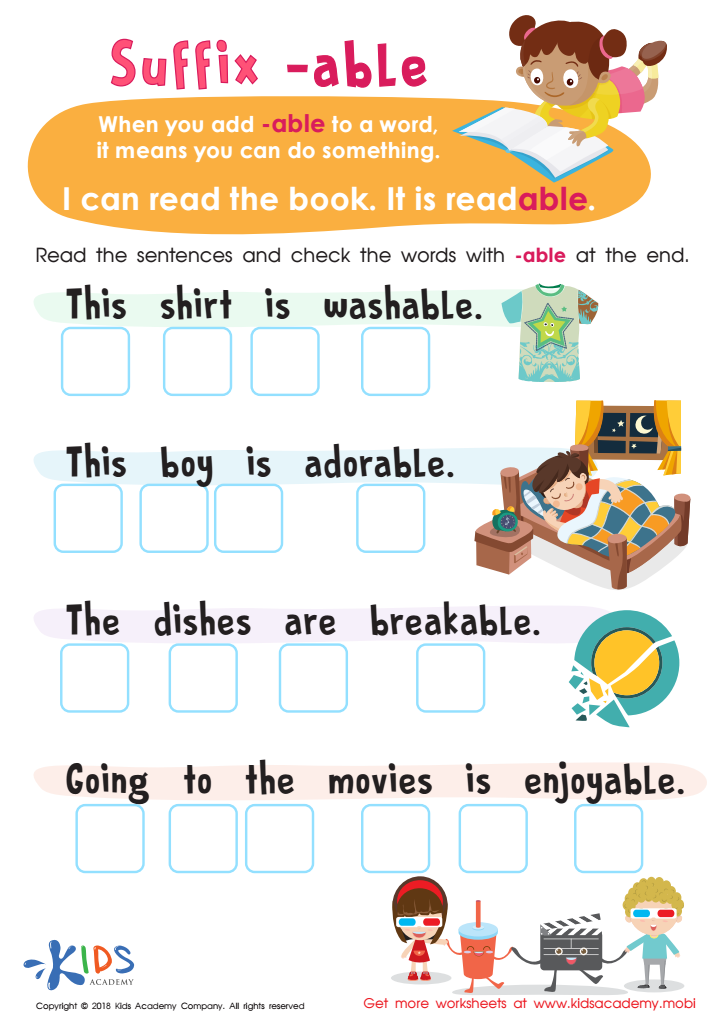
Suffix -able means you can do something. Example: readable - means you can read it. Give kids examples then check this worksheet. Read sentences with kids, looking for words with -able at the end.
Suffix -Able Worksheet
Worksheet
Prefix and suffix worksheet for grade 3

Prefix and Suffix Worksheet For Grade 3
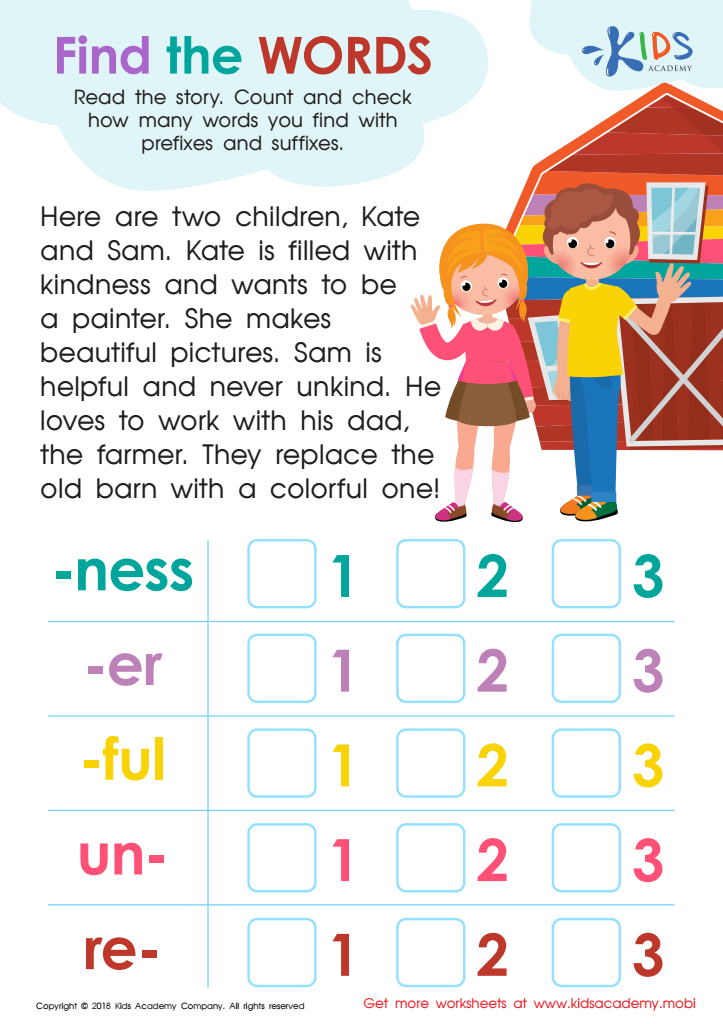
Read the story about Sam and Kate and help your grade 3 child tally all the words with prefixes and suffixes. Check their work by counting the words and ticking the appropriate boxes. This entertaining worksheet will help develop their reading and counting skills! (80 words)
Prefix and Suffix Worksheet For Grade 3
Worksheet
The Suffix -Ly Worksheet

The Suffix -Ly Worksheet

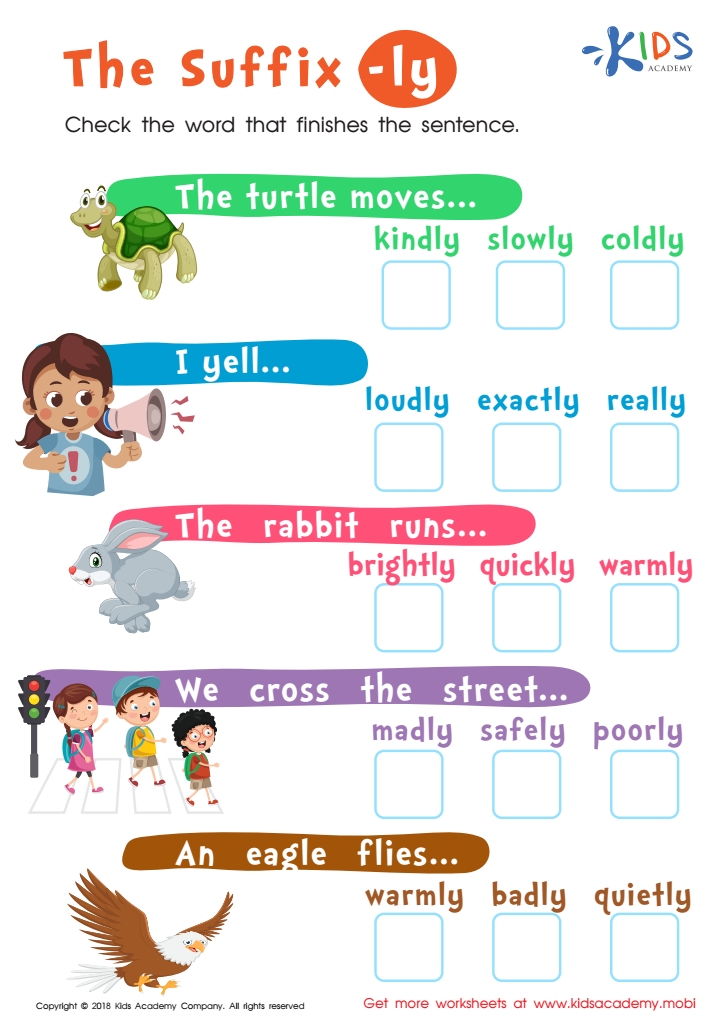
Suffixes change the meaning of words: the -ly suffix usually describes how an action is done (e.g. slowly, quickly, loudly). Help your child understand this and then check out the fun worksheet. Ask them to identify the animals and people in the pictures, then read the sentences out loud and have them check the ones that finish the sentence.
The Suffix -Ly Worksheet
Worksheet
Suffix er printable worksheet

Suffix –er Printable Worksheet
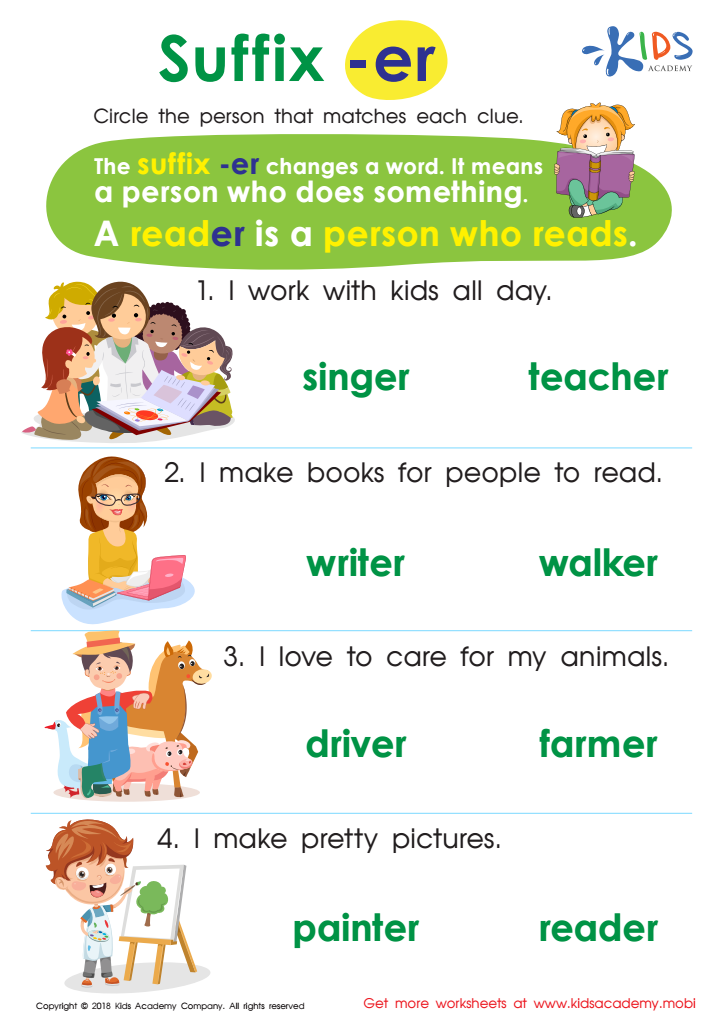
Kids learn how powerful suffixes are with this printable worksheet. Read the sentence clues and select the word it describes. Discuss how the suffix alters the original word. Amazing how two letters can transform meanings!
Suffix –er Printable Worksheet
Worksheet
Suffixes ful and less worksheet

Suffixes Ful and Less Worksheet

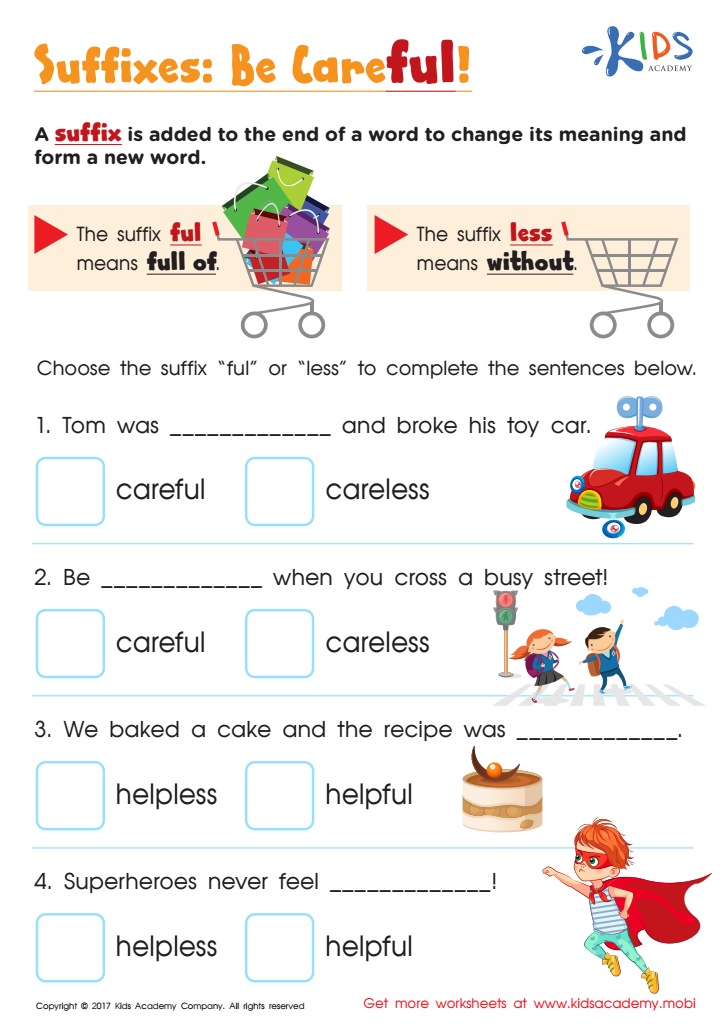
Uh oh! Careful and careless might look similar, but have very different meanings. To avoid mix-ups, learn to spot and use the right suffixes. Use this suffixes ful and less worksheet to help your child master common suffixes!
Suffixes Ful and Less Worksheet
Worksheet


Understanding suffixes is crucial for young learners, especially those aged 5-8, as it lays a foundation for language development, reading comprehension, and effective communication. At this age, children are typically building their vocabulary and beginning to read more complex texts. By grasping the concept of suffixes – word endings that modify meanings or grammatical functions – they can more easily decode unfamiliar words, thereby enhancing their reading skills.

For example, understanding that adding "-s" can make a noun plural or "-ed" can make a verb past tense, helps children predict meanings and grammatical structures in sentences. This knowledge not only facilitates reading but also improves spelling and writing skills. When children know that "happy" becomes "happily" with the addition of "-ly," they gain insights into how words can change based on context, thus promoting better sentence construction and clearer communication.

Moreover, being familiar with suffixes empowers children to explore language creatively, boosting their confidence and interest in learning. For teachers and parents, focusing on suffixes supports holistic language education by connecting reading with phonics, vocabulary, and grammar. Understanding suffixes not only contributes to academic success but also nurtures lifelong language proficiency.