Visual comprehension Normal Worksheets for Ages 5-8
3 filtered results
-
From - To
Boost your child’s learning with our Visual Comprehension Normal Worksheets for ages 5-8. Designed specifically for young learners, these engaging worksheets help develop crucial visual discrimination skills, enhancing pattern recognition, problem solving, and critical thinking. Each printable worksheet combines fun with educational content to keep children motivated and interested. Whether identifying differences in pictures, sequencing events, or matching objects, our resources cater to varied levels and learning styles. Perfect for both home and classroom use, these worksheets support essential early learning skills and set a strong foundation for future academic success. Explore our collection today!
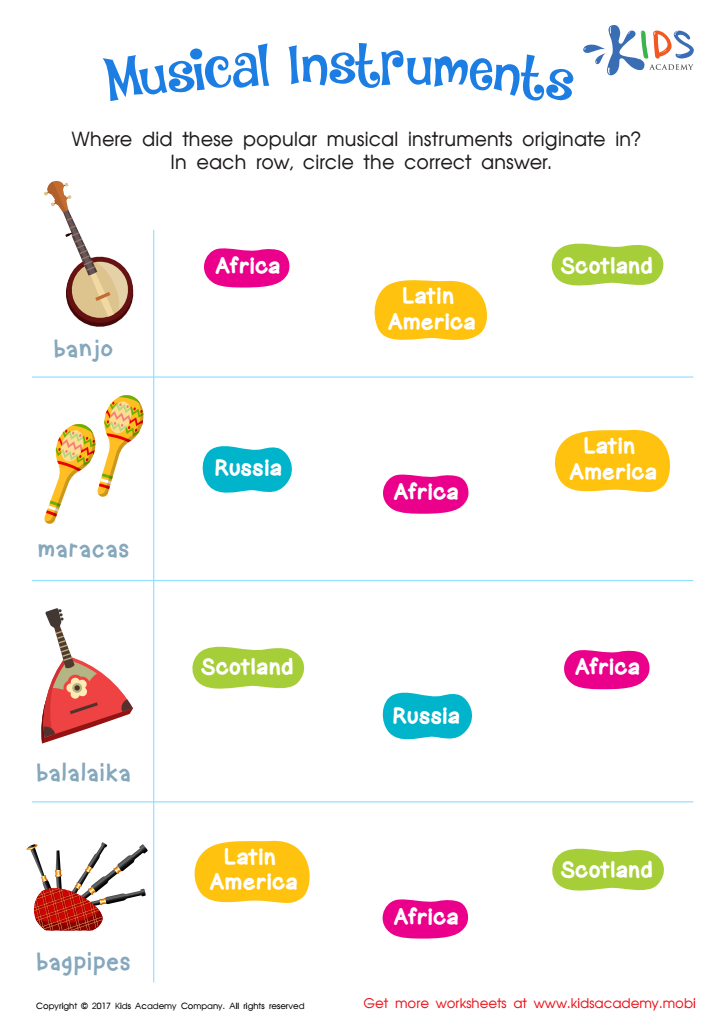
Musical Instruments Printable
 Assign to My Students
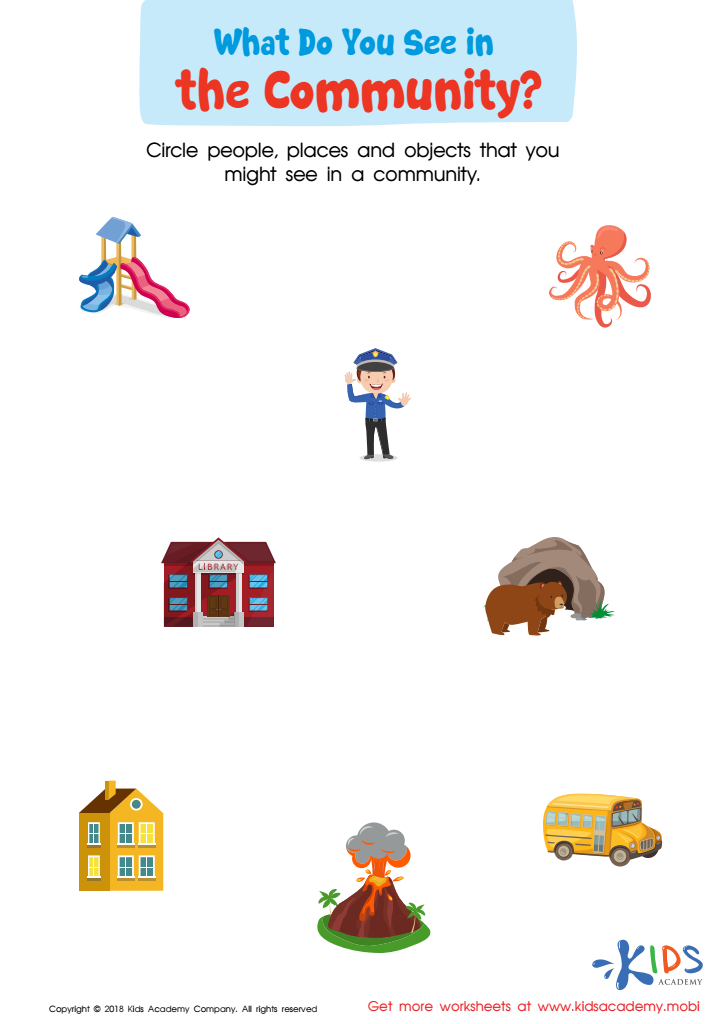
What Do You See in the Community Worksheet
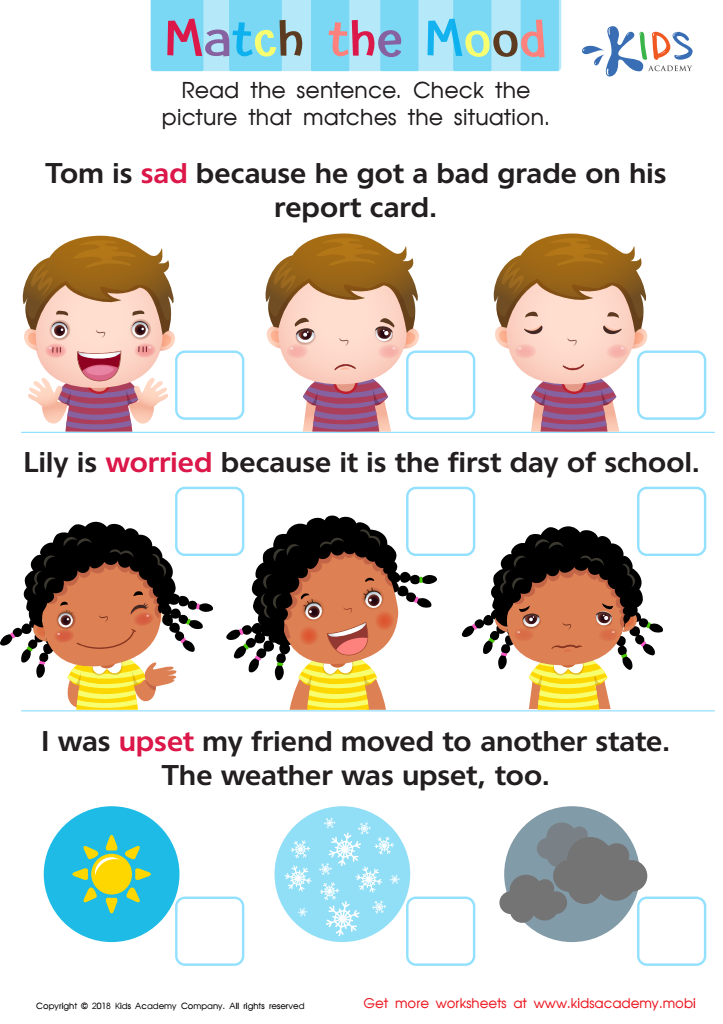
Match The Mood Worksheet





Parents and teachers should care about visual comprehension for children ages 5-8 because it is a foundational skill critical to a child's overall cognitive and academic development. This age group is at a stage where they are learning to read, follow instructions, and make sense of the world around them. Visual comprehension involves the ability to look at something and understand its meaning, context, and relationship to other things.
Firstly, effective visual comprehension enhances reading skills. Young children often follow picture books before they can read text, and their ability to interpret these images helps them understand the story, sequence events, and develop vocabulary. For example, recognizing that a picture of an apple and the word "apple" correspond leads to early literacy.
Secondly, good visual comprehension aids learning in other subjects, such as mathematics and science, where problems often require interpreting graphs, charts, and other visual data. This skill also supports their ability to follow multi-step instructions by understanding diagrams or process flows.
Lastly, strong visual comprehension is pivotal for emotional and social development. It helps children read facial expressions, understand body language, and recognize social cues, which are important for building healthy relationships and effective communication.
Therefore, prioritizing visual comprehension during these formative years lays the groundwork for a child's future academic success and social well-being.








