Visual interpretation Normal Worksheets for Ages 5-8
5 filtered results
-
From - To
Enhance your child's visual interpretation skills with our engaging 'Normal' worksheets for ages 5-8. Specifically designed to challenge young minds, these worksheets help develop critical thinking and visual processing abilities. Through vibrant illustrations and interactive exercises, your child will learn to interpret, analyze, and comprehend visual information effectively. Ideal for early learners, these activities support cognitive growth and improve academic performance. Available on Kids Academy, our carefully curated worksheets ensure a fun and educational experience, promoting your child’s confidence and success in visual literacy. Unlock their potential today with our expertly crafted resources!
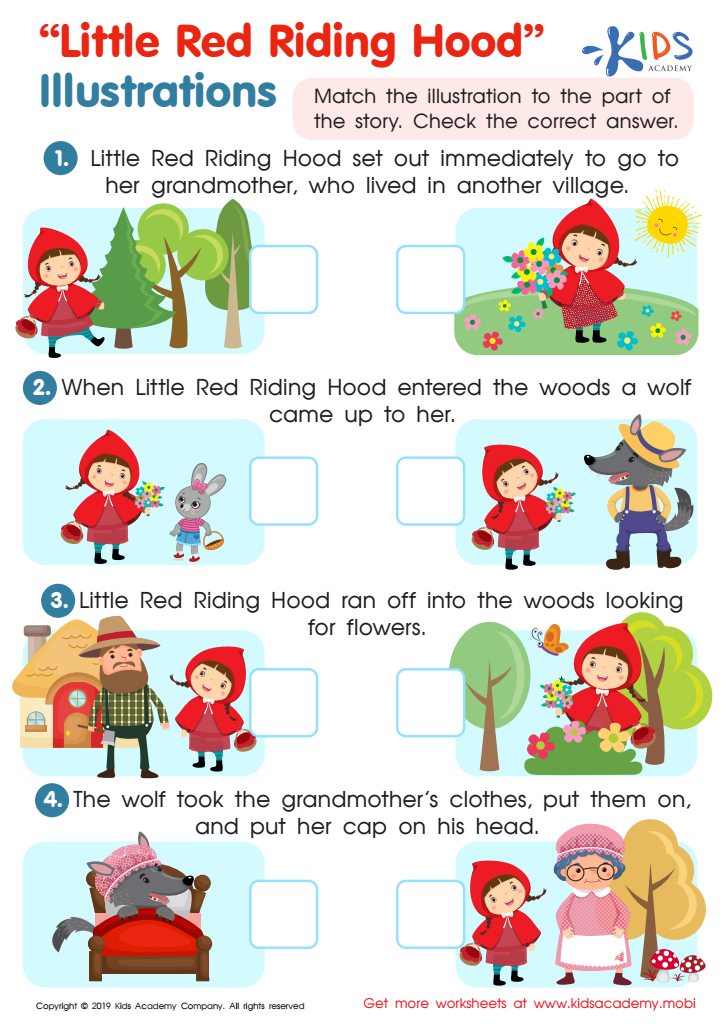
Little Red Riding Hood: Illustrations Worksheet
 Assign to My Students
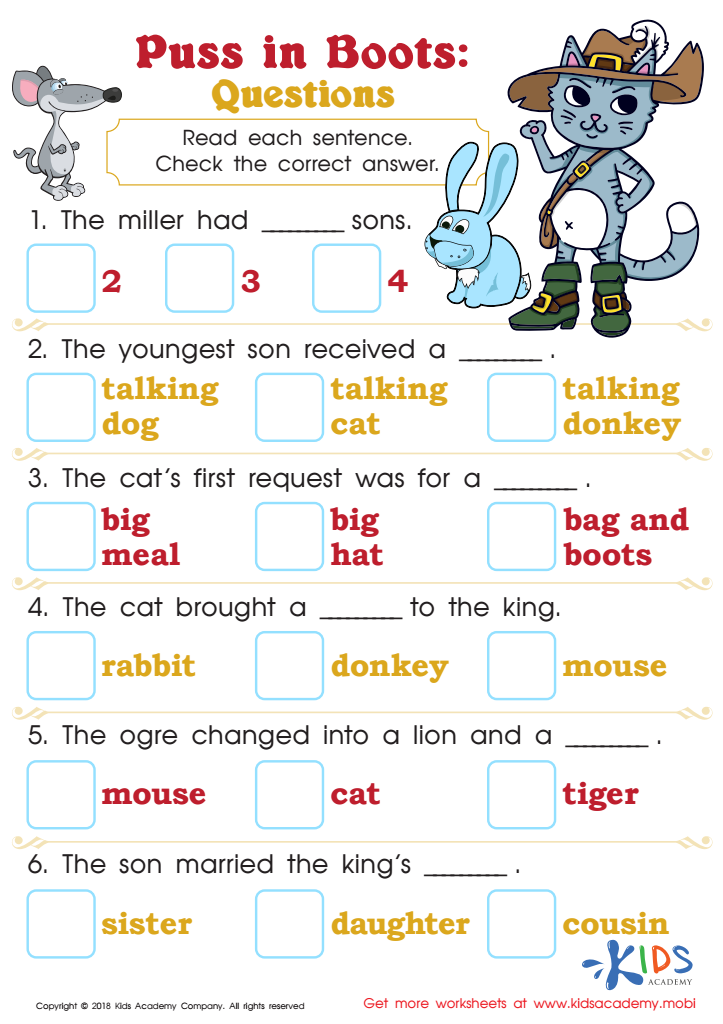
Puss in Boots: Questions Worksheet
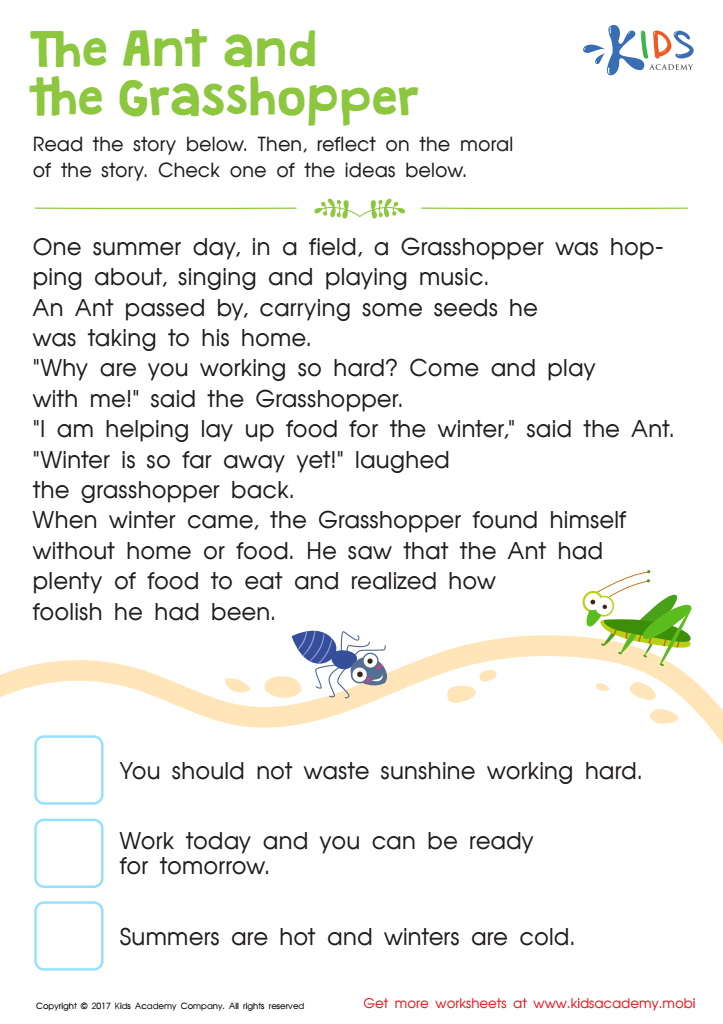
The Ant and The Grasshopper Printable
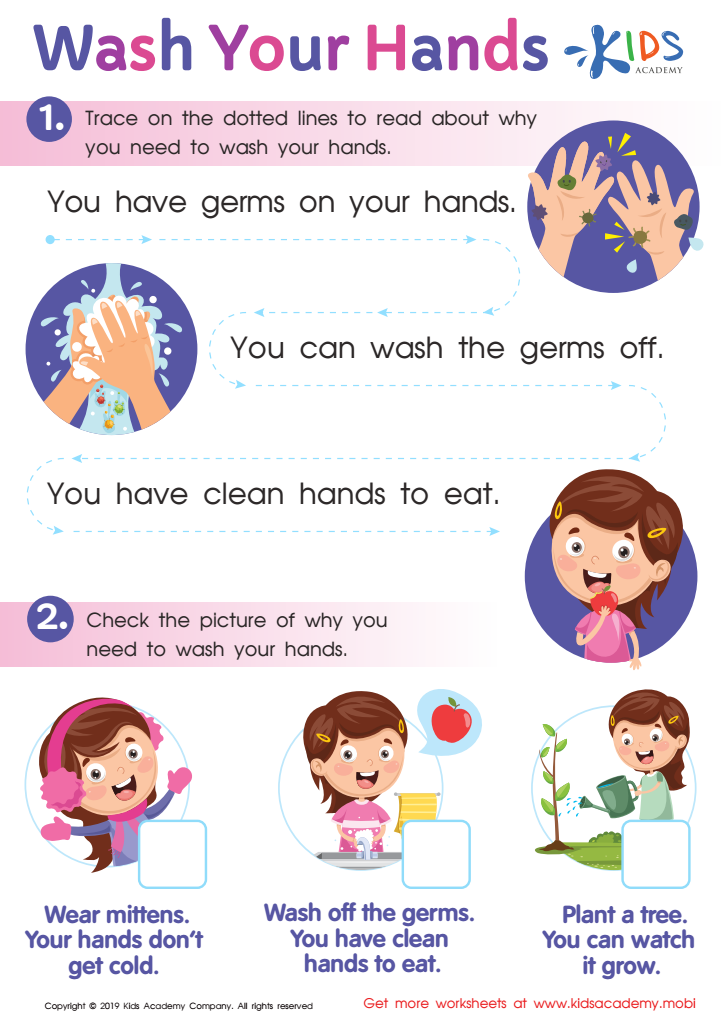
Wash Your Hands Worksheet
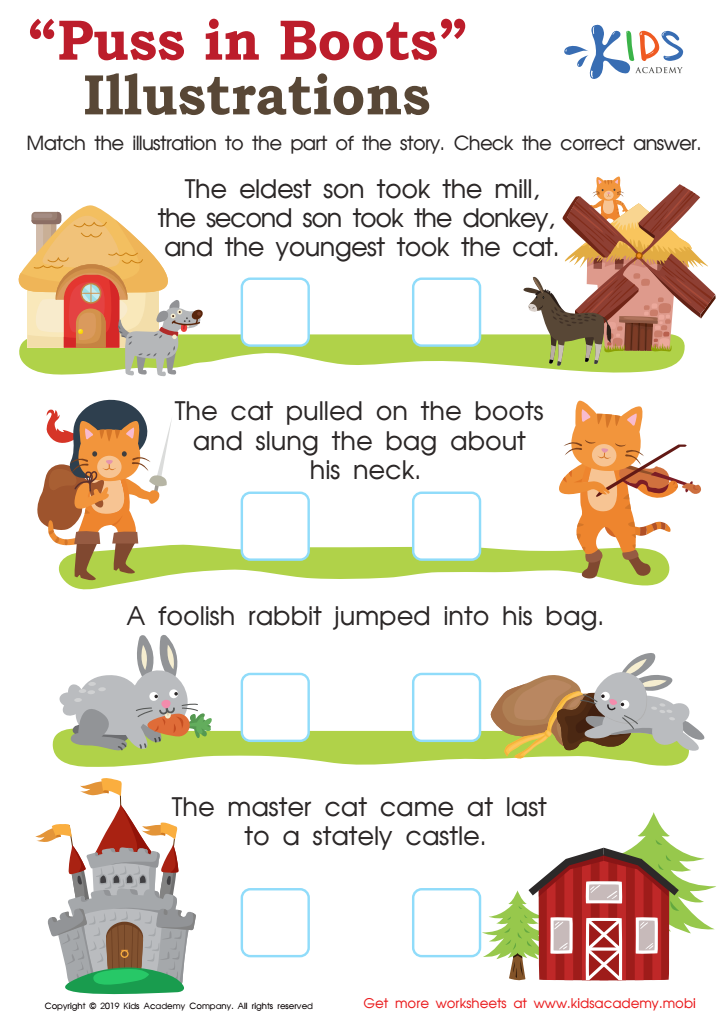
Puss in Boots Illustrations Worksheet



.jpg)




Visual interpretation for children ages 5-8 is crucial because it builds foundational skills necessary for their cognitive, emotional, and social development. At this age, kids are highly visual learners; they absorb and process information from their surroundings primarily through observation. When parents and teachers focus on visual interpretation skills, they help children understand and decode visual information, enabling comprehension of complex concepts and fostering critical thinking.
Visual interpretation involves recognizing patterns, shapes, colors, and spatial relationships. These skills are fundamental not only in everyday life but also in subjects like mathematics, reading, and arts. For instance, interpreting pictures in storybooks enhances literacy by linking images to words, making the reading process engaging and understandable. In math, understanding visual cues aids in grasping concepts like geometry and spatial awareness.
Moreover, visual interpretation aids emotional development. Children learn to read non-verbal cues such as facial expressions and body language, enhancing their ability to communicate and empathize with others, thus bolstering their social skills.
By encouraging visual interpretation, parents and teachers can cater to different learning styles, making education more inclusive and impactful. This foundation sets the stage for lifelong learning and adapts well to various educational environments, ensuring that children develop a robust toolkit for future academic and personal success.








