Vocabulary Building Normal Worksheets for Ages 5-8 - Page 3
51 filtered results
-
From - To
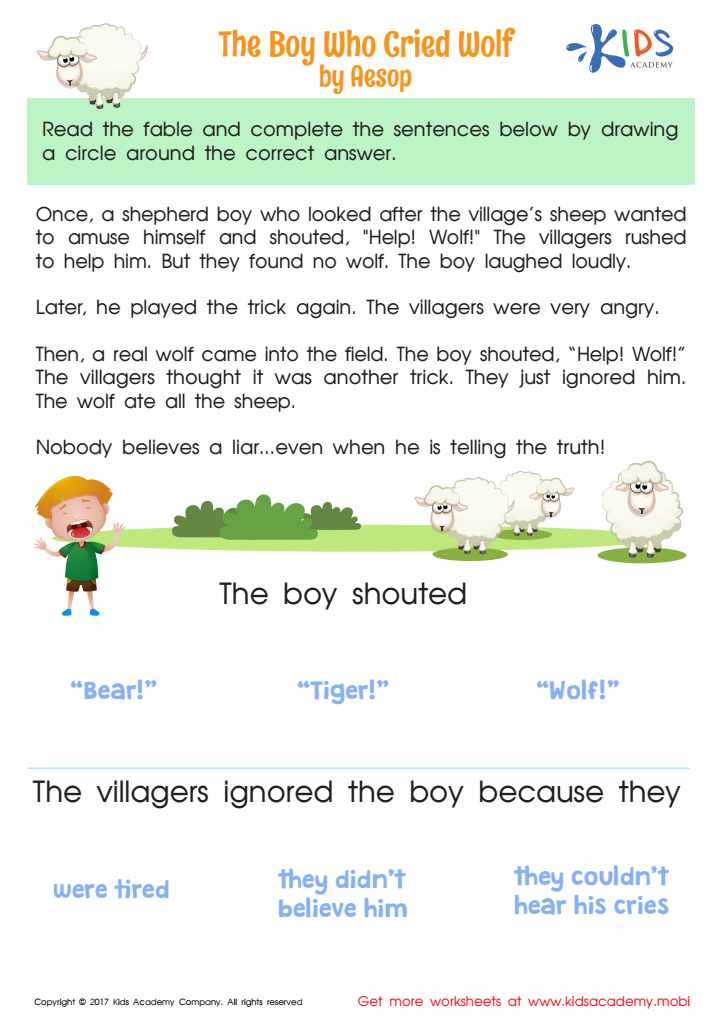
The Boy Who Cried Wolf Worksheet
 Assign to My Students
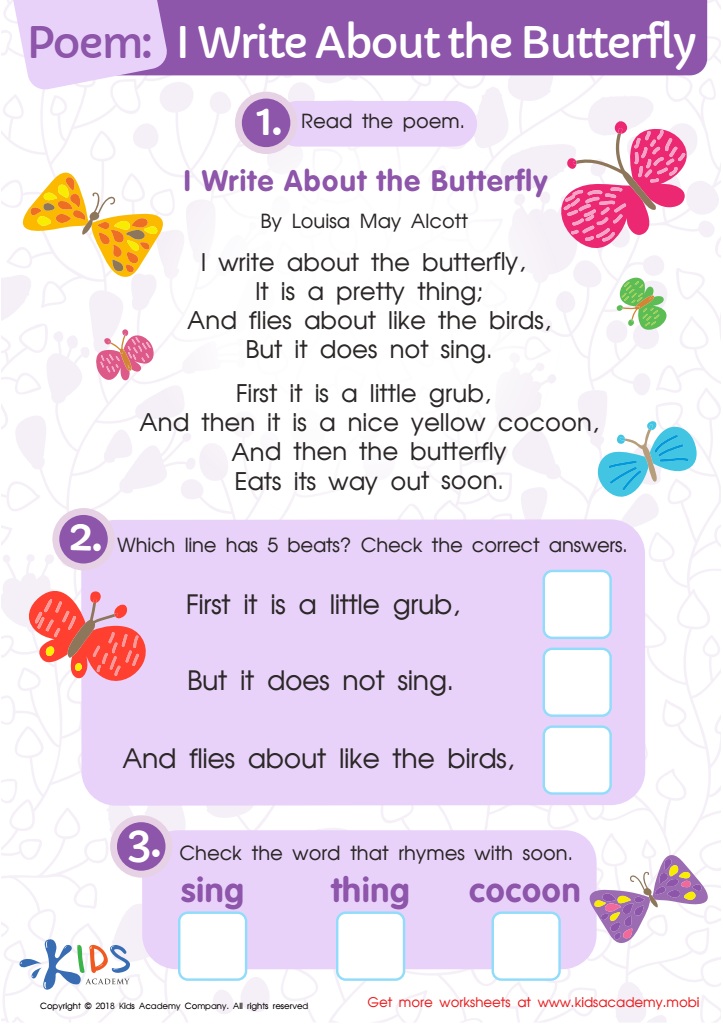
Poem: I Write About The Butterfly Worksheet
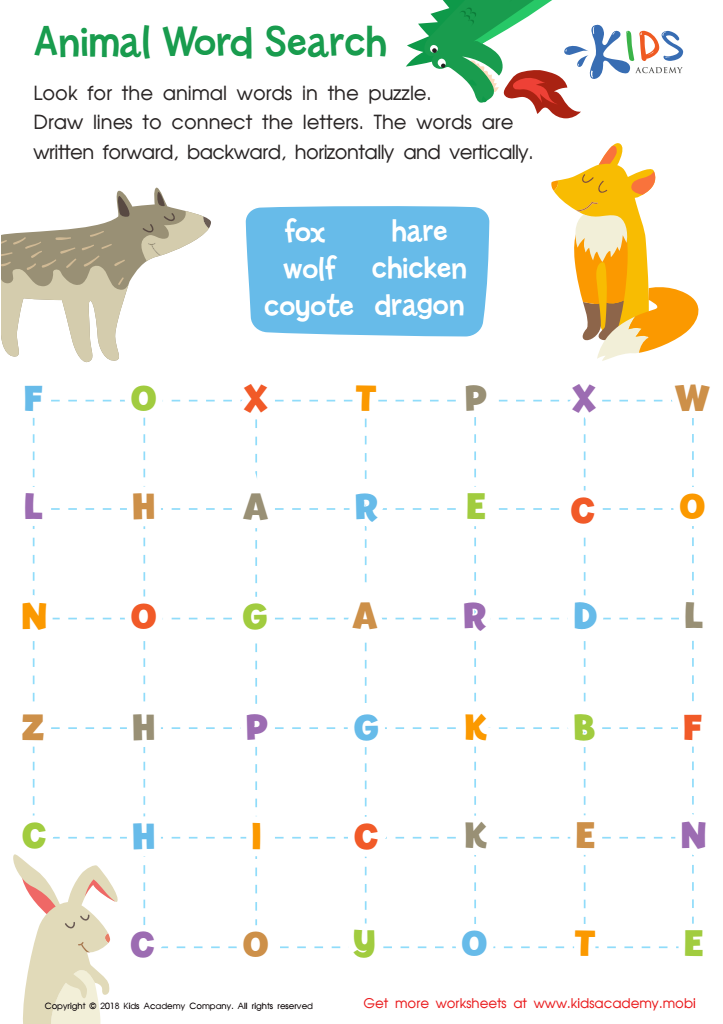
Animal Word Search Worksheet







Vocabulary building is crucial for children aged 5-8 because it serves as the foundation for their reading, writing, and overall communication skills, which are essential for academic success and social interaction. During these formative years, children's brains are highly receptive to learning new words and concepts, making it an ideal time to expand their vocabulary.
A robust vocabulary helps children understand and process what they read more effectively. This understanding is vital as reading proficiency is directly linked to success in other subjects, including math and science. For instance, word problems in math require comprehension, which is supported by a strong vocabulary. Additionally, children with a rich vocabulary can express their thoughts and feelings more clearly, facilitating better interactions with peers and adults.
For parents and teachers, actively engaging in vocabulary-building activities means providing children with tools for better critical thinking and problem-solving skills. Simple activities like reading aloud, playing word games, and encouraging storytelling can significantly enhance a child's word bank. Investing time in vocabulary development also helps address future academic challenges, reducing the risk of language-related learning difficulties.
Prioritizing vocabulary building in early childhood thus equips children with the essential cognitive and social tools they need to thrive both inside and outside the classroom.








