
Weather identification Normal Worksheets for Ages 5-8
4 filtered results
Difficulty Level
Grade
Age
-
From - To
Subject
Activity
Standards
Discover the perfect tool to help children ages 5-8 understand and identify different weather conditions with our "Weather Identification Normal Worksheets." These engaging printables enhance early learners' skills through fun, interactive activities. Students will explore various types of weather, such as sunny, rainy, cloudy, and snowy, while developing essential observation and recognition abilities. Each worksheet is designed to align with the core learning goals for this age group, ensuring an educational and enjoyable experience. Whether for classroom use or homeschooling, these worksheets foster a deeper appreciation for the natural world and prepare young minds for more advanced concepts.
Favorites
With answer key
Interactive
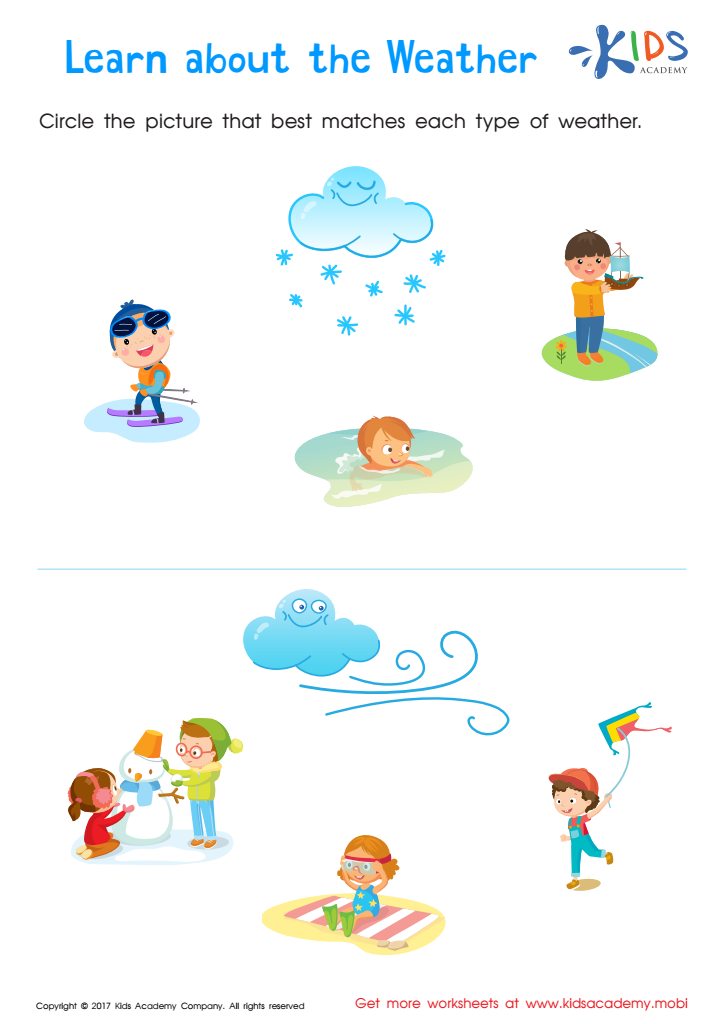
About the Weather Printable
This worksheet is perfect for reinforcing knowledge about changing weather and activities that suit each season. Help your child use their life experiences to observe the weather and complete the worksheet. Fun and colorful, it's a great way to learn about weather and seasons. Let's get started!
 Assign to My Students
About the Weather Printable
Worksheet
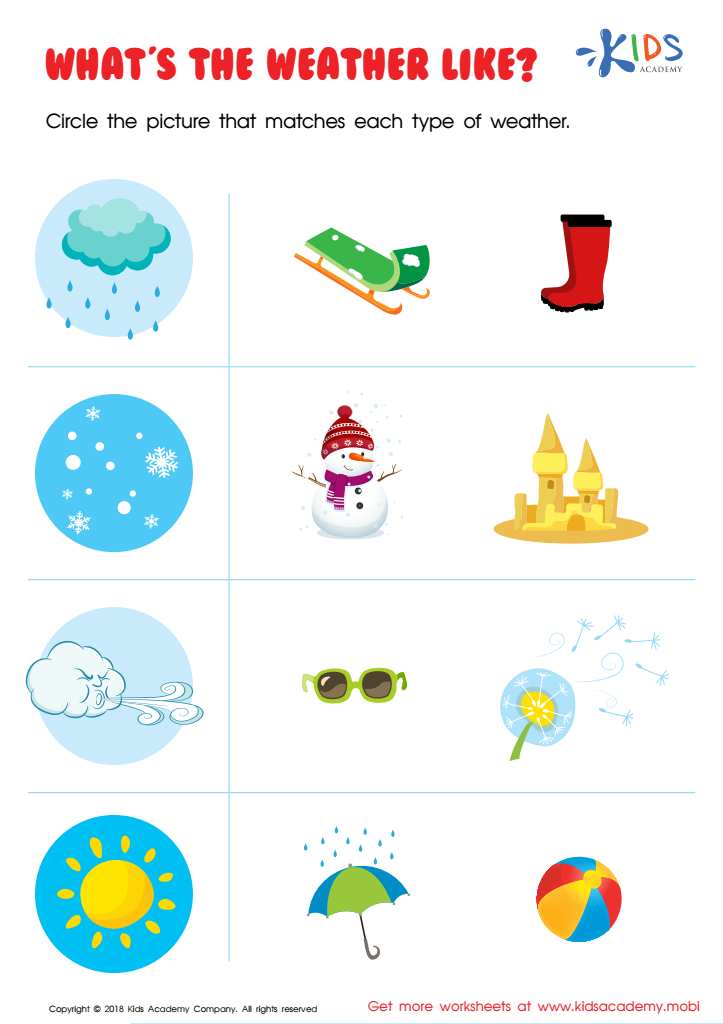
What's the Weather Like? Worksheet
Help budding meteorologists practice matching weather to seasons with this PDF worksheet. Picture clues help identify seasons and fine motor skills are practiced circling the correct weather patterns. Bright and engaging characters make learning fun and reinforce weather knowledge.
What's the Weather Like? Worksheet
Worksheet
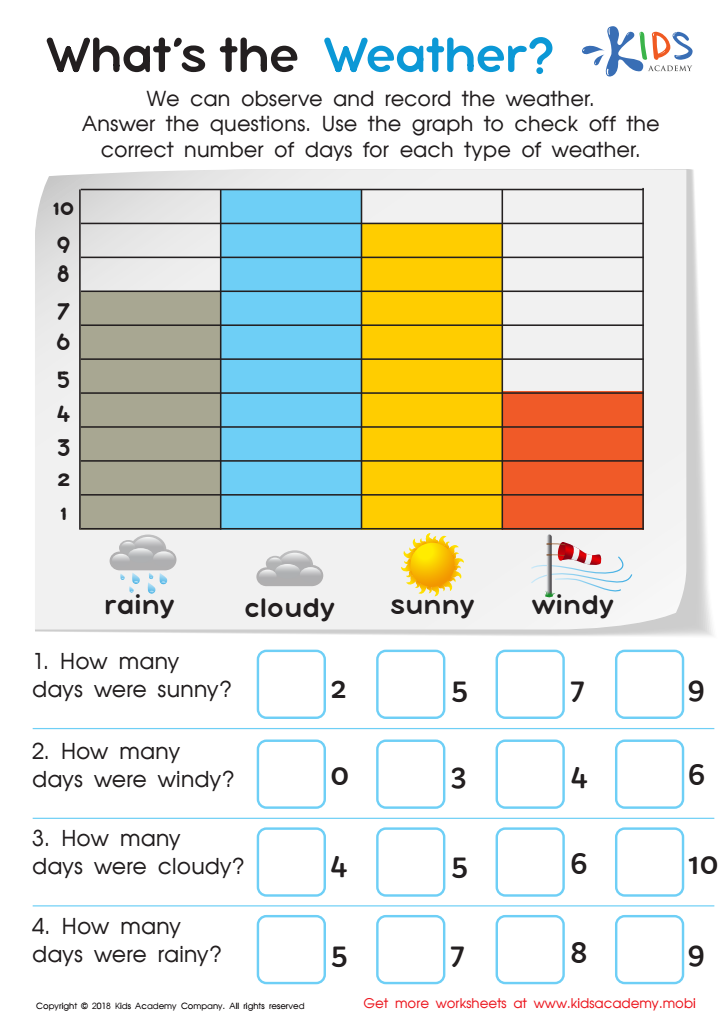
What's the Weather? Worksheet
Check the weather outside. Help kids learn and practice science and math by tracking different types of days using this printable worksheet. Have them count bars next to weather types like cloudy, sunny, windy, and rainy. Answer the questions and take the lesson further by creating a bar graph to show the monthly weather.
What's the Weather? Worksheet
Worksheet
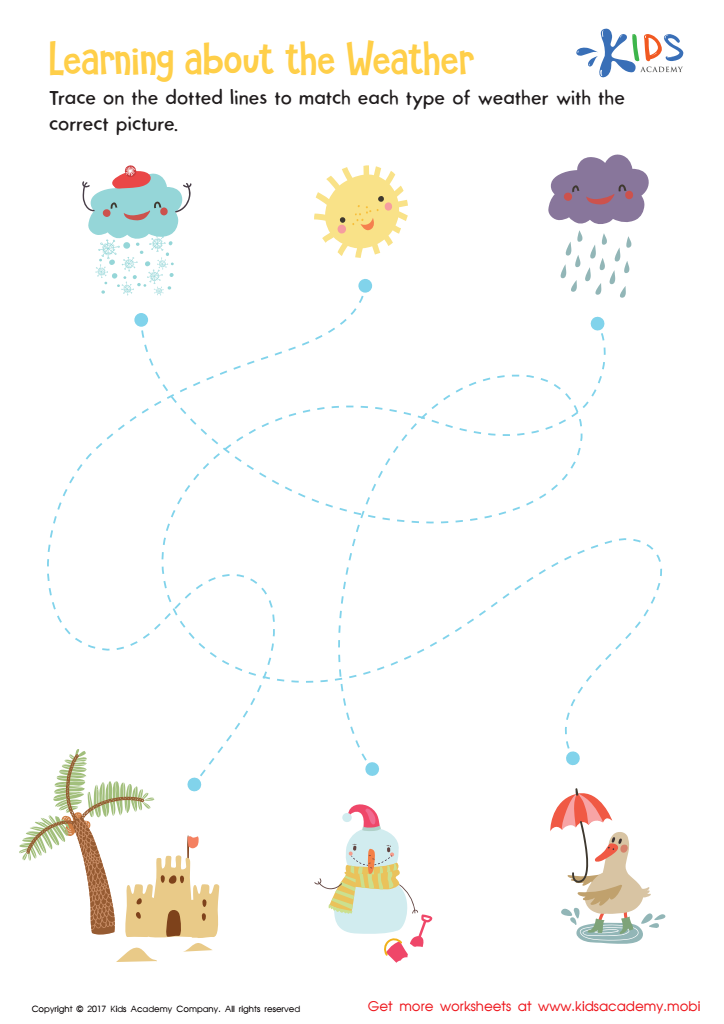
Join Kids Academy for Free
Who is primarily going to use this learning content?








Understanding weather identification is crucial for young children ages 5-8 because it lays the foundation for their environmental awareness and safety. Parents and teachers play a key role in teaching this skill, helping children recognize different weather conditions such as sunny, cloudy, rainy, snowy, and stormy. By doing so, kids can better prepare for daily activities based on the weather, such as dressing appropriately or choosing safer outdoor activities.
Weather identification promotes critical thinking and observational skills. Children learn to notice patterns and make predictions, enhancing their cognitive development. For instance, knowing that dark clouds often precede rain helps kids understand cause and effect, a fundamental scientific principle.
Safety is another significant reason. Familiarity with weather warnings like thunderstorms or extreme heat helps children know when to seek shelter or stay hydrated, reducing risks related to severe weather conditions. It cultivates lifelong habits of checking the weather forecast regularly, preparing them for various situations.
Lastly, understanding weather connects children to broader environmental and scientific concepts. It fosters curiosity about the natural world, paving the way for subjects like geography, Earth science, and environmental education. Early exposure to these themes helps create informed, responsible future citizens deeply aware of their surroundings.








