Color Identification Normal Addition & Subtraction Worksheets for Ages 5-8
4 filtered results
-
From - To
Welcome to our Color Identification Normal Addition & Subtraction Worksheets for Ages 5-8! Designed to make learning fun, these worksheets combine essential math skills with vibrant colors, capturing children's attention while reinforcing their understanding of addition and subtraction. Each activity encourages color recognition alongside solving basic math problems, promoting cognitive development in an engaging way. Perfect for classrooms or home use, these worksheets also support fine motor skills through fun coloring activities. Help your child build a strong foundation in math while enjoying the colorful journey of learning. Download now and watch your little ones thrive in their educational adventures!
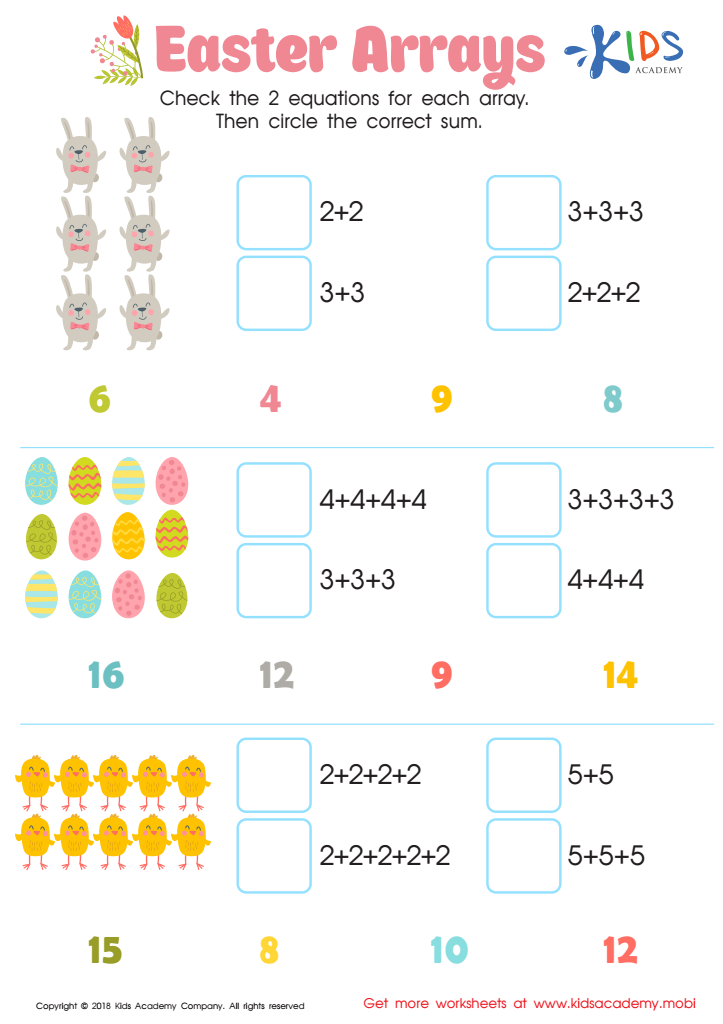
Easter Arrays Worksheet
 Assign to My Students
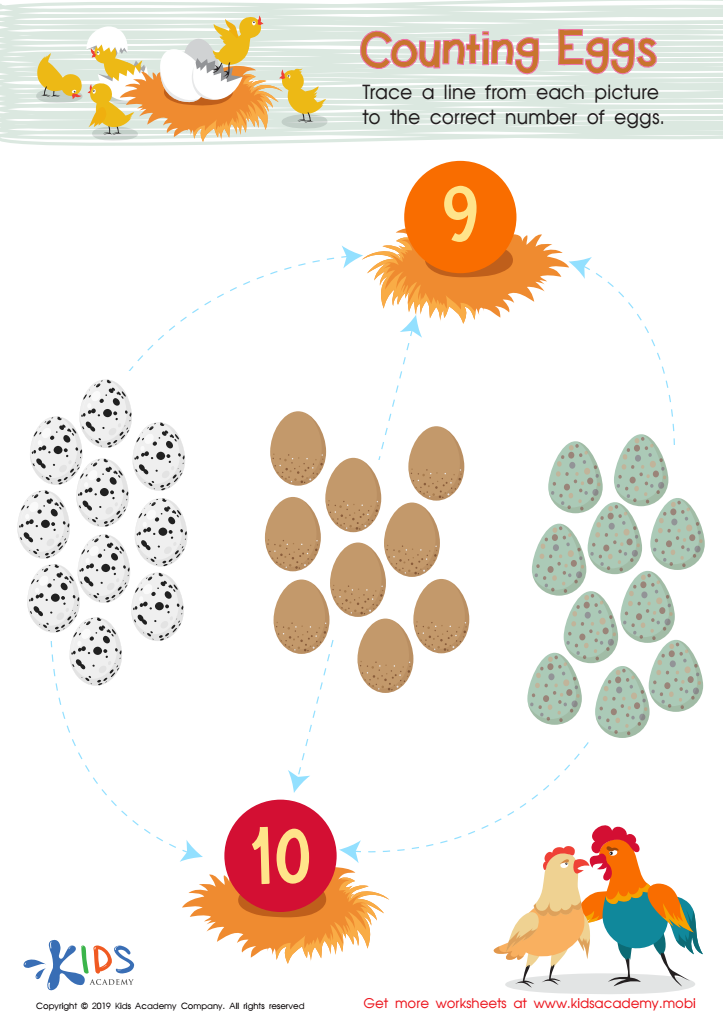
Counting Eggs Worksheet
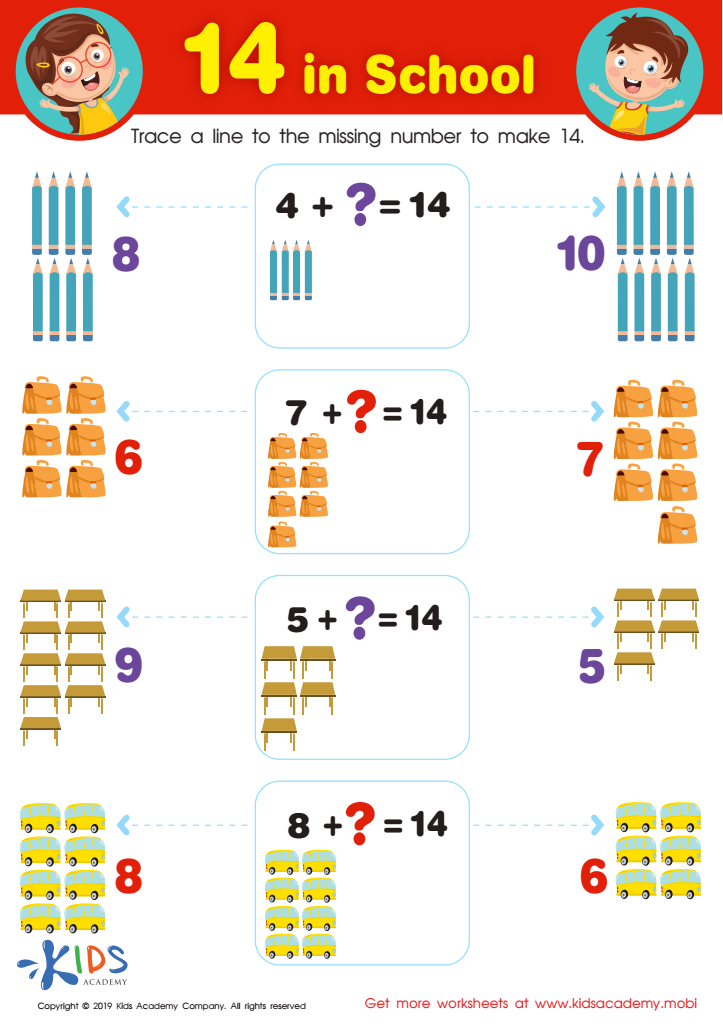
14 in School Worksheet
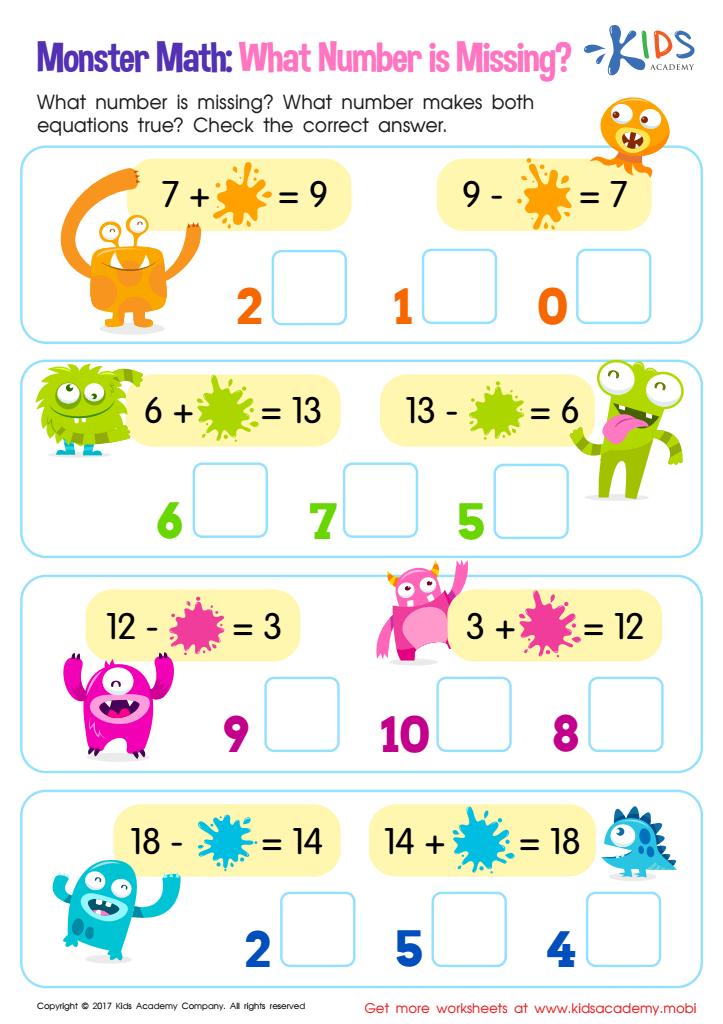
Missing Number: Monster Math Worksheet








Color identification and basic addition and subtraction skills are vital components of early childhood education, particularly for children aged 5-8. These foundational skills are interconnected and play a significant role in a child’s cognitive development.
Firstly, color identification not only enriches a child’s understanding of the world but also enhances their observational skills. Recognizing colors is essential for everyday tasks, such as sorting objects and making connections between items in their environment. It also contributes to their verbal development, allowing them to describe and categorize various objects.
Moreover, early addition and subtraction foster critical thinking and problem-solving skills. Understanding these mathematical concepts lays the groundwork for more complex arithmetic as they progress in their education. Engaging children in fun and interactive games involving colors and numbers can greatly enhance motivation and learning retention.
For parents and teachers, cultivating these skills can lead to a significant improvement in children's academic performance and self-esteem. By fostering a love for learning through engaging activities that incorporate both colors and numbers, caregivers can equip children with the necessary tools to thrive both in and outside the classroom. Investing time in these areas ultimately promotes a well-rounded education and prepares children for future learning challenges.








