Basic Addition Skills Normal Addition Worksheets for Ages 5-8
5 filtered results
-
From - To
Enhance your child’s math proficiency with our Basic Addition Skills Normal Addition Worksheets, specially designed for ages 5-8. These engaging resources provide a perfect balance of playful learning and essential skill-building, making addition fun! Each worksheet offers clear illustrations and relatable scenarios, helping kids grasp fundamental concepts while boosting their confidence. Parents and teachers can easily incorporate these worksheets into daily learning routines. From simple equations to colorful visuals, these activities cater to early learners at various skill levels. Foster a love for math in your child and watch them thrive with our thoughtfully curated addition worksheets! Start exploring today!
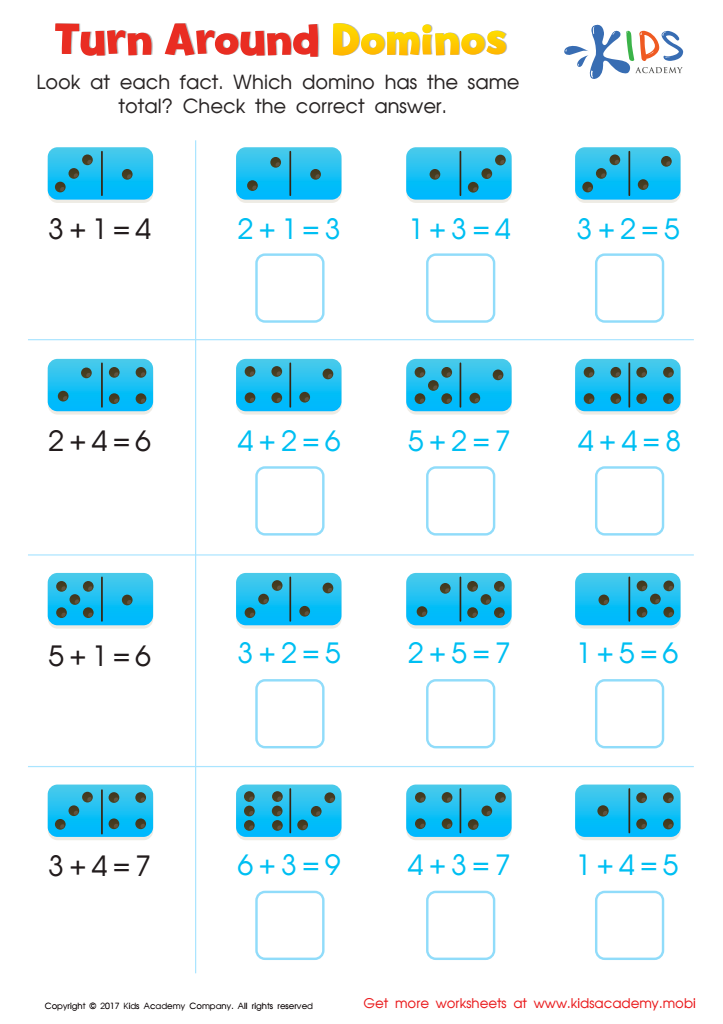
Turn Around Dominos Worksheet
 Assign to My Students
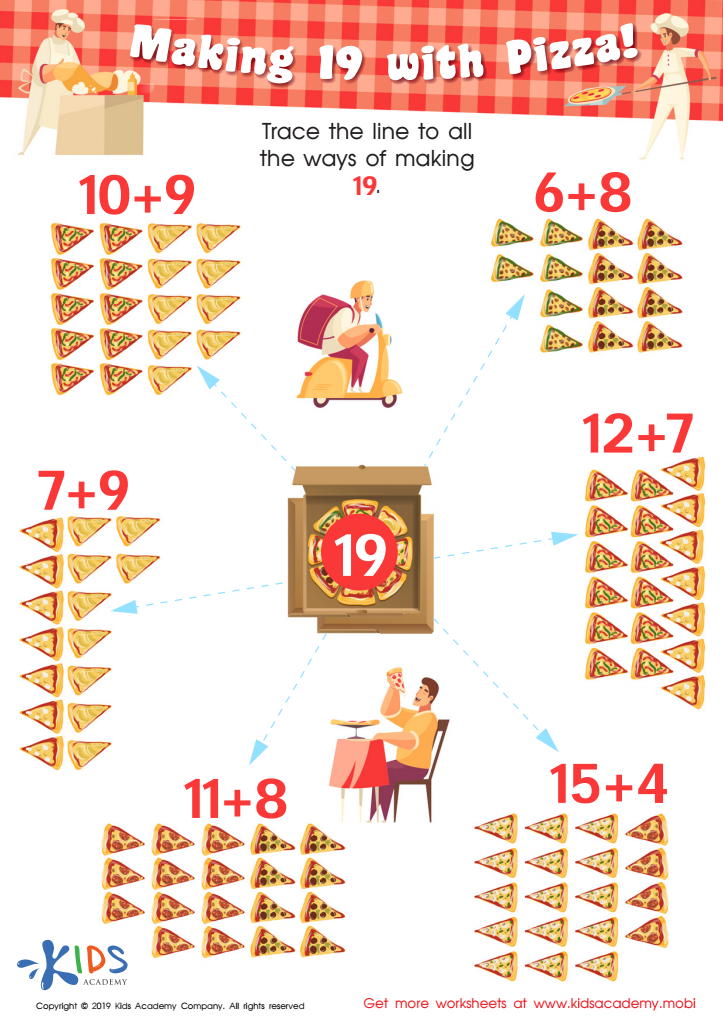
Making 19 with Pizza! Worksheet
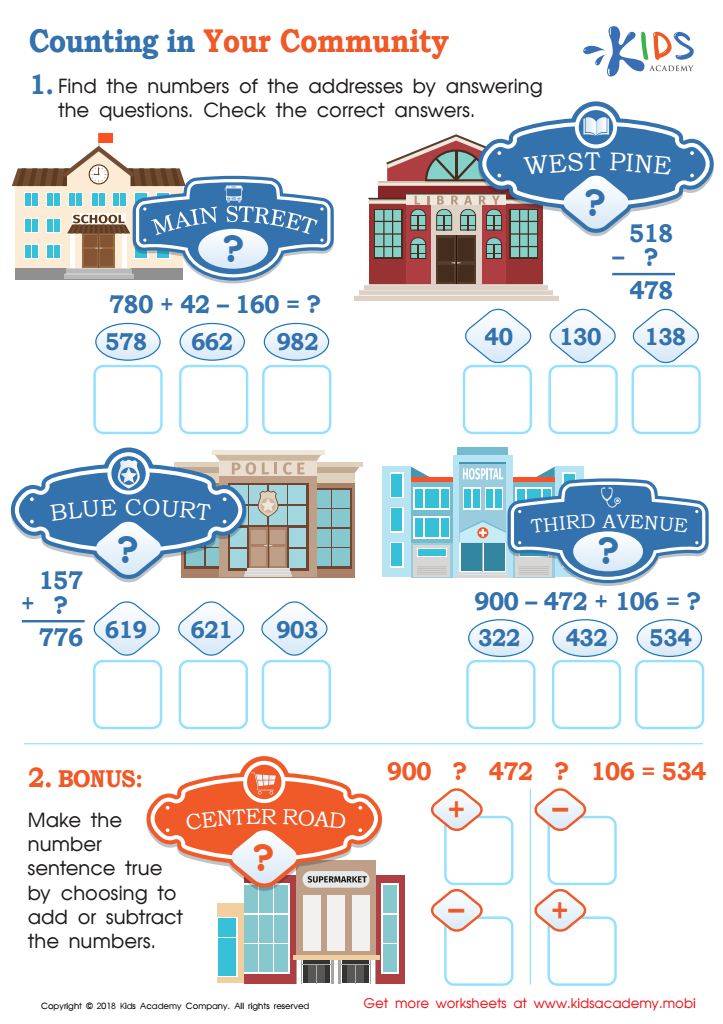
Counting in Your Community Worksheet
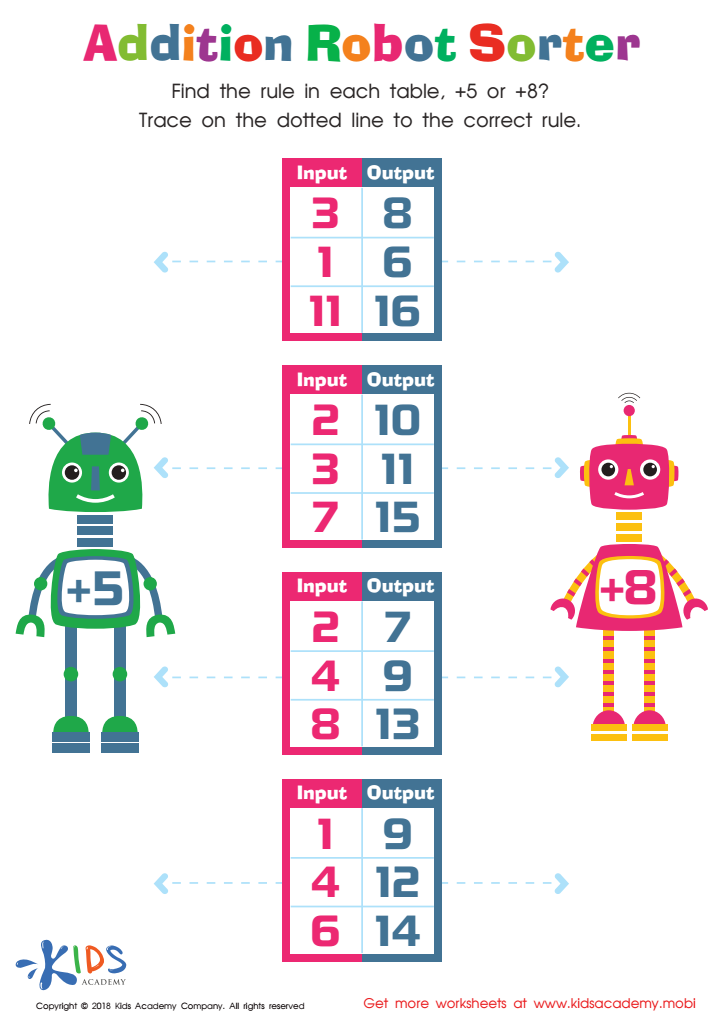
Addition Robot Sorter Worksheet
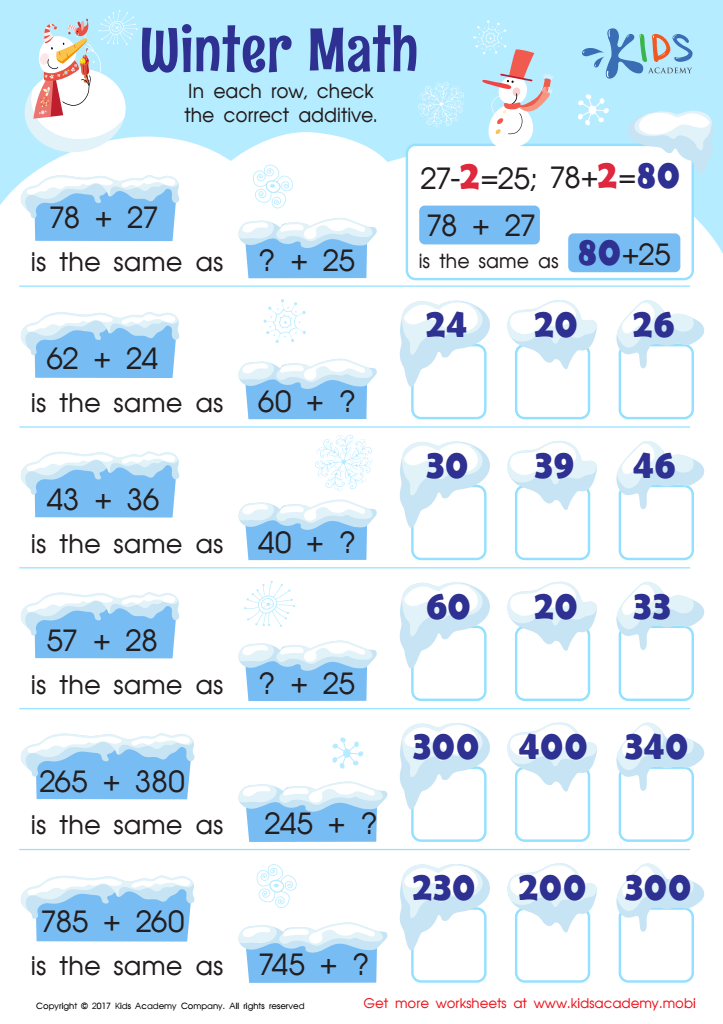
Free Addition Worksheet








Basic addition skills are crucial for children aged 5-8, laying the groundwork for their future academic success and everyday life. These foundational math skills enhance a child's problem-solving abilities and contribute to their cognitive development. Understanding normal addition enables children to tackle more complex math concepts as they progress in school, fostering mathematical fluency and confidence.
Moreover, mastering basic addition helps in developing critical thinking and analytical skills. It allows children to grasp patterns and relationships within numbers, which is essential for both mathematics and other subject areas, including science and logical reasoning. Additionally, enhancing these skills at a young age promotes positive attitudes towards learning—children who succeed in math early on are more likely to develop a love for the subject, which can lead to better opportunities in the future.
Furthermore, these skills have practical applications in everyday life, from counting items and understanding money transactions to competitive games and sports. When parents and teachers prioritize basic addition, they not only prepare children for academic challenges but also equip them with essential life skills, nurturing independent learners who can confidently navigate both academic and real-world situations.