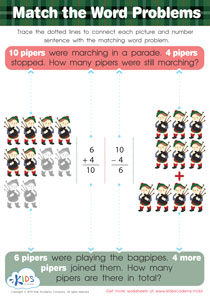
Counting practice Normal Addition Worksheets for Ages 5-8
3 filtered results
-
From - To
Our Counting Practice Normal Addition Worksheets for Ages 5-8 are expertly designed to help young learners enhance their addition skills in a fun and engaging manner. These worksheets provide age-appropriate exercises that focus on building a solid foundation in basic arithmetic, fostering both confidence and competence in math. Each worksheet is filled with colorful visuals and interactive problems that make learning addition an enjoyable experience for children. Perfect for classrooms or home practice, these activities ensure children master the essential counting and addition skills needed for academic success. Dive into fun and effective math practice today!
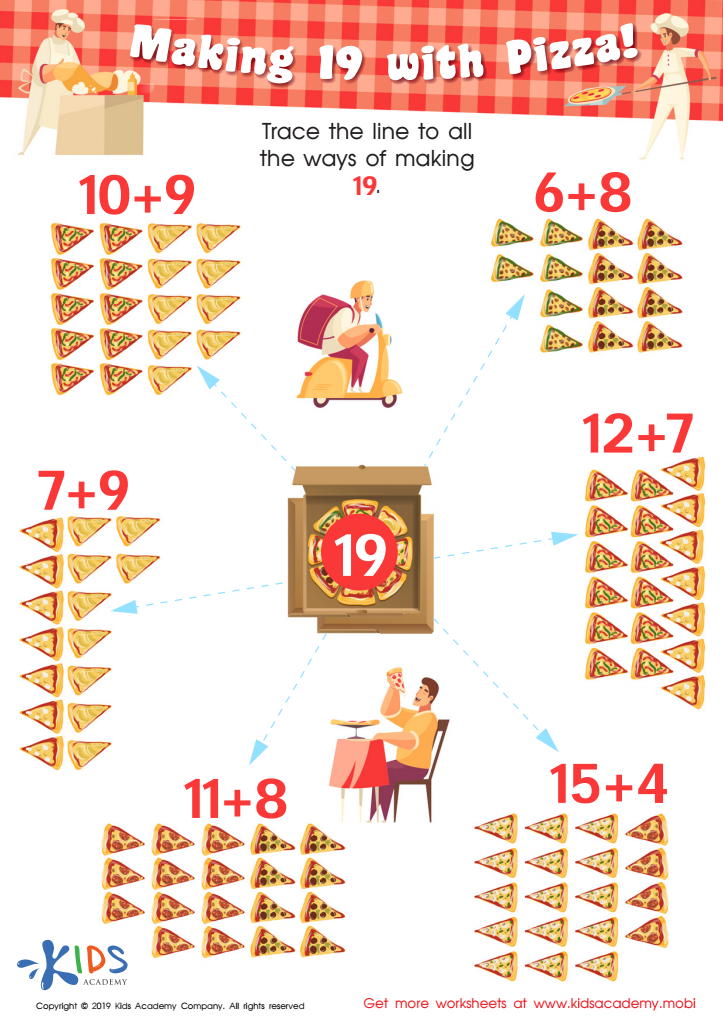
Making 19 with Pizza! Worksheet
 Assign to My Students
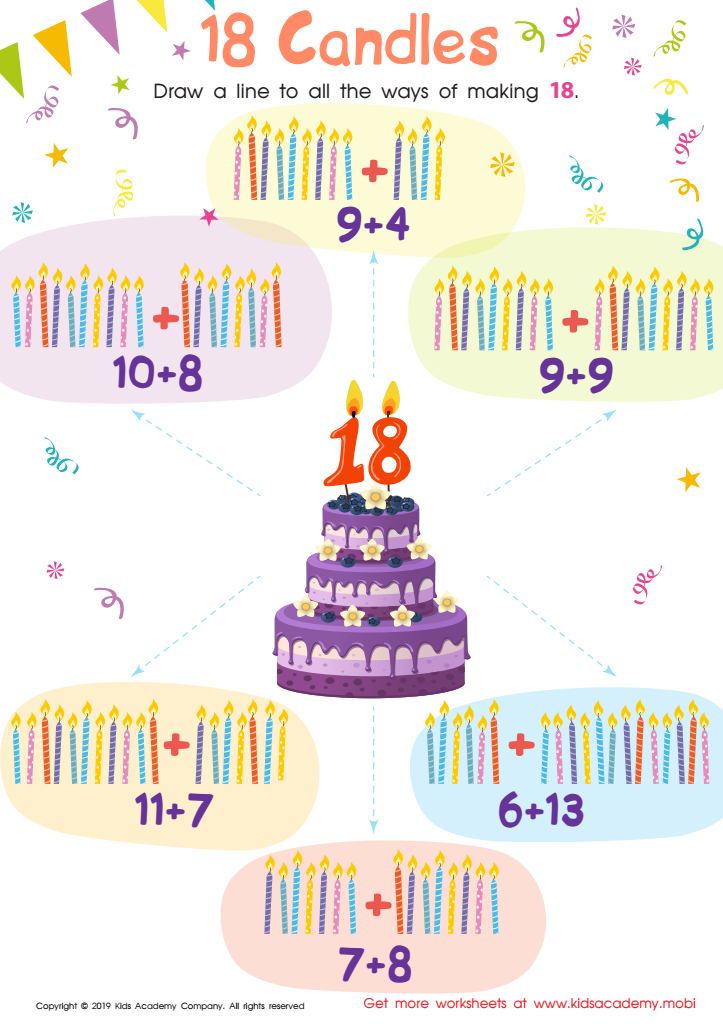
18 Candles Worksheet
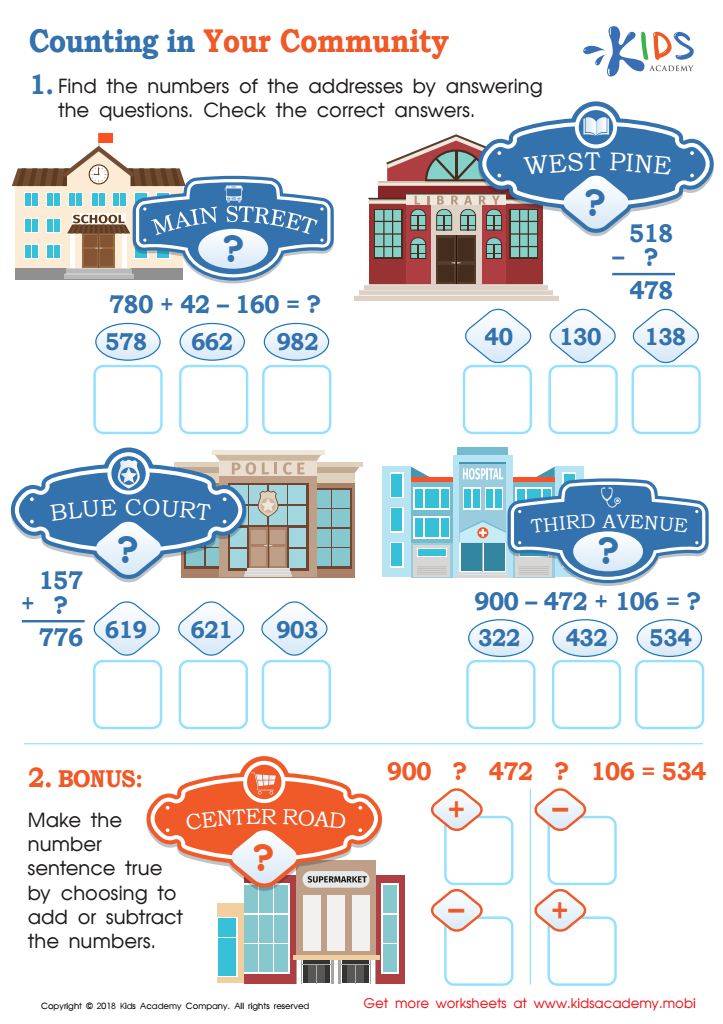
Counting in Your Community Worksheet








Parents and teachers should prioritize counting practice and basic addition for children aged 5-8 because these skills form the foundation of mathematical understanding. At this developmental stage, children's brains are rapidly developing, making it an ideal time to introduce and reinforce basic arithmetic concepts.
Counting practice helps children grasp the concept of numbers and their sequence, which is essential for developing number sense. Number sense is the intuitive understanding of numbers, their magnitude, relationships, and how they are affected by operations. This foundational skill is crucial for tackling more complex mathematical tasks in later years.
Normal addition, or simple arithmetic, introduces children to the idea of combining quantities, which is a fundamental mathematical operation. Mastery of addition paves the way for understanding more complex operations like subtraction, multiplication, and division. Through activities like counting objects, using number lines, or simple word problems, children also develop problem-solving skills and learn how to think logically.
Additionally, early success in mathematics builds confidence. Positive experiences with numbers at a young age can foster a love for learning and reduce math anxiety. Engaging in counting and basic addition activities nurtures a strong mathematical foundation, critical thinking, and a positive attitude toward learning, all key elements for academic success.