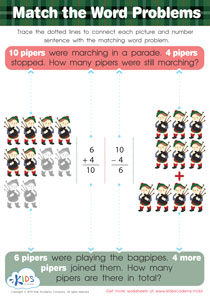
Mental math skills Normal Addition Worksheets for Ages 5-8
5 filtered results
Difficulty Level
Grade
Age
-
From - To
Subject
Activity
Standards
Enhance your child’s mental math skills with our engaging Normal Addition Worksheets, specially designed for children aged 5-8. These worksheets focus on building addition fluency through fun and interactive exercises that encourage quick thinking and problem-solving. With a variety of activities that support classroom learning and home practice, your little learners will develop confidence as they master fundamental math concepts. Our resources are perfect for reinforcing essential skills while keeping children motivated and excited about mathematics. Discover how these worksheets can brighten your child’s mathematical journey, making addition enjoyable and effective! Get started today and watch their skills soar!
Favorites
With answer key
Interactive
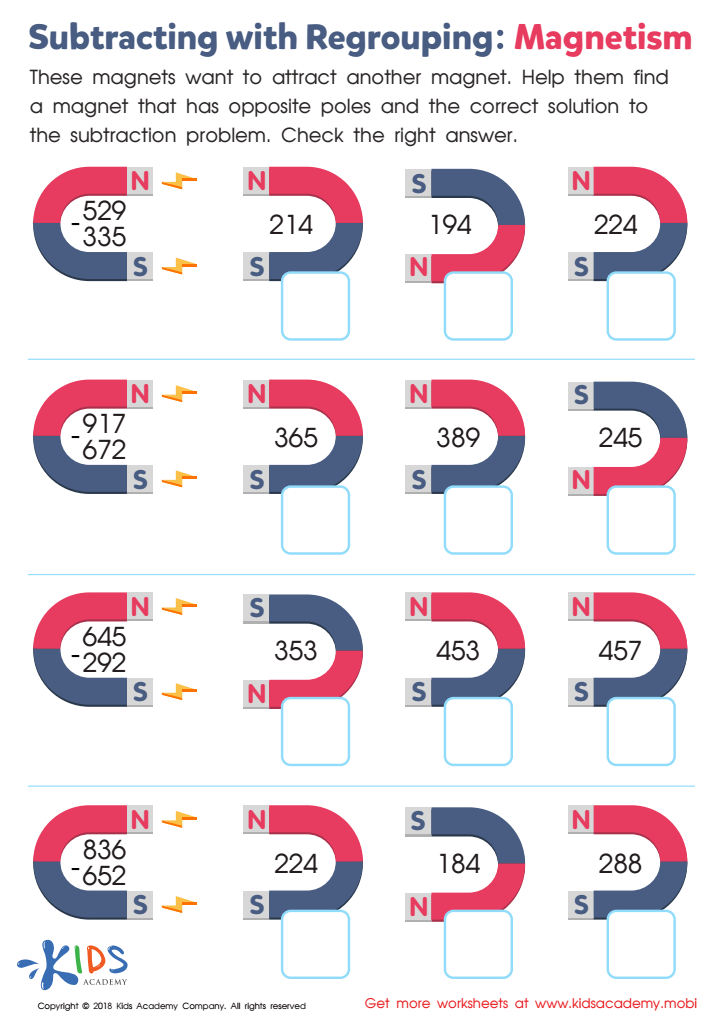
Subtracting with Regrouping: Magnetism Worksheet
Download Kids Academy's worksheet for a fun way to review science and math! Look at the magnet and remember opposites attract. Find another with opposite poles, then solve the problem on the left and check the solution against the magnet. Check the box next to the correct answer to complete this page.
 Assign to My Students
Subtracting with Regrouping: Magnetism Worksheet
Worksheet
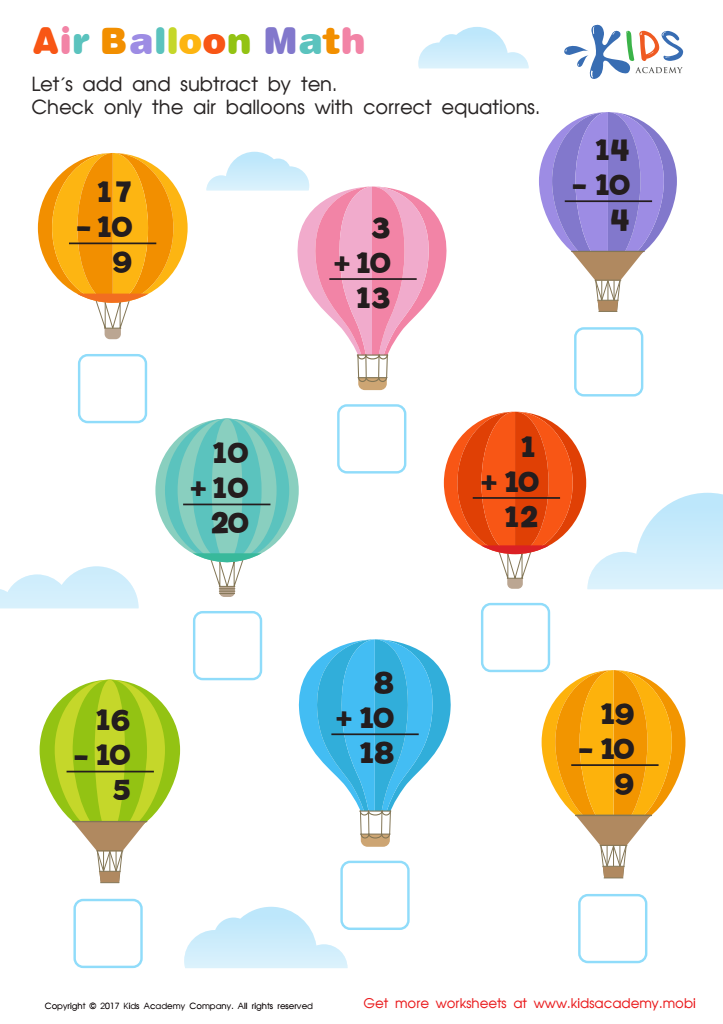
Air Balloon Math Worksheet
Revised:
Review your child's addition and subtraction skills with this fun worksheet. Featuring hot air balloons filled with math equations, help your child add or subtract by ten before ticking the boxes with the right answers. Working through the equations one-by-one is a great way to make math practice enjoyable!
Air Balloon Math Worksheet
Worksheet
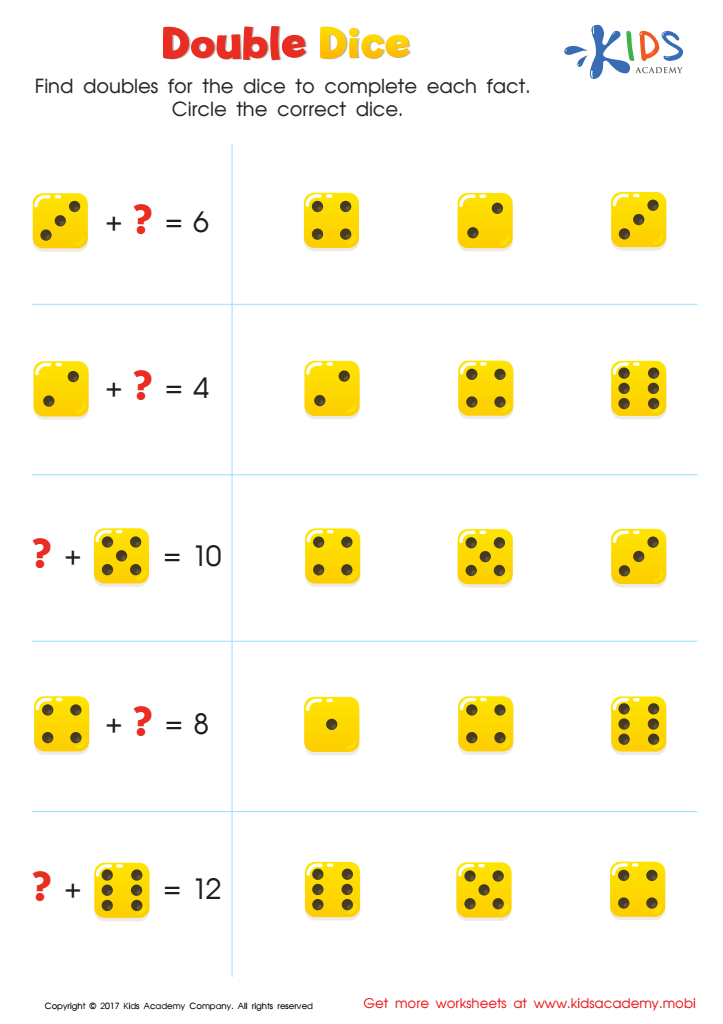
Addition Facts: Double Dice Worksheet
Are you looking for ways to make maths more engaging for kids? Maths can be a bore, but by teaching kids from an early age that it can be fun, they won't struggle with it. This worksheet is a great way to start: your child needs to identify the number on the left dice and find its double on the right. The sum of the two dice is also given.
Addition Facts: Double Dice Worksheet
Worksheet
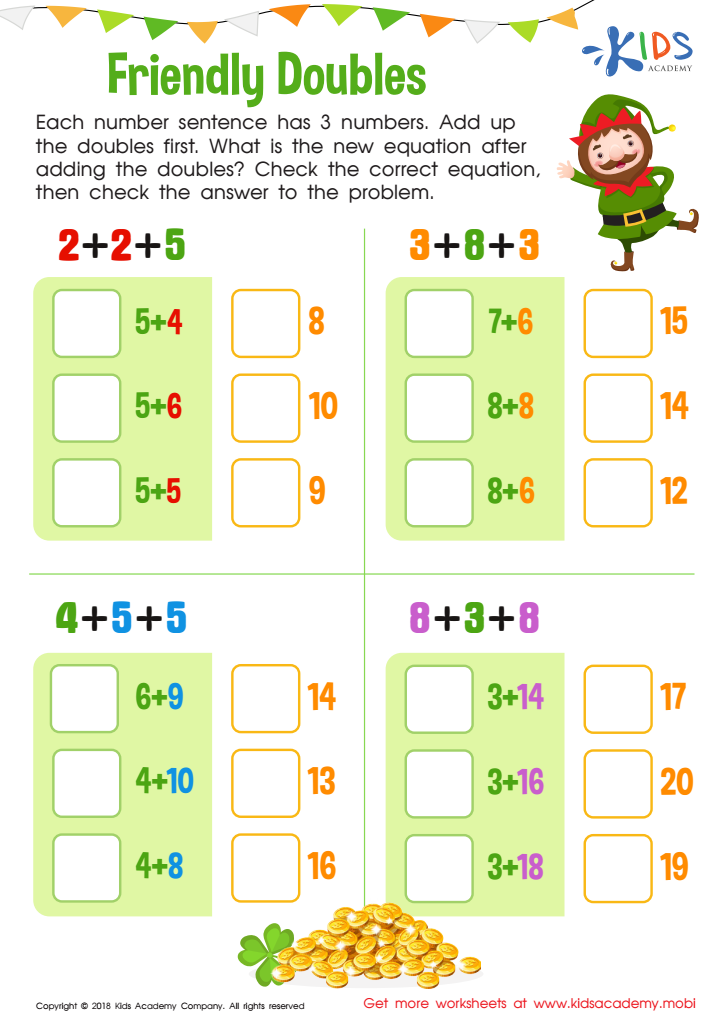
Friendly Doubles Worksheet
Kids will love this animated worksheet with bright colors! It helps them learn how to use doubles facts to answer three addend addition problems. It boosts their math skills, making computation easier, faster and more efficient. It also assists with adding and subtracting larger numbers. Let the power of doubles get them started!
Friendly Doubles Worksheet
Worksheet
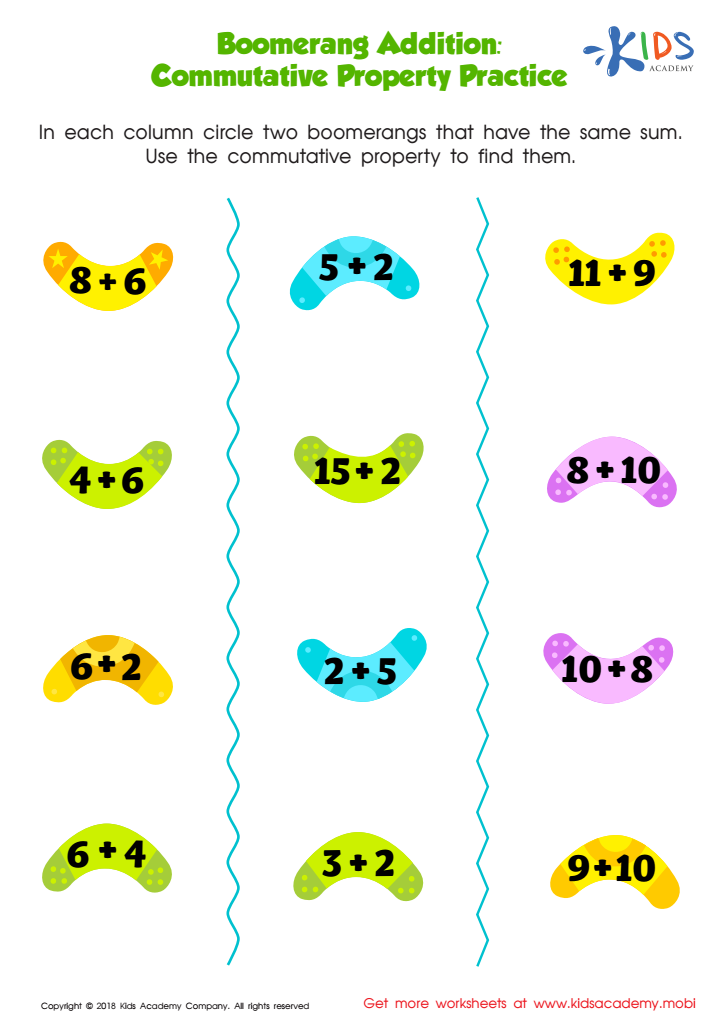
Boomerang Addition Worksheet
Kids know that when a boomerang is thrown, it reverses its path back. The same goes for addition: numbers can be rearranged and the sum will remain the same. Use this worksheet to find matching pairs of colorful boomerangs and equations. Look through each column and use the commutative property to find the pairs with the same sum.
Boomerang Addition Worksheet
Worksheet
Join Kids Academy for Free
Who is primarily going to use this learning content?








Parents and teachers should care about mental math skills, particularly normal addition, for children ages 5-8, because these skills form the foundation for a child’s overall mathematical understanding and problem-solving abilities. At this developmental stage, children are naturally curious and eager to learn, and mastering mental addition can significantly enhance their confidence and engagement with math.
Mental math encourages children to visualize numbers, develop number sense, and improve their ability to think critically and solve problems without relying solely on calculators or written methods. This fosters independence and makes mathematical concepts more relatable and enjoyable, discouraging negative attitudes often associated with math.
Moreover, strong mental math skills facilitate smoother transitions to more complex math operations, as they help children recognize patterns and relationships between numbers. This can lead to improved performance in school and standardized tests later on. Additionally, these skills promote quick decision-making in daily life situations, such as managing money and time, ultimately equipping children with practical tools they will use beyond the classroom. Therefore, investing time in developing mental addition skills is essential for nurturing a child’s love for math and enhancing their cognitive development.