Normal Fractions of Shapes Worksheets for Ages 5-8
5 filtered results
-
From - To
Help your child master the basics of fractions with our engaging "Normal Fractions of Shapes Worksheets for Ages 5-8." Designed specifically for young learners, these worksheets use fun, colorful shapes to introduce key fraction concepts in an easy-to-understand format. Children will develop their skills by identifying, coloring, and comparing fractions, making math enjoyable and accessible. Each worksheet is crafted to align with early grade math standards, ensuring that your child gains a strong foundation in fractions. Perfect for both classroom activities and additional practice at home, these worksheets transform learning into an exciting adventure.
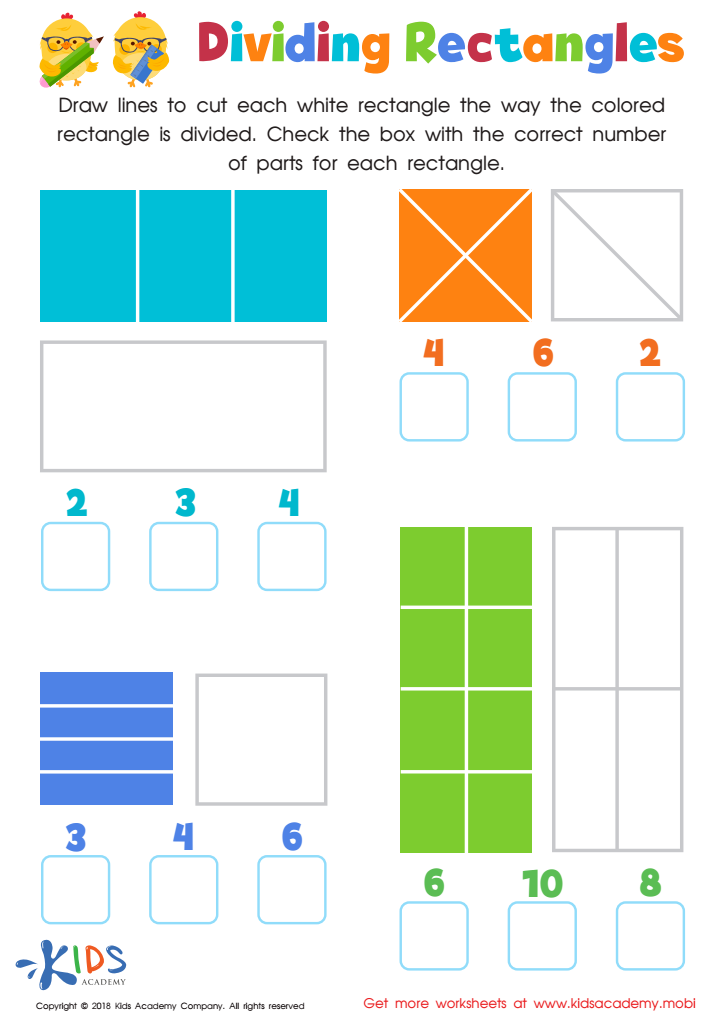
Dividing Rectangles Worksheet
 Assign to My Students
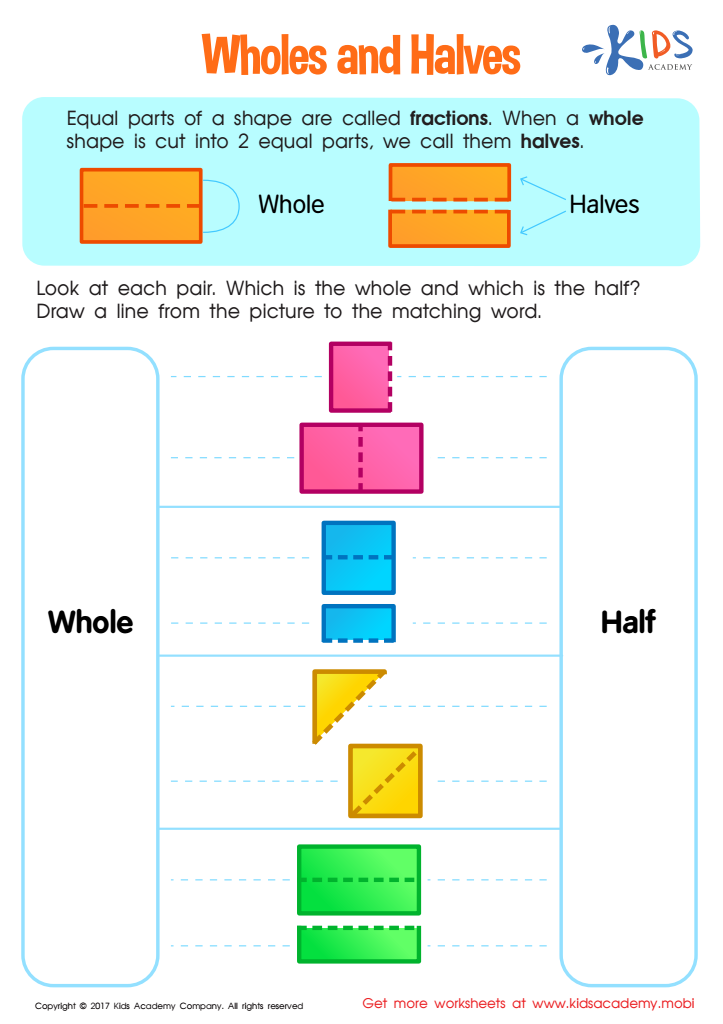
Wholes and Halves Worksheet
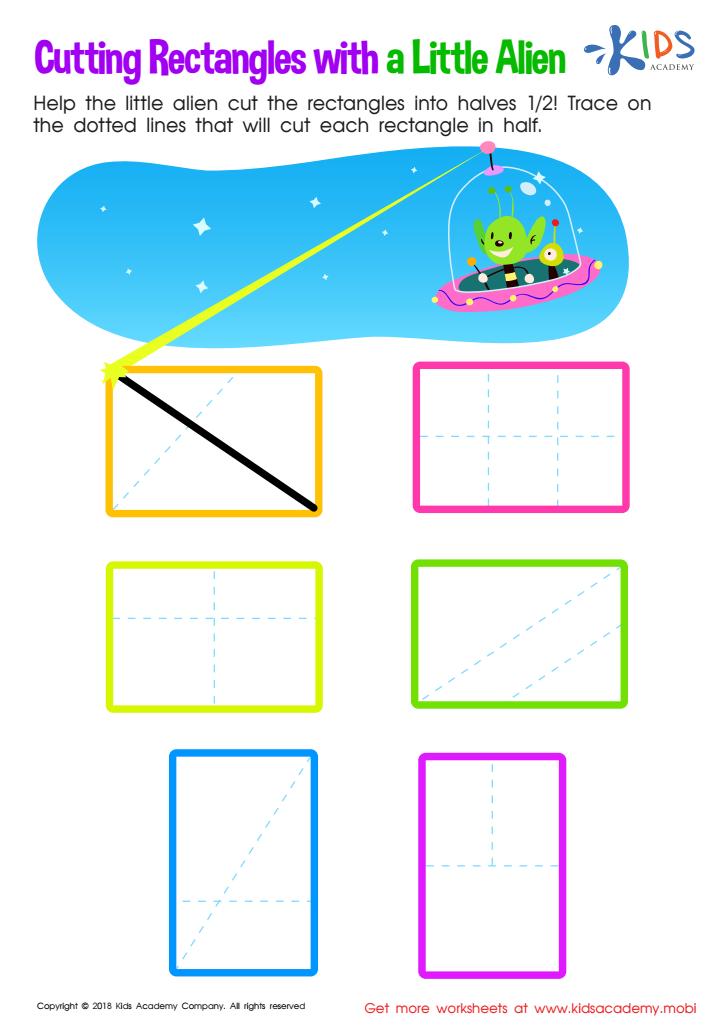
Cutting Rectangles with Alien Worksheet
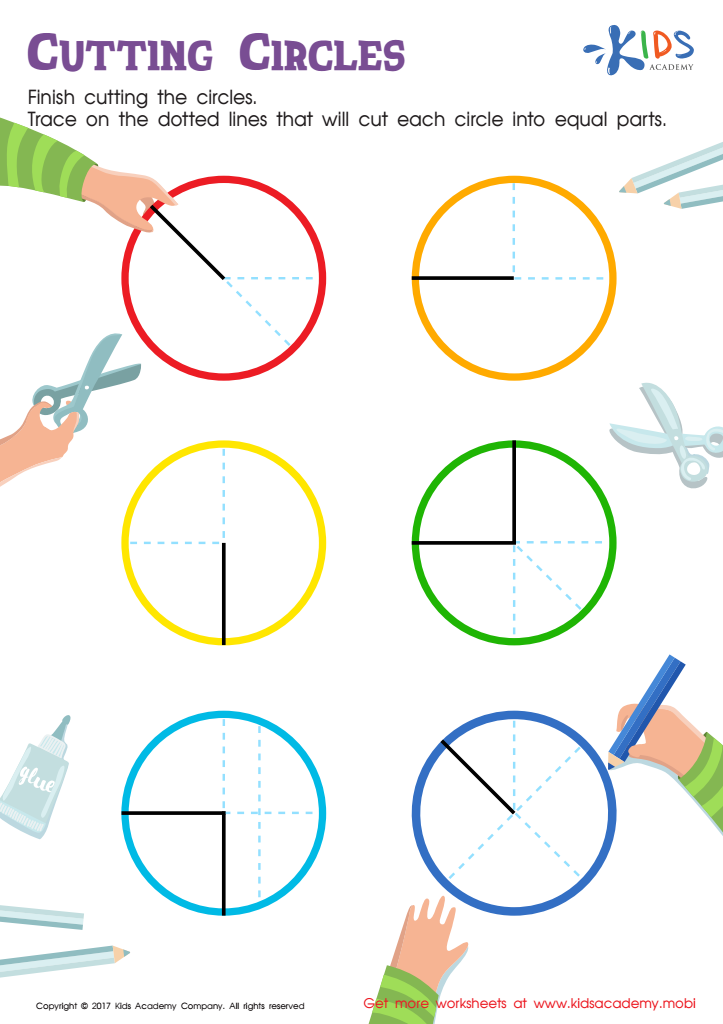
Cutting Circles Worksheet
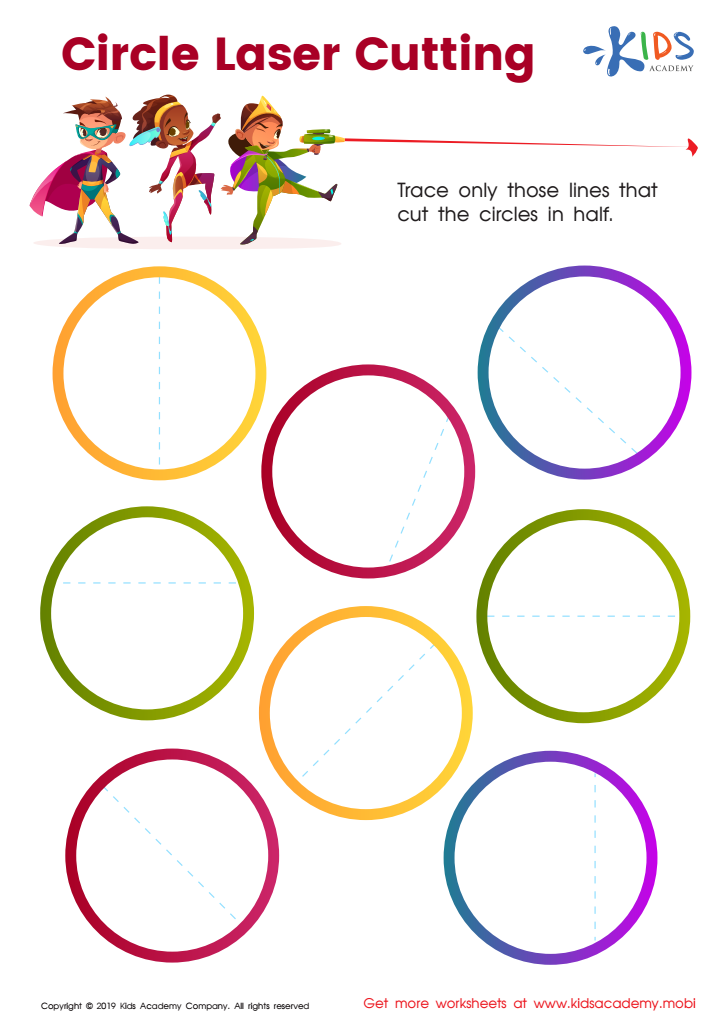
Circle Laser Cutting Worksheet








Introducing normal fractions of shapes to children ages 5-8 is crucial for multiple reasons. Firstly, it lays a solid foundation for their understanding of more advanced mathematical concepts. Learning fractions helps children grasp the idea of parts making a whole, which is vital not only in math but also in everyday problem-solving and decision-making tasks.
Teaching children about fractions with shapes engages them visually and kinesthetically. Young children, especially between the ages of 5 and 8, benefit greatly from hands-on learning. Handling physical objects or drawing shapes helps solidify abstract concepts, making them more concrete and easier to comprehend.
Furthermore, early exposure to fractions boosts a child’s cognitive development. It enhances their ability to compare and contrast, understand proportionality, and recognize relationships between different quantities. This foundational knowledge supports later learning in areas such as geometry, measurement, and algebra.
For parents and teachers, integrating lessons on normal fractions of shapes instills a sense of confidence and capability in young learners. It empowers children to face mathematical challenges head-on and paves the way for their academic success. Additionally, these foundational skills apply beyond mathematics, fostering critical thinking and logical reasoning abilities that will benefit children throughout their education and everyday lives.