Counting practice Normal Geometry Worksheets for Ages 5-8
3 filtered results
-
From - To
Boost your child's math skills with our Counting Practice Normal Geometry Worksheets designed specifically for ages 5-8. These engaging worksheets integrate fundamental counting exercises with basic geometric concepts, making learning fun and interactive. Your little ones will explore shapes, spatial awareness, and number recognition, all while honing essential counting abilities. Packed with colorful illustrations and age-appropriate challenges, these worksheets will captivate young minds and encourage a love for math. Ideal for homeschooling or classroom activities, our resources support early learners in building a solid foundation in geometry and counting. Download now to ignite your child’s passion for learning through geometry!
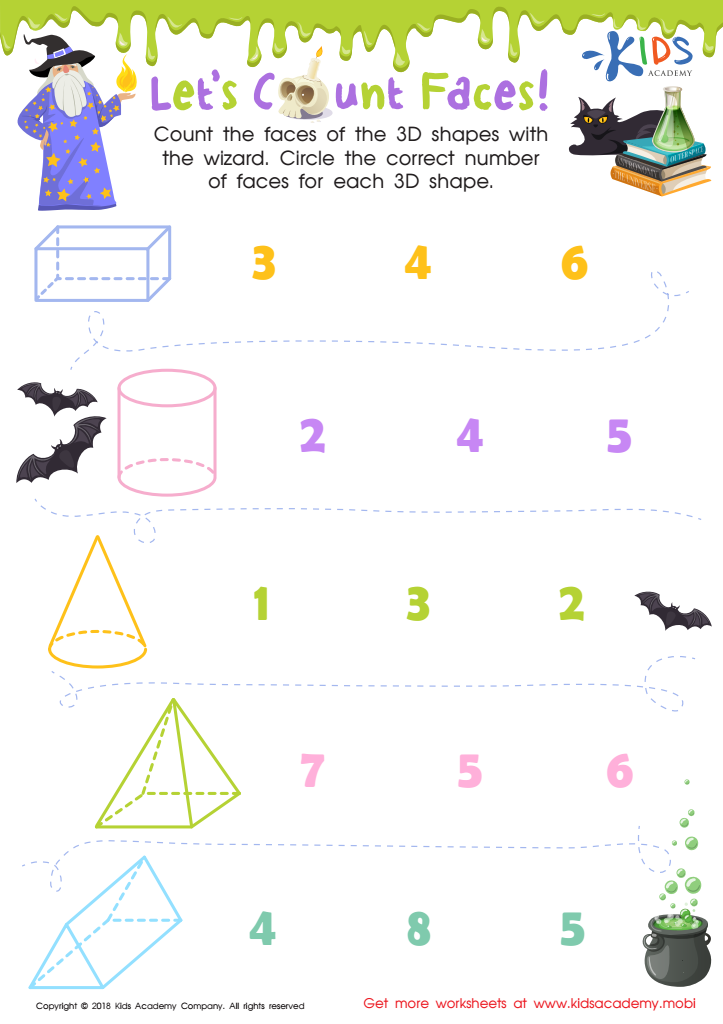
Let's Count Faces! Worksheet
 Assign to My Students











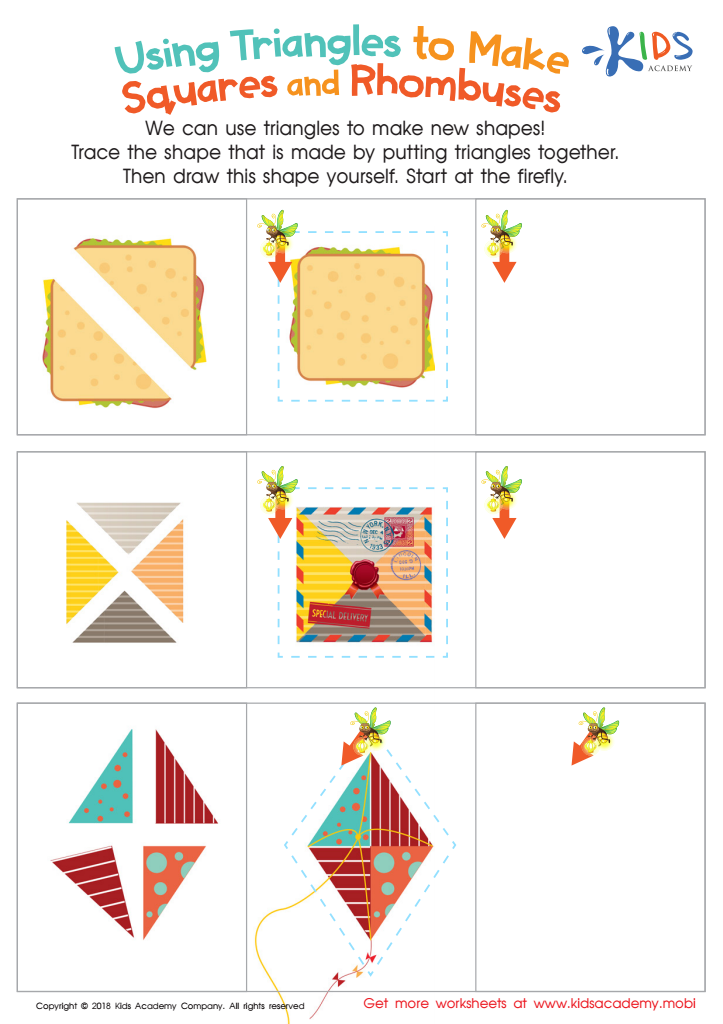
Using Triangles to Make Squares and Rhombuses Worksheet
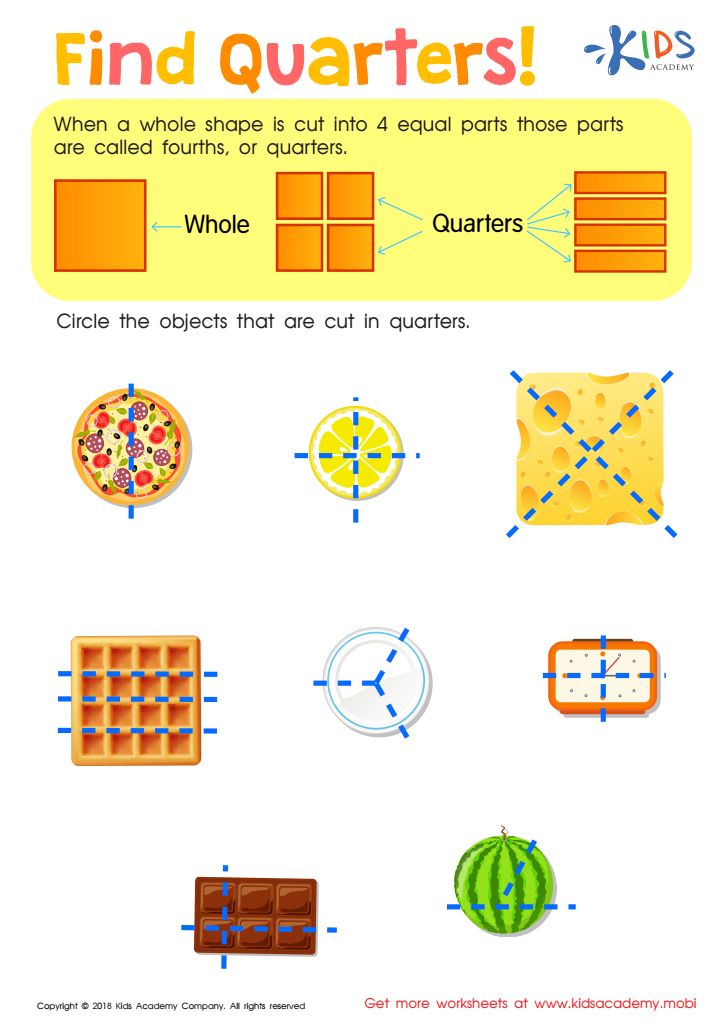
Find Quarters Worksheet








Counting practice and understanding basic geometry are foundational skills for children ages 5-8, forming the building blocks for advanced mathematical concepts. By engaging in counting, children learn to recognize numbers, understand quantity, and develop spatial awareness. This comprehension is essential not only for mathematics but also for critical thinking and problem-solving skills that benefit academic performance across subjects.
Normal geometry introduces children to shapes, sizes, and the relationships between different objects. This knowledge helps enrich their experiences in real-life scenarios, from recognizing home objects to understanding patterns in nature. For example, when kids identify shapes while playing, they exercise their observational skills and enhance their cognitive development.
Furthermore, parents and teachers play a crucial role in reinforcing these skills. Encouragement during counting and geometry practice fosters a positive attitude towards math, reduces anxiety in future mathematical endeavors, and raises children who become confident learners. As kids strengthen their counting skills and grasp basic geometry concepts, they build essential reasoning capacities that aid them throughout their academic journeys. Ultimately, fostering these foundational elements influences not only the children's mathematical skills but also their overall cognitive and emotional development.








