Shape identification Normal Geometry Worksheets for Ages 5-8
5 filtered results
-
From - To
Introduce your child to the exciting world of shapes with our Shape Identification Normal Geometry Worksheets designed for ages 5-8! These carefully curated worksheets from Kids Academy enhance spatial reasoning, recognition, and geometry skills through fun and interactive activities. Perfect for young learners, our printable worksheets help children identify, compare, and understand various shapes, fostering confidence and love for learning math. Tailored to suit early grade levels, each worksheet is thoughtfully crafted to align with educational standards and ensure your child's successful foundational learning experience. Engage your little ones with enjoyable, purposeful learning today!
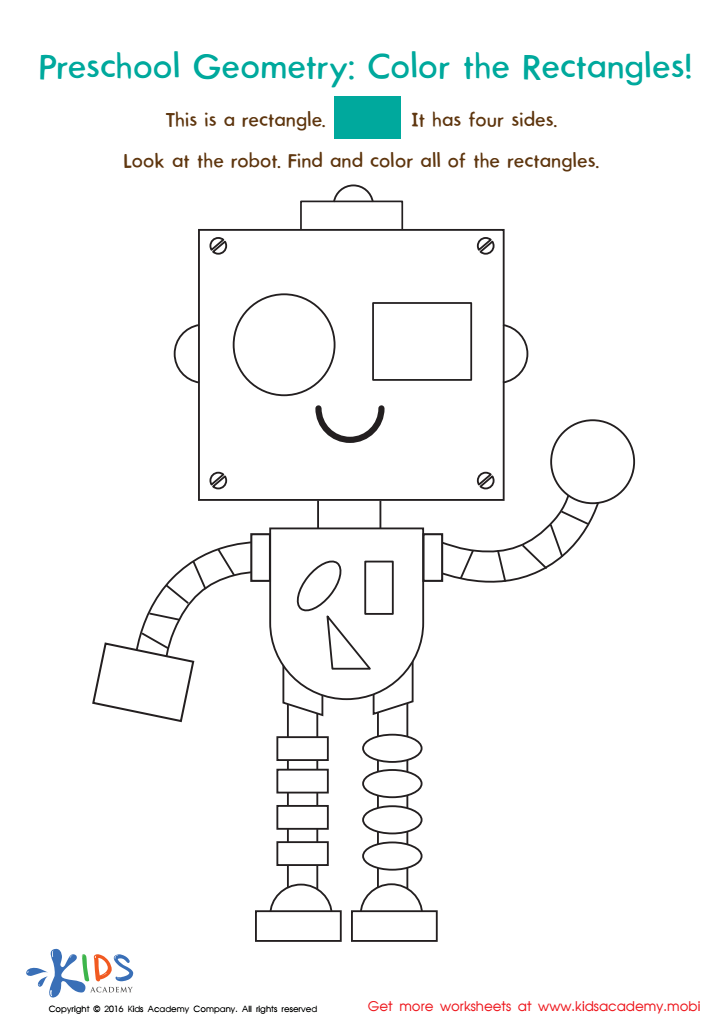
Geometry Worksheet
 Assign to My Students











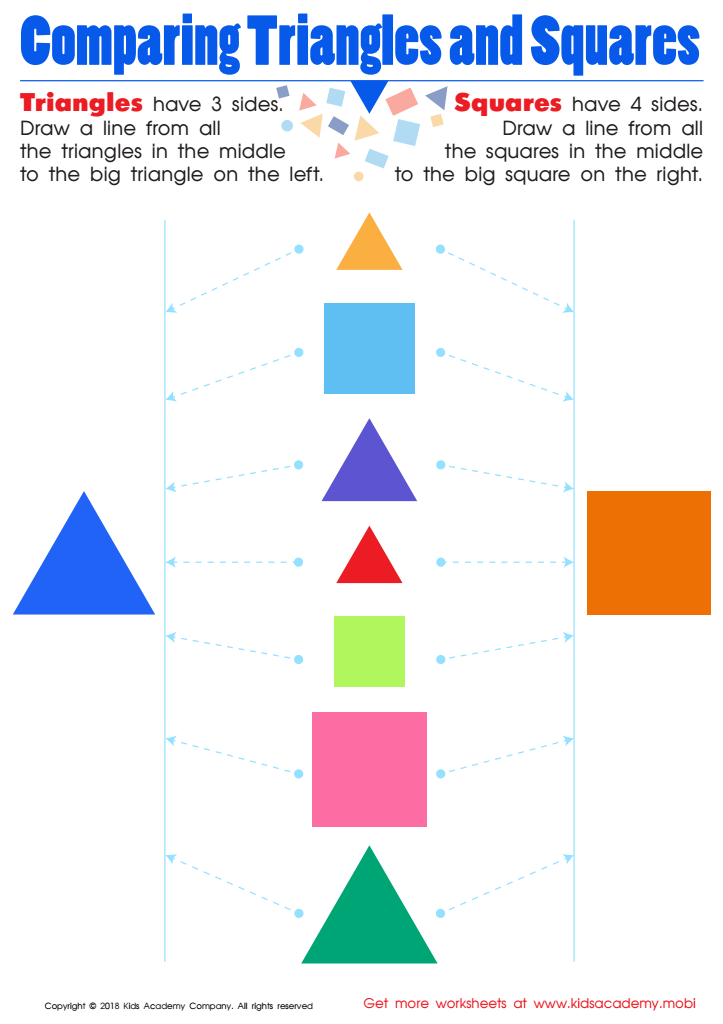
Comparing Triangles Squares Worksheet
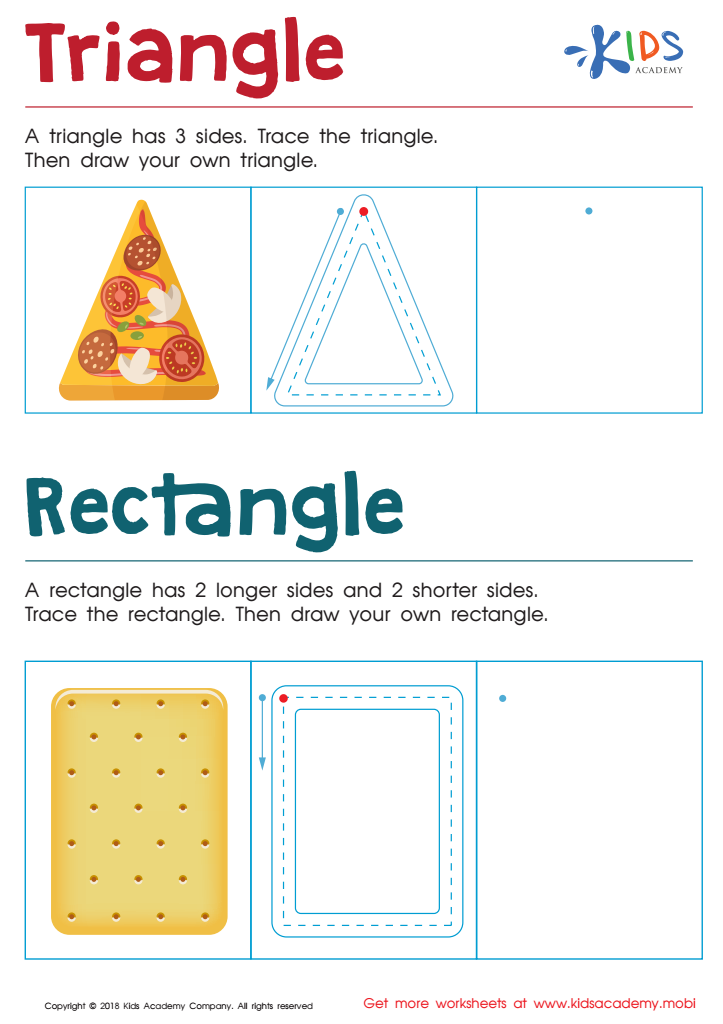
Triangle Rectangle Worksheet
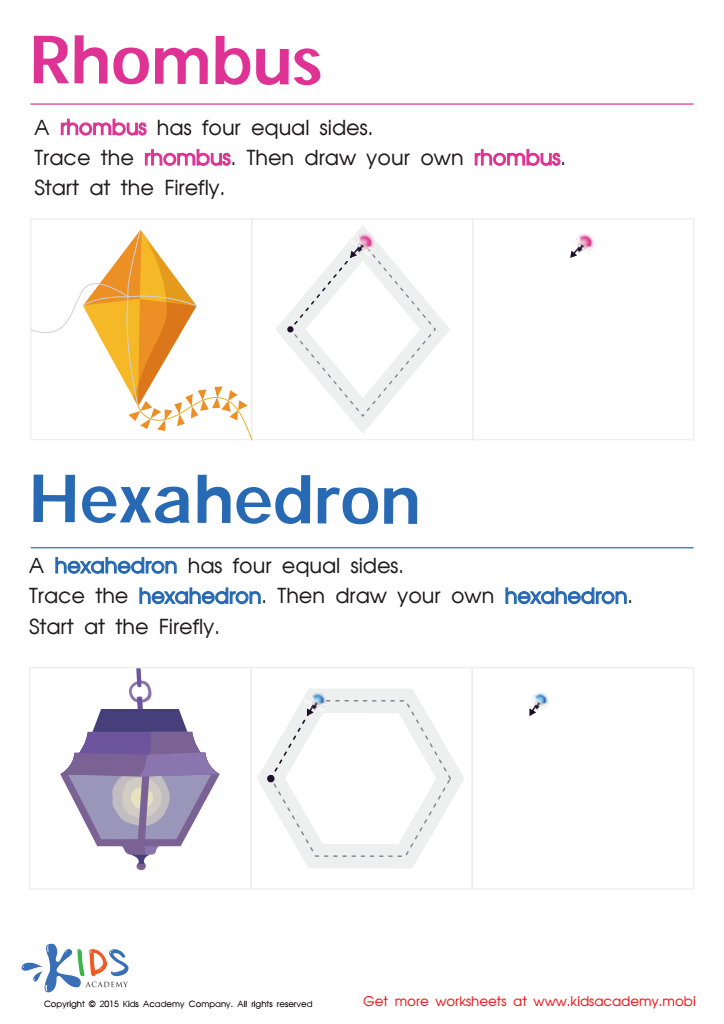
Draw a Rhombus And a Hexahedron Printable
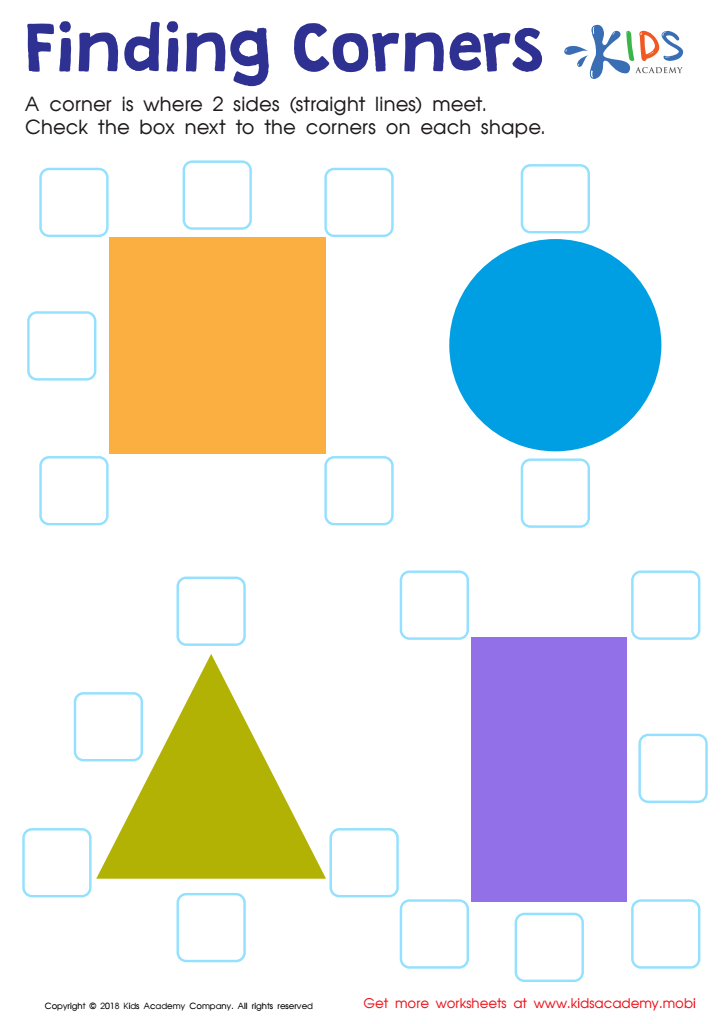
Finding Corners Worksheet








Shape identification plays a significant role in the cognitive and academic development of children aged 5-8. This early encounter with geometry helps build a foundation for more complex mathematical concepts that children will encounter as they progress in their education.
Recognizing shapes helps develop spatial awareness, which is crucial in understanding how different objects fit and relate to one another in space. This ability translates well into problem-solving and logical thinking skills. By learning to identify basic shapes such as circles, squares, and triangles, children begin to notice patterns and structures in their everyday environment, fostering observational skills that are essential for science and other subjects.
Moreover, shape identification is integral to the development of fine motor skills. Activities like drawing or constructing shapes help enhance hand-eye coordination and dexterity. These skills are not only important for mathematics but also for writing and other academic tasks.
Additionally, understanding and identifying shapes contributes to a child's ability to comprehend and use mathematical language. Terms like "sides," "corners," and "edges" become familiar, paving the way for more advanced geometrical concepts later on.
Teachers and parents can further support this learning through fun and engaging activities like puzzles, building blocks, and drawing exercises. Proper guidance in shape identification enriches a child’s academic journey, making them more well-rounded and capable learners.








