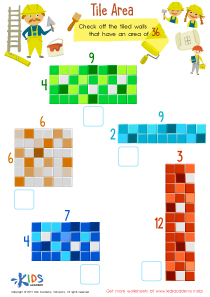
Color Identification Normal Numbers Worksheets for Ages 5-8
4 filtered results
-
From - To
Boost your child's learning with our engaging Color Identification Normal Numbers Worksheets, specifically designed for kids aged 5-8. These worksheets combine colorful visuals and number recognition to create an interactive learning experience. Children will enhance their color vocabulary while practicing number identification, making math fun and accessible. Our thoughtfully crafted activities encourage creativity and critical thinking, allowing young learners to explore colors and numbers in a hands-on manner. Ideal for both classroom and home settings, these resources aim to build foundational skills and improve color awareness. Download our worksheets today and watch your child's confidence soar as they master numbers and colors!
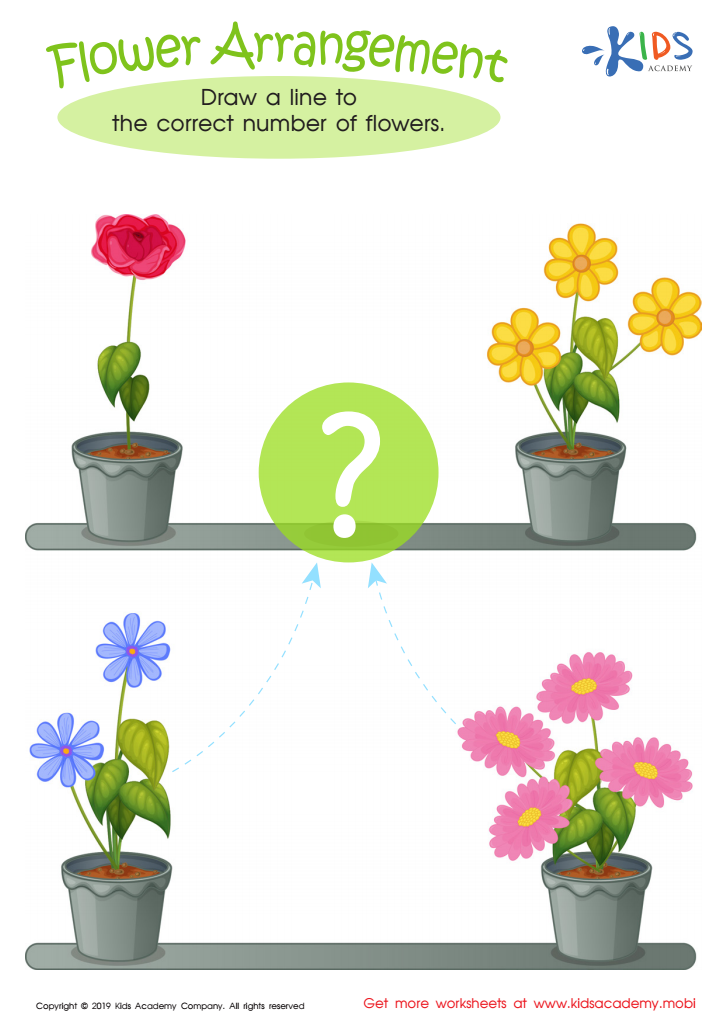
Flower Arrangement Worksheet
 Assign to My Students
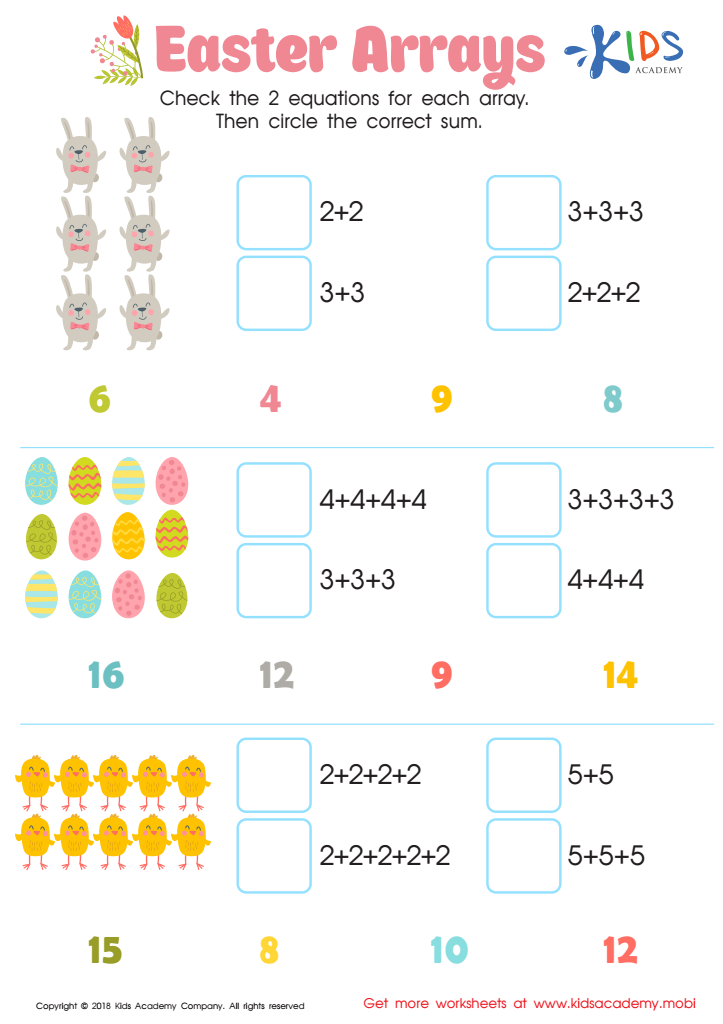
Easter Arrays Worksheet
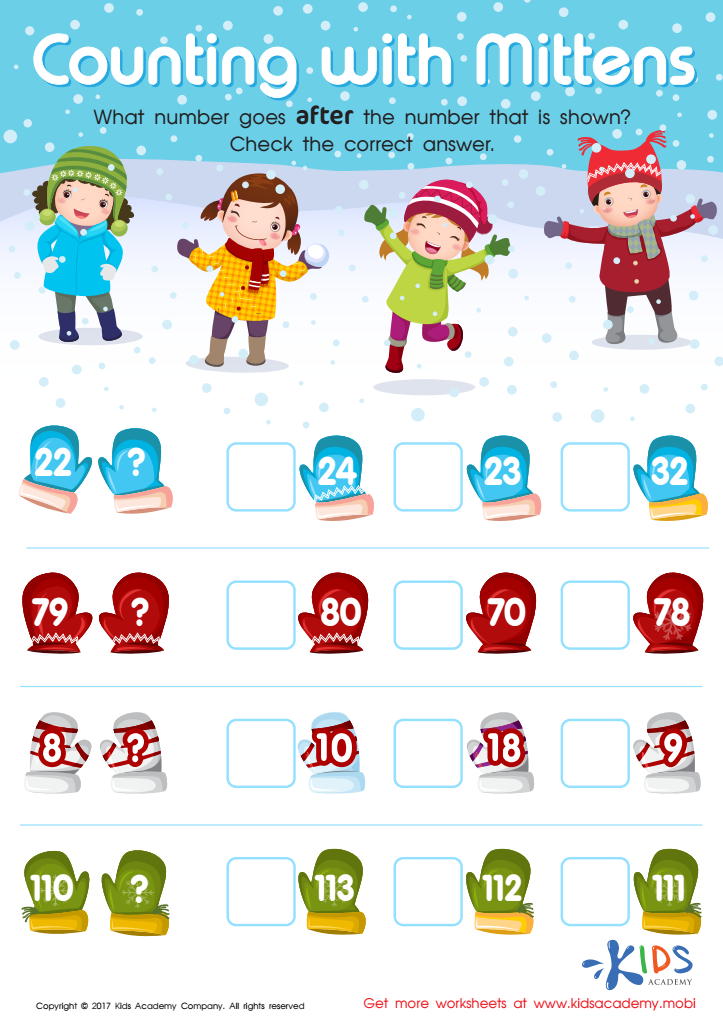
Counting with Mittens Worksheet
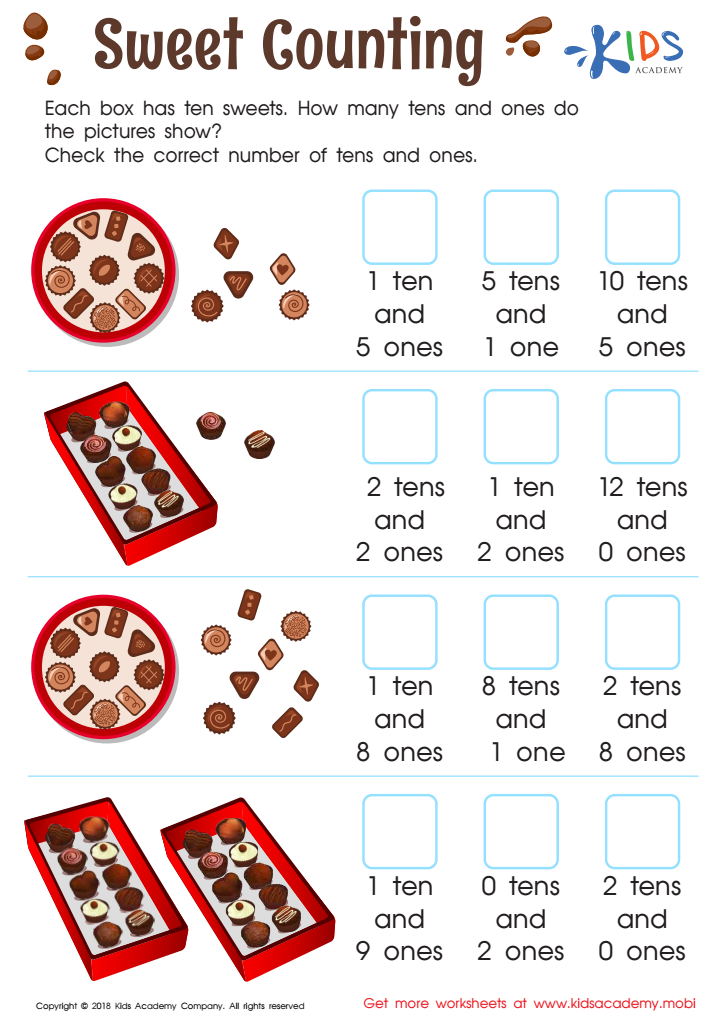
Sweet Counting - Part 2 Worksheet








Color identification and understanding normal numbers are vital skills for children aged 5-8, significantly impacting their cognitive and social development. Mastering color recognition enhances children's ability to categorize objects, which lays the groundwork for more complex thinking and pattern recognition later on. It plays a critical role in learning through visual aids found in various subjects, such as art, math, and science, enriching their overall educational experience.
Understanding normal numbers, including counting and basic arithmetic, establishes a foundational numeracy skill set essential for daily life and further academic success. These early math skills enhance logical reasoning and problem-solving abilities, laying a strong groundwork for more complex mathematics.
Furthermore, both color identification and numerical skills have practical applications in children’s social activities, helping them connect and interact with peers during play and group learning. Parents and teachers should prioritize these skills to foster holistic development—focusing not just on academic achievements but optimizing children's ability to engage socially and emotionally with their surroundings.
Ultimately, proficiency in color recognition and normal numbers sets the stage for a well-rounded education, equipping children with essential tools for lifelong learning and active participation in the world around them.