Associative learning Normal Math Worksheets for Ages 5-8
3 filtered results
-
From - To
Enhance your child's math skills with our Associative Learning Normal Math Worksheets, designed specifically for ages 5-8. These engaging worksheets promote the understanding of fundamental math concepts by linking new ideas to familiar knowledge, making learning both fun and effective. Aimed at reinforcing addition, subtraction, and other essential skills, these worksheets help young learners develop critical thinking and problem-solving abilities. With a variety of exercises that cater to different learning styles, your child can build a solid foundation in mathematics. Explore our collection today and support your child's journey towards mathematical confidence and academic success!
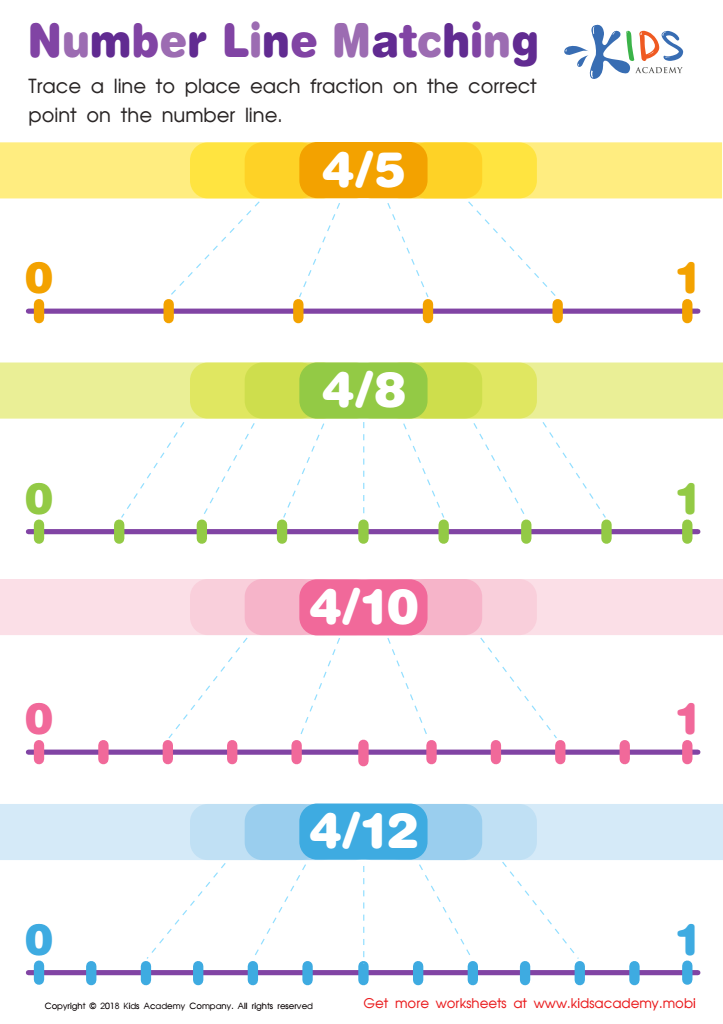
Number Line Matching Worksheet
 Assign to My Students
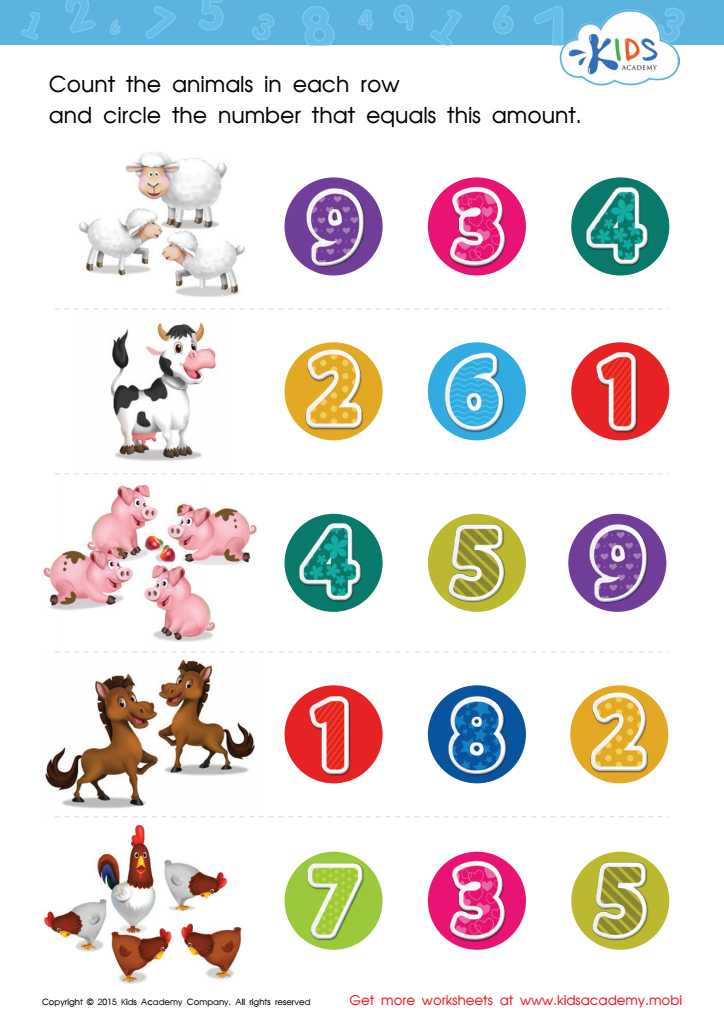
Count and Match 1 – 5 Math Worksheet
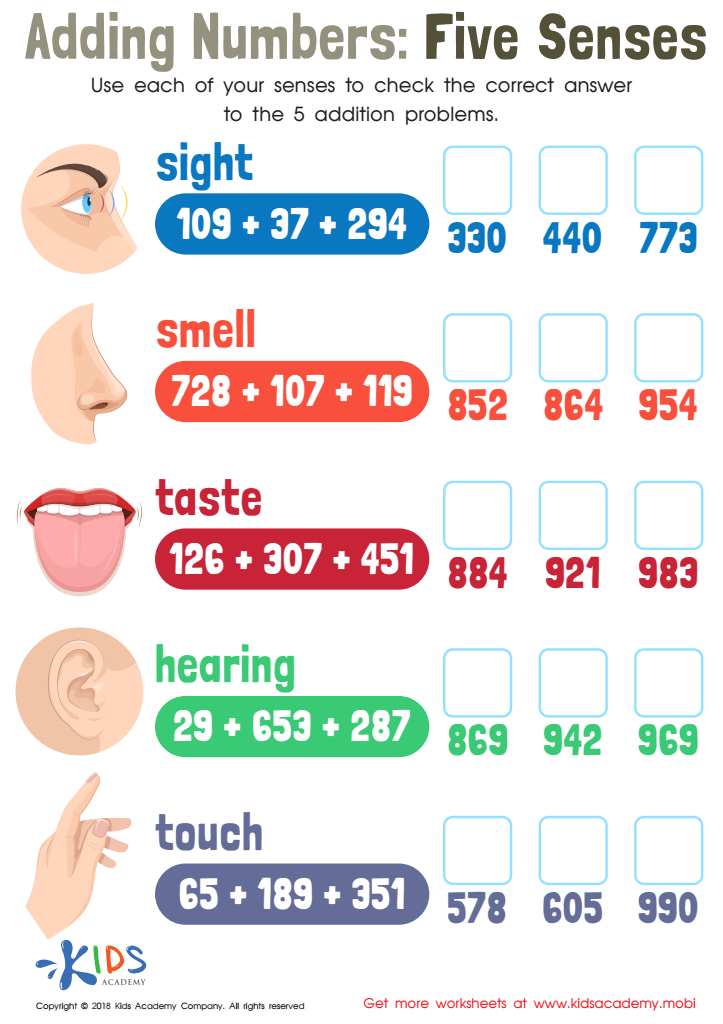
Adding Numbers: Five Senses Worksheet








Associative learning is a crucial aspect of childhood education, particularly in early math for ages 5-8. It enables children to make connections between concepts and ideas, which enhances their understanding and retention of mathematical principles. For parents and teachers, nurturing this type of learning fosters critical thinking and problem-solving skills, essential for academic success and real-life application.
At this formative age, children often learn best through engaging, hands-on experiences that relate mathematical concepts to their everyday lives. Associative learning allows them to bridge known and unknown information, enabling them to solve problems more intuitively. For example, recognizing patterns, such as associating shapes with their names and properties, supports both spatial and numerical reasoning.
Furthermore, this method of learning encourages a positive attitude toward math. When children see the relevance of mathematics in their surroundings and can make connections between different ideas effortlessly, they're more likely to develop confidence in their abilities.
In sum, fostering associative learning in math for children ages 5-8 not only strengthens foundational skills but also cultivates a love for learning, equipping them with the tools necessary for future academic endeavors and daily interactions with math.








