Counting practice Normal Math Worksheets for Ages 5-8 - Page 2
28 filtered results
-
From - To
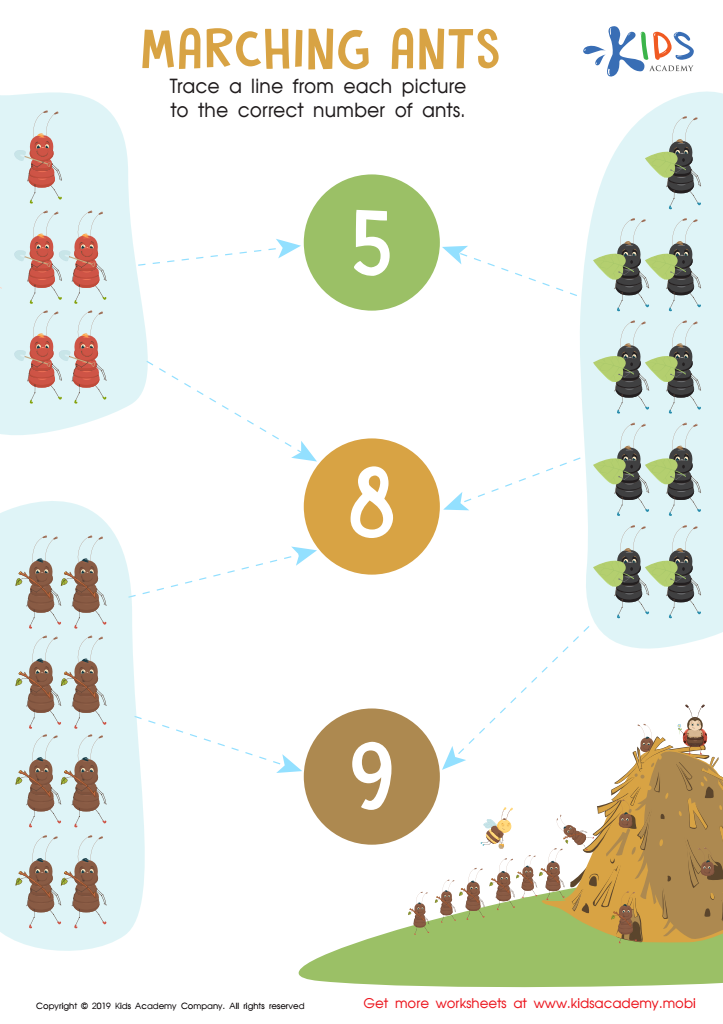
Marching Ants Worksheet
 Assign to My Students
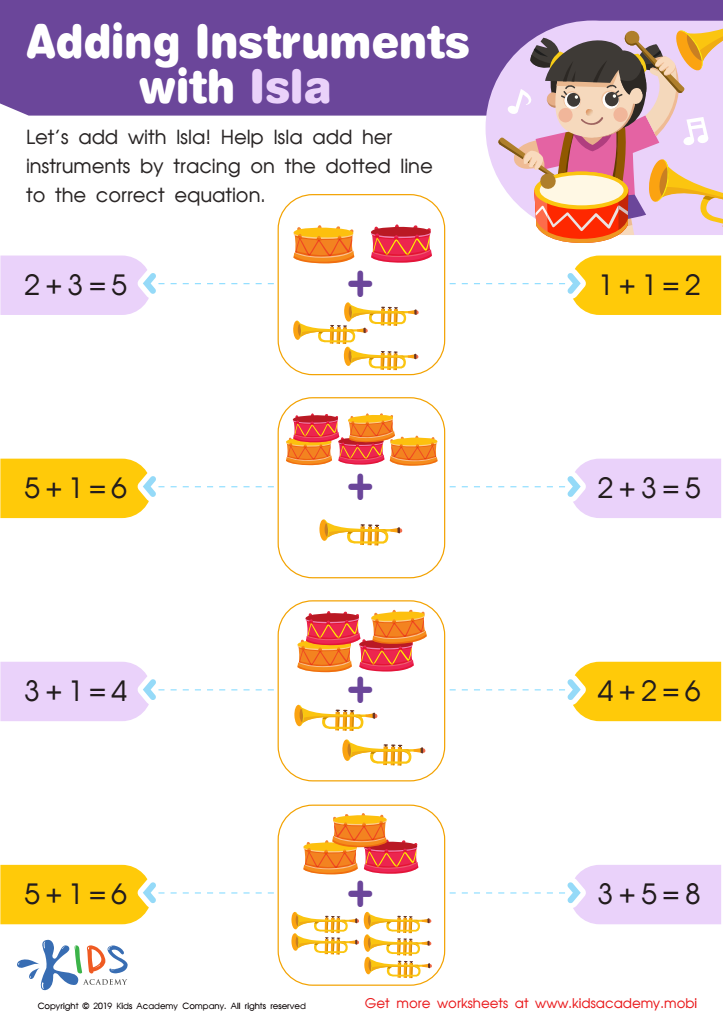
Adding Instruments with Isla Worksheet
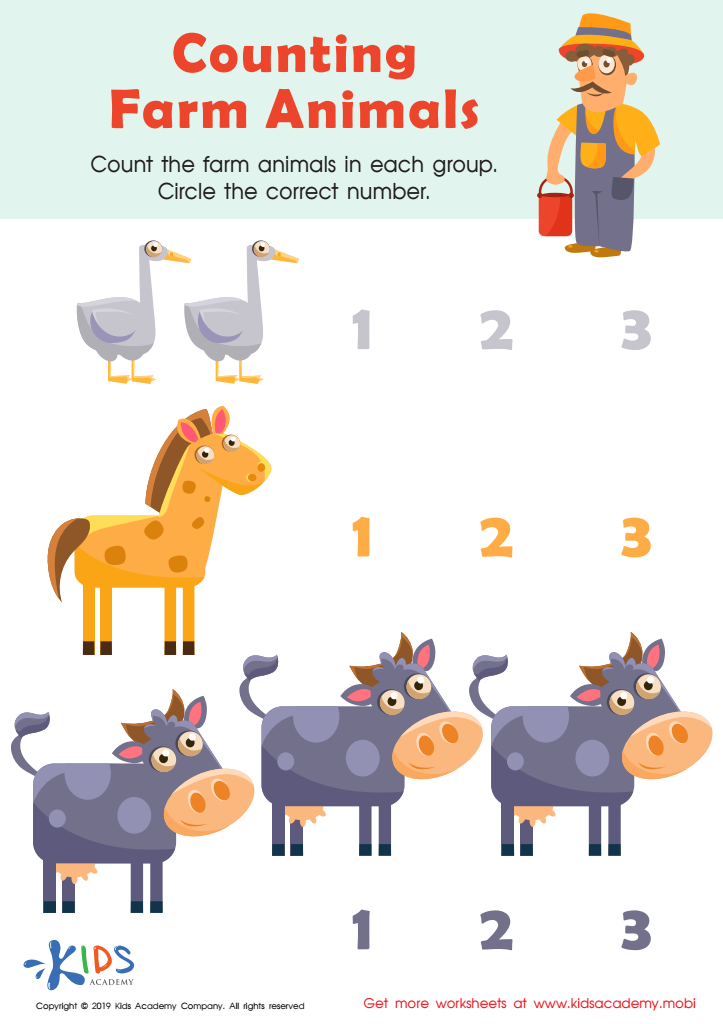
Counting Farm Animals Worksheet
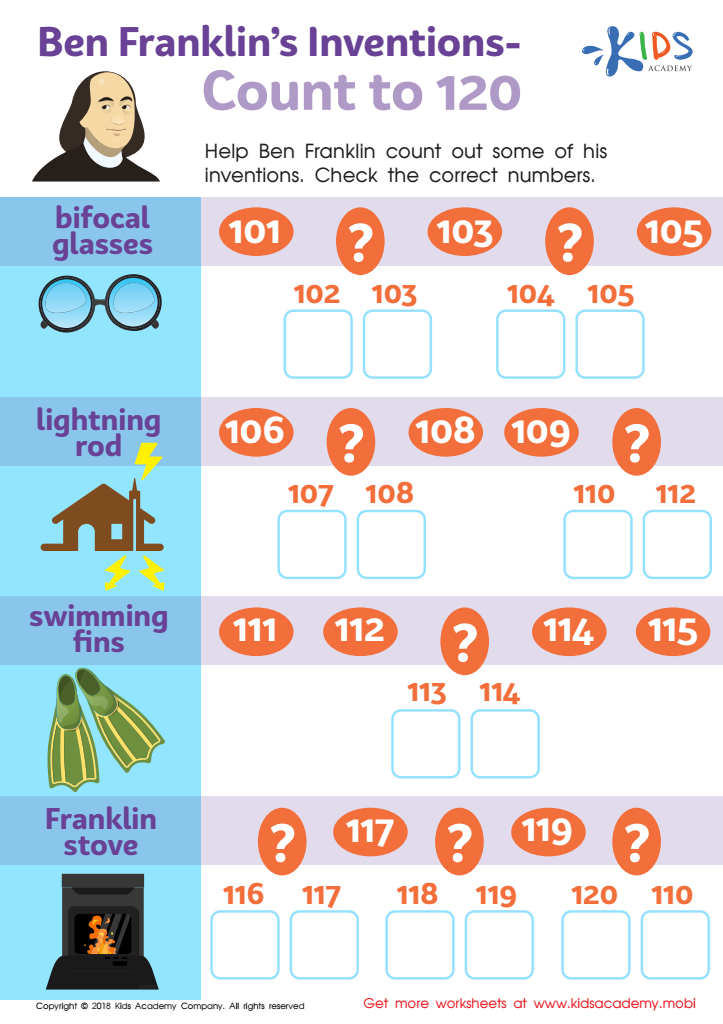
Ben Franklin’s Inventions – Count to 120 Worksheet


.jpg)





Counting practice is essential for children aged 5-8, as it serves as a crucial foundation for their overall mathematical development. At this age, children develop their number sense—the understanding of numbers and their values—through basic counting activities. This early stage of math learning not only helps students to recognize and understand numbers but also enhances their ability to perform simple addition and subtraction.
Parents and teachers should prioritize counting practice because it promotes critical cognitive skills. Engaging in counting activities strengthens children's ability to focus, improves memory retention, and fosters problem-solving strategies. Furthermore, counting practice encourages the development of fine motor skills through the use of manipulatives like beads or blocks, making learning both tactile and enjoyable.
Additionally, consistent counting practice nurtures confidence and a positive attitude towards math, setting the tone for future academic success. The formative years are critical; children who struggle with foundational math concepts often face challenges in more advanced math later on. Therefore, investing time in counting practice helps establish a solid math foundation, equips children with necessary skills, and instills a love for learning, ultimately paving the way for lifelong mathematical proficiency and enthusiasm.








