Developing problem-solving abilities Normal Math Worksheets for Ages 5-8
3 filtered results
-
From - To
Unlock your child's potential with our "Developing Problem-Solving Abilities" math worksheets designed for ages 5-8! These engaging and interactive activities encourage young learners to think critically, reason effectively, and apply math concepts to real-life situations. Our carefully crafted worksheets focus on enhancing problem-solving skills through age-appropriate challenges that foster creativity and logical thinking. With a variety of fun exercises, kids will enjoy mastering essential math skills while building confidence in their abilities. Perfect for classroom use or at-home learning, these resources provide an exciting way to prepare your child for future academic success. Explore the world of problem-solving today!
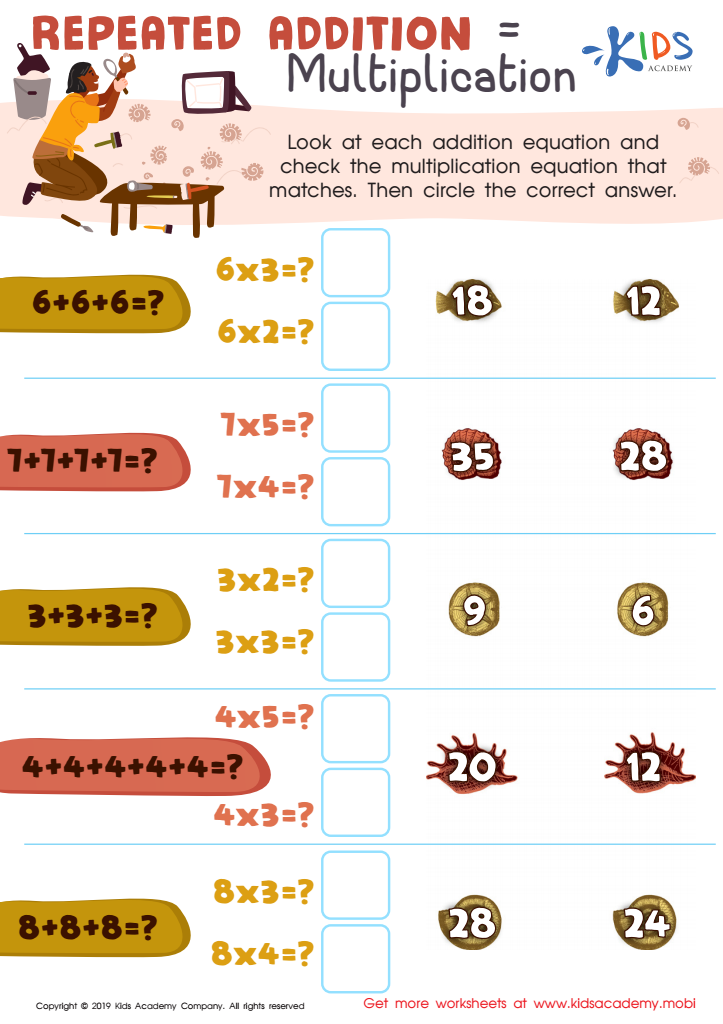
Repeated Addition = Multiplication Worksheet
 Assign to My Students
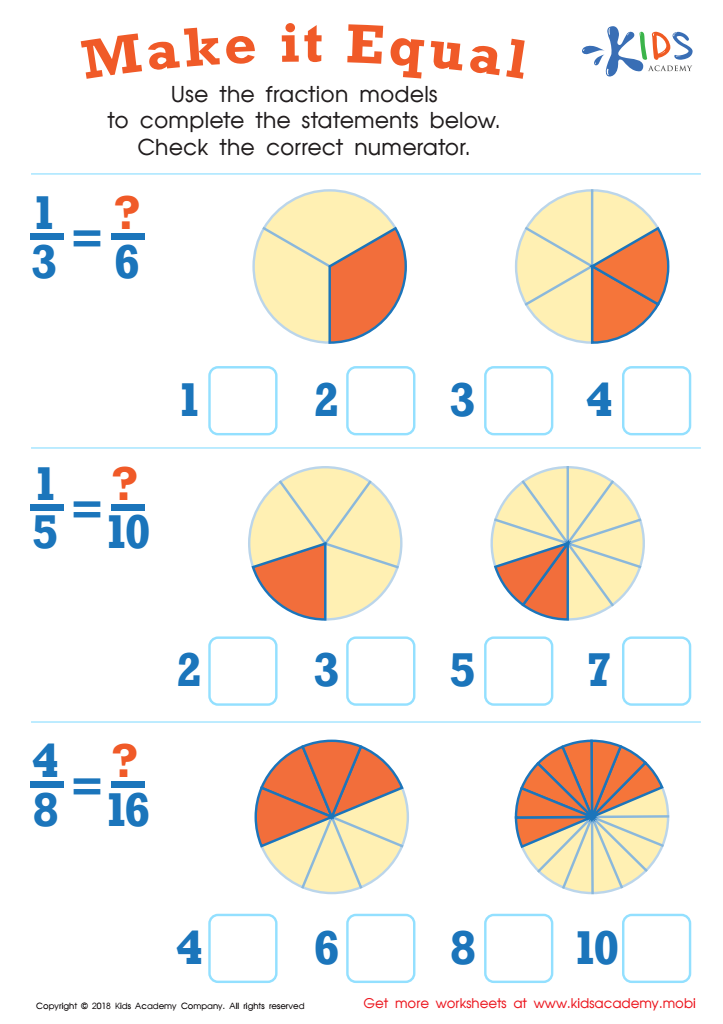
Make It Equal Worksheet
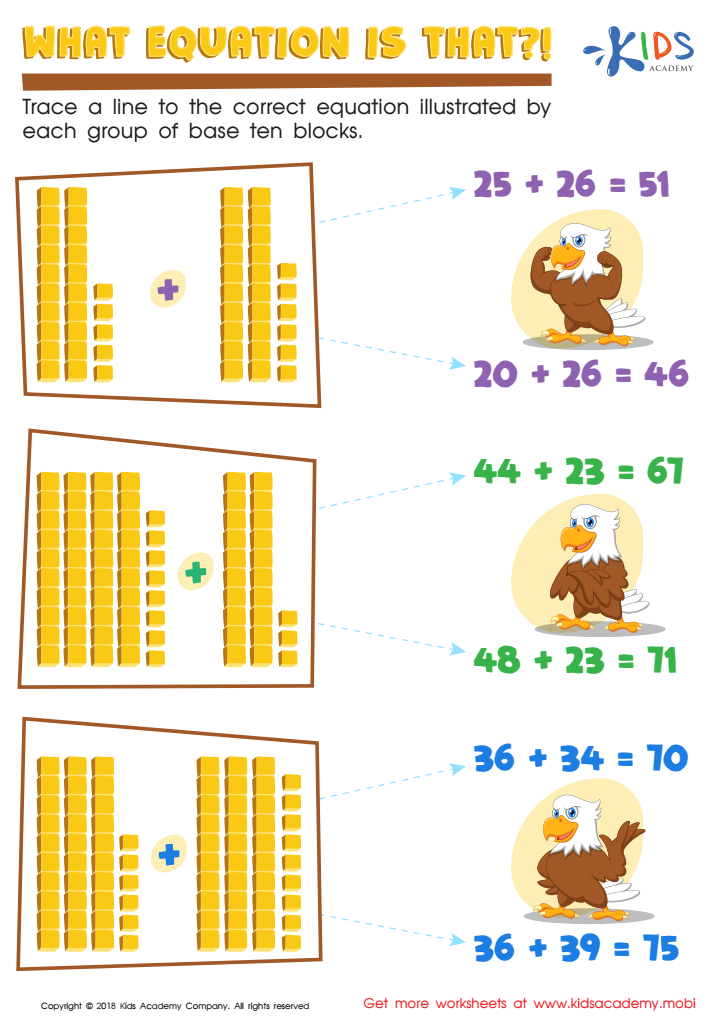
What Equation Is That? Worksheet






%20(1).jpg)
Developing problem-solving abilities in children ages 5-8 is crucial for their cognitive and emotional growth. During these early developmental years, children are naturally curious and eager to explore, making it an ideal time to foster mathematical thinking and critical reasoning. Problem-solving not only builds a foundational understanding of mathematical concepts but also enhances skills such as critical thinking, logical reasoning, and perseverance.
Encouraging mathematics through problem-solving allows children to approach challenges creatively and boosts their confidence in their capabilities. This can make math feel more engaging and less intimidating, promoting a positive attitude toward learning. Additionally, problem-solving helps children learn to break down complex tasks into manageable parts, an essential skill that extends beyond academic settings into everyday life.
For parents and teachers, recognizing the importance of developing these skills is vital for preparing children for the future. As society increasingly relies on analytical and technological skills, providing young learners with a solid mathematical foundation ensures they are well-equipped to navigate future educational and career challenges. Ultimately, fostering problem-solving abilities lays the groundwork not only for success in math but also for critical life skills, paving the way for lifelong learning and adaptability.








