Number comparison Normal Math Worksheets for Ages 5-8
5 filtered results
-
From - To
Explore our engaging Number Comparison Normal Math Worksheets designed for children ages 5-8, perfect for fostering essential math skills! These worksheets help young learners enhance their number recognition and comparative thinking by using engaging visuals and interactive activities. Each worksheet encourages children to practice comparing numbers, identifying greater or lesser values, and mastering foundational math concepts in a fun and accessible way. Accompanied by vibrant illustrations, our materials are tailored to keep students motivated while learning. Perfect for classroom use or at-home practice, these worksheets provide parents and educators with invaluable resources to support math proficiency in early childhood education.
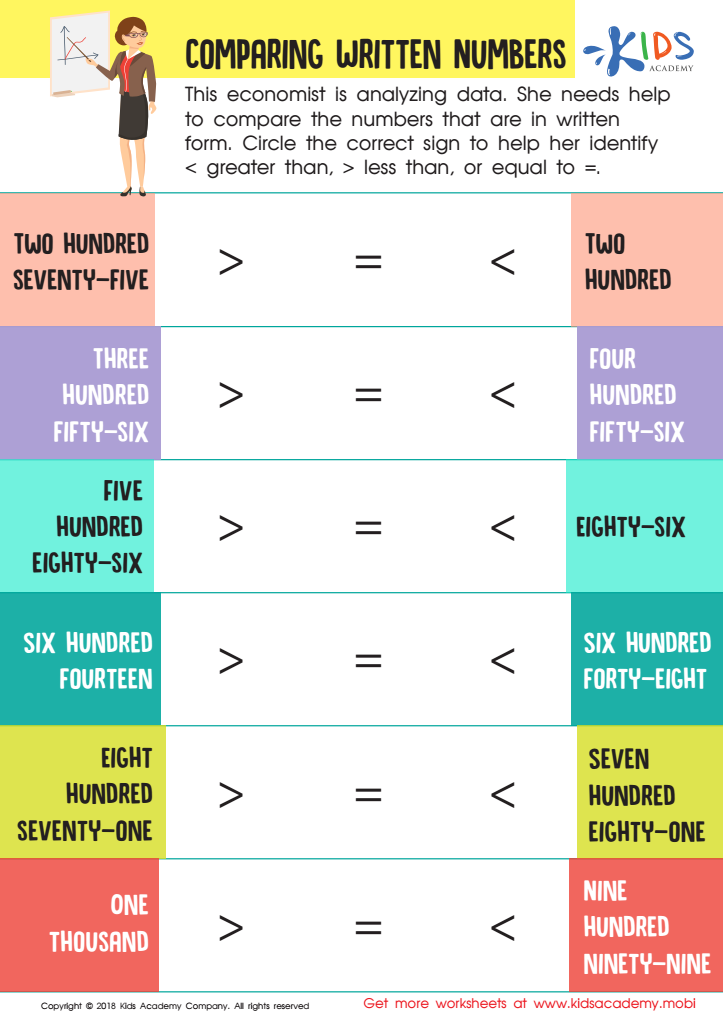
Comparing Written Numbers Worksheet
 Assign to My Students
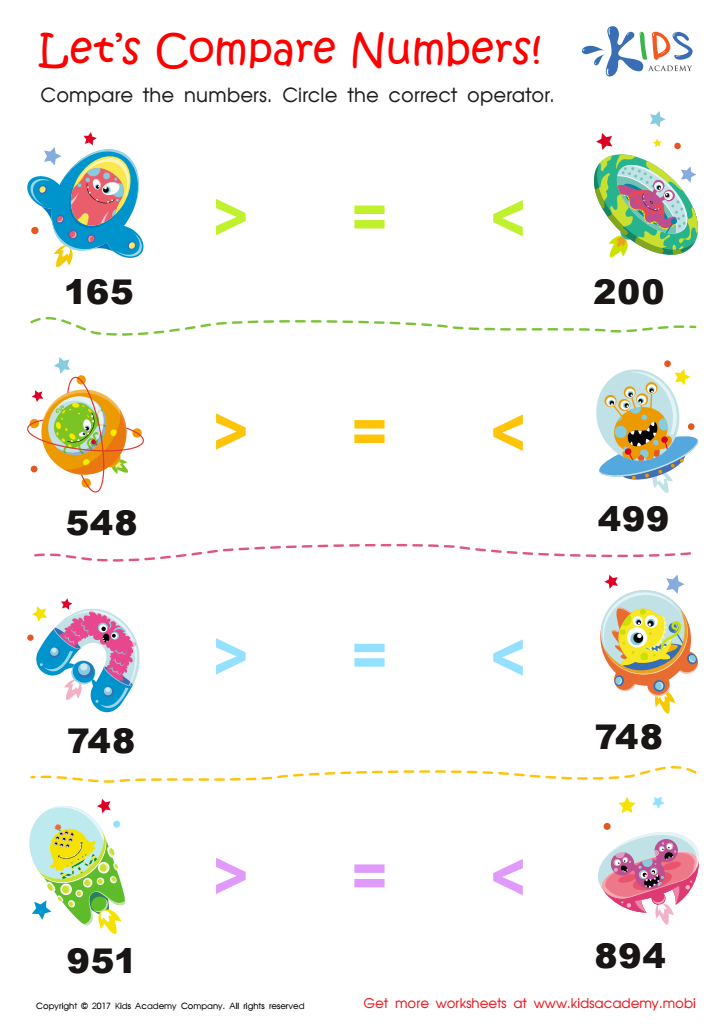
Comparing Numbers Worksheet for 2nd Grade
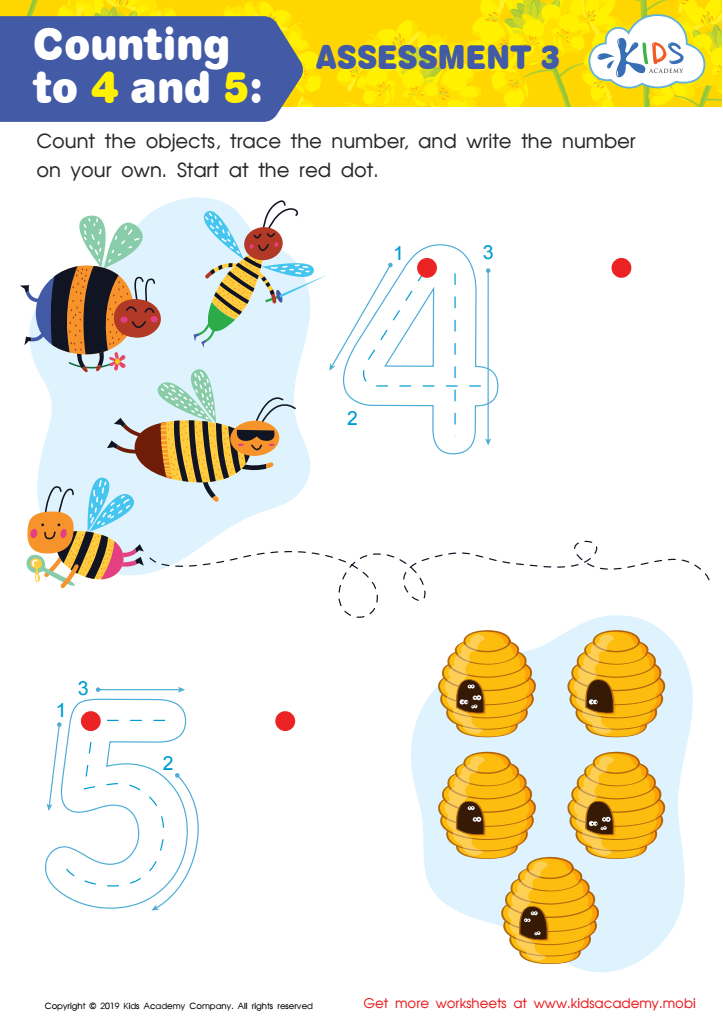
Counting to 4 and 5: Assessment 3 Worksheet
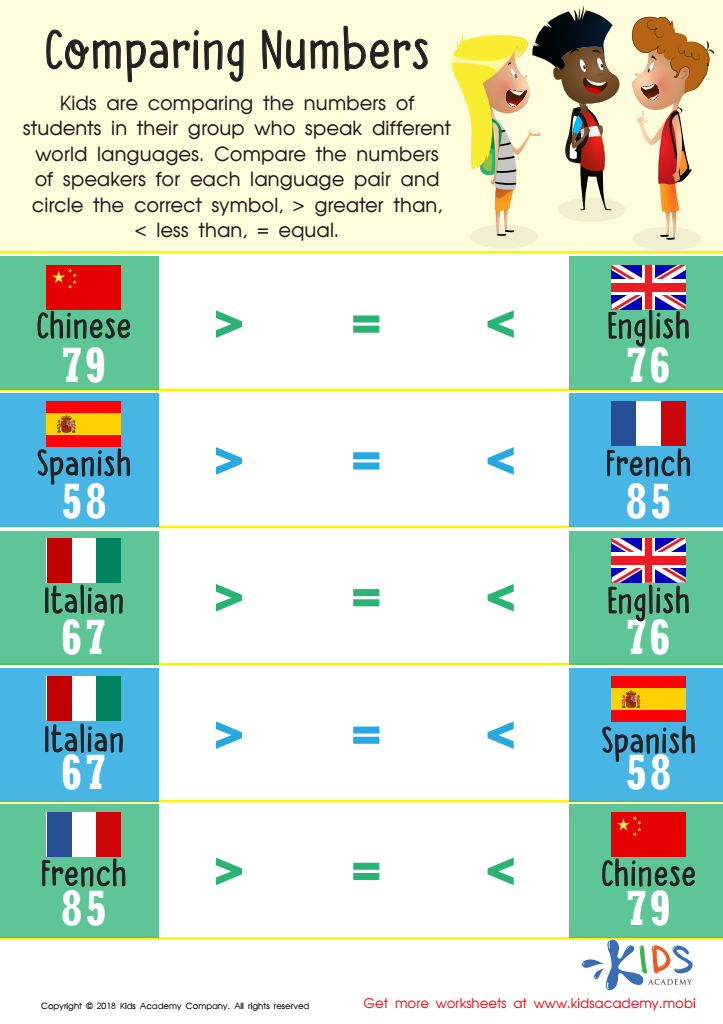
Comparing Numbers Worksheet for 1st Grade
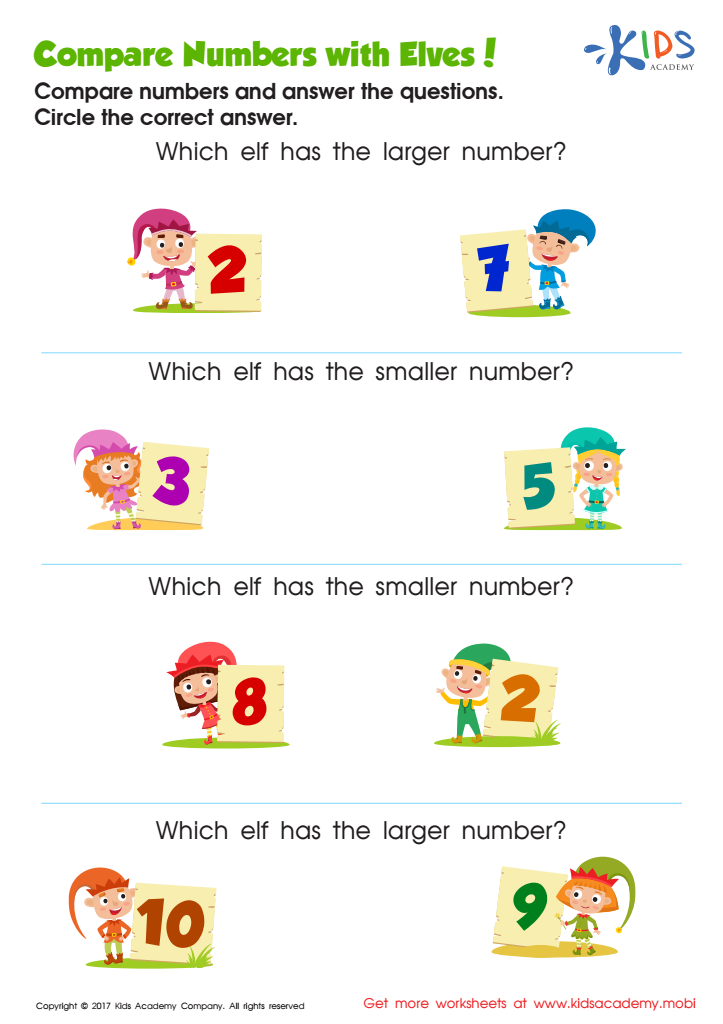
Comparing Numbers Worksheet for Kindergarten








Number comparison is a foundational skill in mathematics, especially for children aged 5-8. Understanding how to compare numbers helps young learners develop critical thinking and problem-solving abilities. During this stage, kids are beginning to grasp the concept of quantity and value, which lays the groundwork for more complex mathematical concepts.
By learning number comparison, children can enhance their number sense, an essential skill that allows them to understand and manipulate numbers effectively. This skill encourages them to engage in activities like counting, estimating, and using practical applications in everyday situations, such as determining which of two items costs more or measuring ingredients for cooking.
Moreover, mastering number comparison boosts children's confidence, making them more willing to tackle challenges in mathematics as they progress. When parents and teachers engage in activities that promote these skills, they not only foster a positive attitude toward math but also create an enriching learning environment. This supportive context encourages children to experiment and explore mathematical concepts without fear of failure, ultimately influencing their overall academic success. In a technologically driven world, foundational math skills will empower future generations, making this a crucial focus for parents and educators alike.








