Reading analog clocks Normal Math Worksheets for Ages 5-8
3 filtered results
-
From - To
Welcome to our dedicated section for "Reading Analog Clocks" math worksheets designed specifically for children aged 5-8. These engaging and interactive worksheets provide young learners with the foundational skills needed to read and understand analog clocks. Featuring colorful illustrations and age-appropriate exercises, our worksheets make learning to tell time fun and effective. Kids will practice identifying hour and minute hands, reading different times, and solving simple time-related problems. Perfect for both classroom use and at-home learning, these resources foster essential math skills while also enhancing clock-reading confidence. Let’s make learning to tell time an exciting adventure for your child!
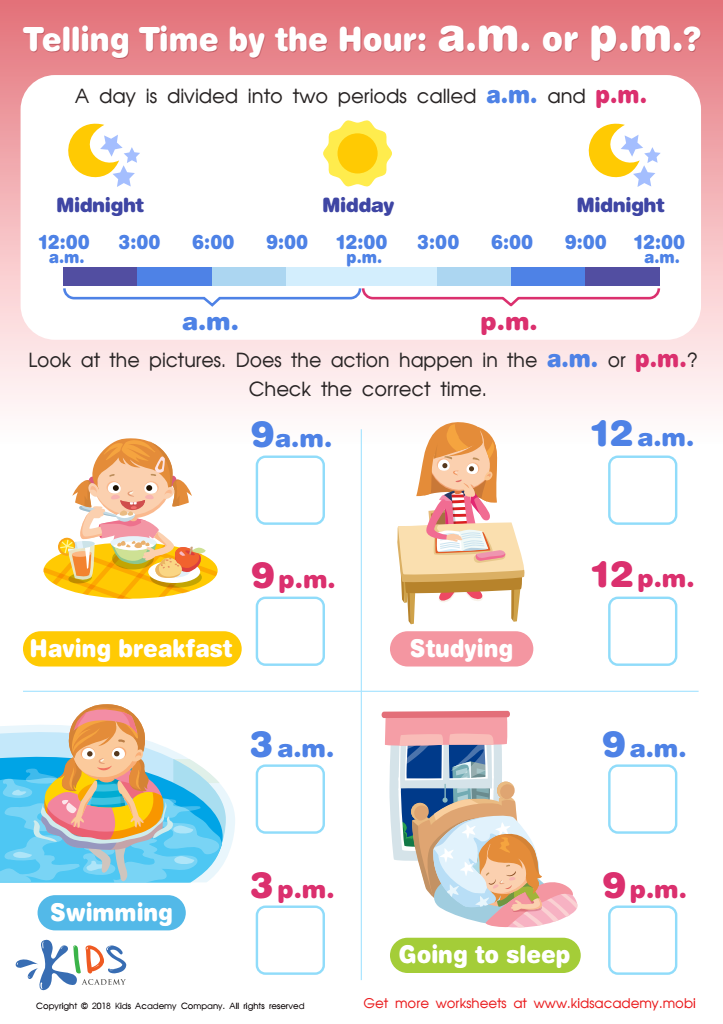
Tilling Time by the Hour: a.m. or p.m.? Worksheet
 Assign to My Students
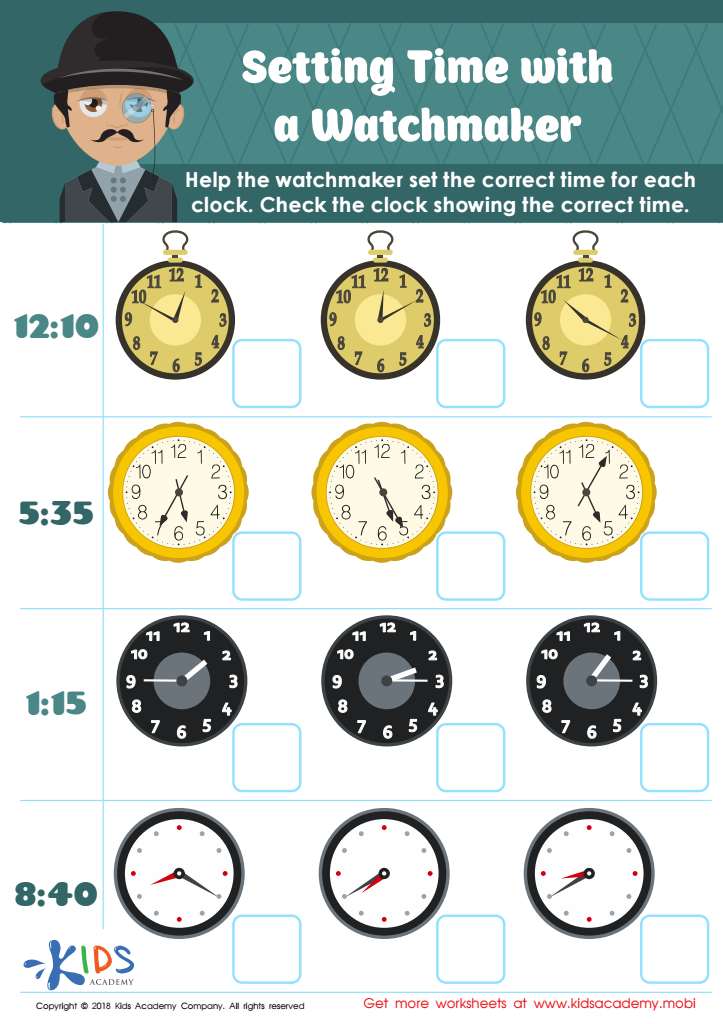
Setting Time with Watchmaker Worksheet
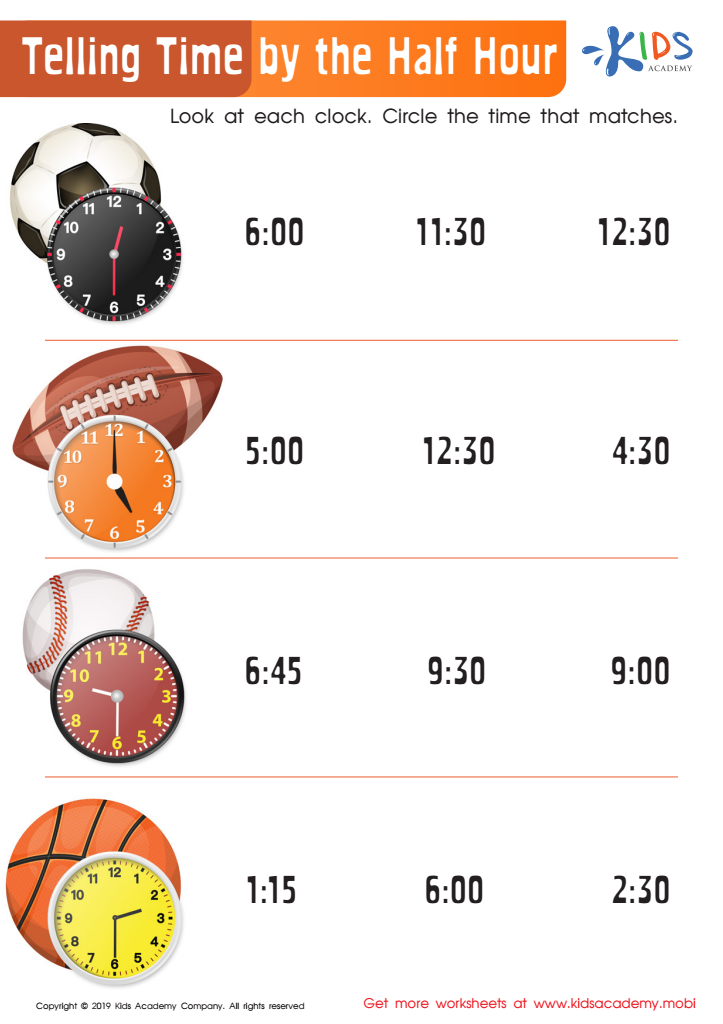
Telling Time by the Half Hour Worksheet







Learning to read analog clocks is an essential skill for children ages 5-8, as it not only enhances their mathematical abilities but also improves their understanding of time management. Reading an analog clock fosters essential cognitive skills, including critical thinking and spatial awareness. Unlike digital clocks, which simply display the time, analog clocks require children to interpret the position of the hands, promoting conceptual thinking as they learn to associate numbers with their corresponding timings.
Moreover, understanding how to tell time boosts a child's independent decision-making. For instance, knowing when it is time to start an activity helps them develop routines and improve their punctuality, which are valuable life skills. Learning to navigate time on an analog clock can inspire confidence and self-reliance.
Additionally, parents and teachers can use analog clocks as a gateway for discussing various math concepts, such as counting by fives or understanding fractions, contributing to a composite learning experience. Overall, parents and teachers play a vital role in nurturing these skills, setting the foundation for a child's future academic success and equipping them with essential life skills that extend beyond the classroom.








