Fine Motor Skills Normal Matching Worksheets for Ages 5-8
4 filtered results
Difficulty Level
Grade
Age
-
From - To
Subject
Activity
Standards
Enhance your child's fine motor skills with our engaging Normal Matching Worksheets designed specifically for ages 5-8. These fun, colorful worksheets are perfect for developing hand-eye coordination and precision while fostering essential early learning abilities. Our matching activities allow children to connect images, shapes, and letters, encouraging both cognitive and physical skill development. Ideal for home or classroom use, these worksheets provide a rich, interactive experience that keeps young learners motivated and excited about practice. Equip your child for success in their educational journey – explore our collection of fine motor skills matching worksheets today and watch their abilities flourish!
Favorites
With answer key
Interactive
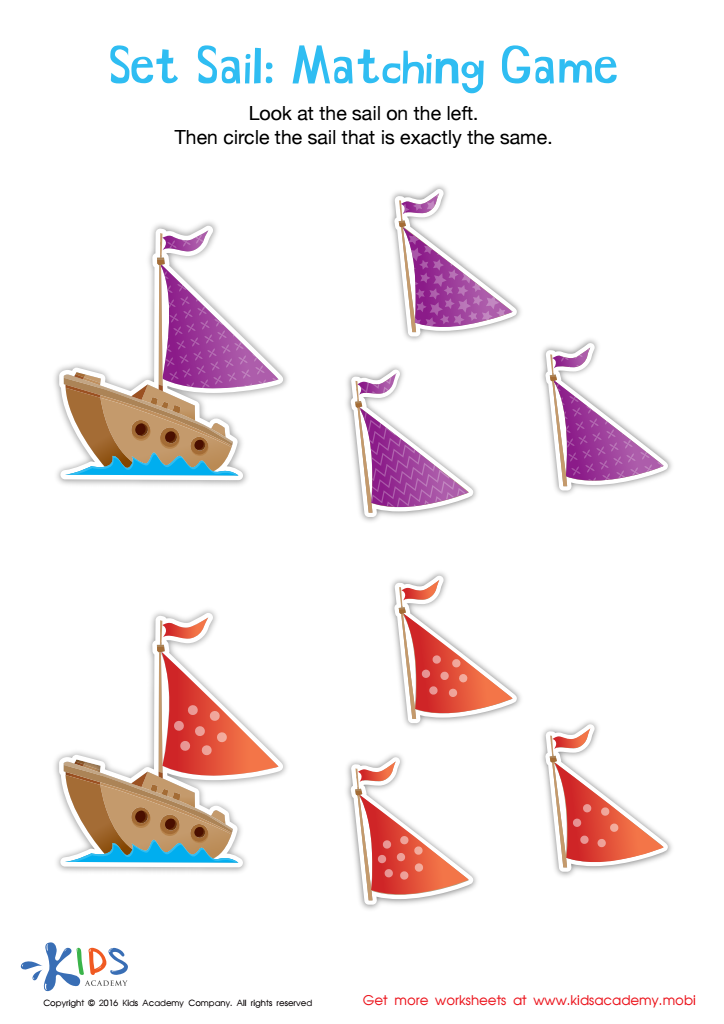
Set Sail Worksheet
Set sail with this fun matching game for toddlers! Kids will love finding the same pattern on the sails, improving their problem-solving and counting skills. Enjoy this bright and engaging worksheet!
 Assign to My Students
Set Sail Worksheet
Worksheet
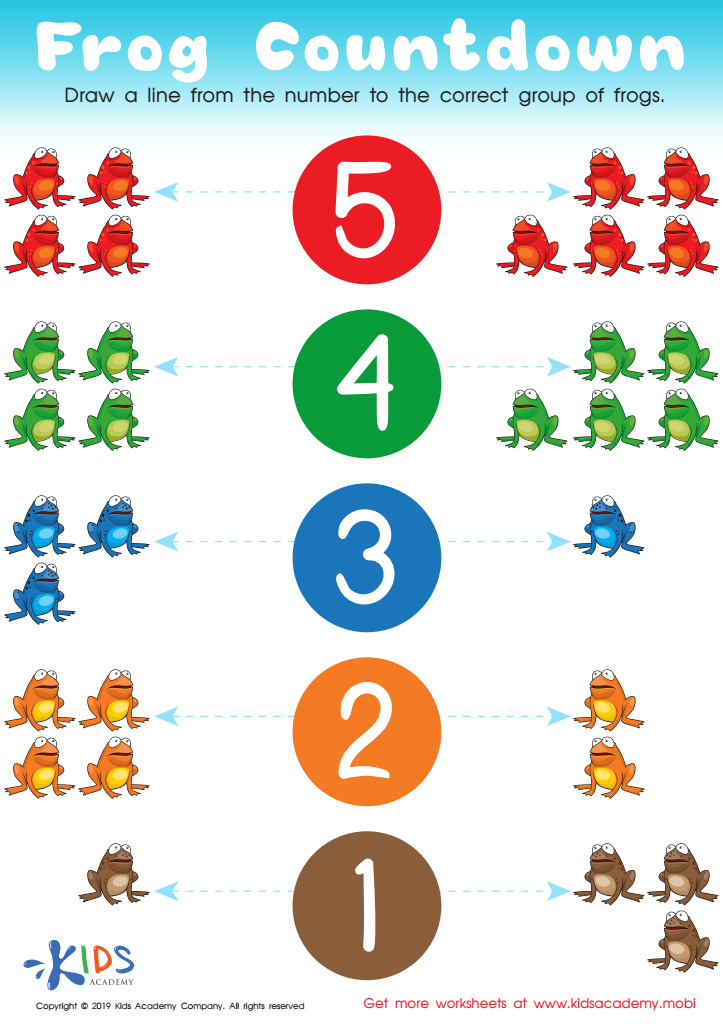
Frog Countdown Worksheet
Make learning fun for kids with traceable printouts! This exercise has kids counting frogs and drawing a line to match the number. Expand their knowledge with activities like this, beyond the basics they learn in school. Help them explore new ways of learning and make it enjoyable.
Frog Countdown Worksheet
Worksheet
Join Kids Academy for Free
Who is primarily going to use this learning content?








Fine motor skills are crucial for children aged 5-8 as they set the groundwork for daily tasks and academic success. These skills involve the coordination of small muscles in the hands and fingers, enabling children to perform essential activities such as writing, cutting, and manipulating objects. The development of fine motor skills enhances hand-eye coordination, dexterity, and control, all of which are vital for children as they begin to engage more in classroom activities and hobbies.
When parents and teachers pay attention to fine motor skills, they can identify areas where children may need additional support or practice. This can lead to early interventions that prevent future difficulties, ensuring that children gain confidence in their abilities. Furthermore, these skills are linked to brain development and cognitive skills, including problem-solving and concentration.
Activities that promote fine motor skills, like crafts, building models, or using utensils, can be fun and engaging for children. Encouraging these playful yet purposeful activities fosters not only skill development but also a joyful learning environment. Ultimately, by prioritizing fine motor skill development, parents and teachers help children build a solid foundation for lifelong learning and independence.