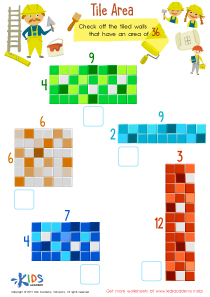
Matching skills Normal Matching Worksheets for Ages 5-8
4 filtered results
-
From - To
Enhance your child’s problem-solving and cognitive abilities with our Matching Skills Worksheets tailored for ages 5-8. These engaging, educational worksheets are designed to strengthen your child’s visual discrimination, memory, and logical thinking by challenging them to match objects, patterns, and shapes. Perfect for fostering early learning skills, each activity encourages attention to detail while making learning enjoyable. Whether used at home or in the classroom, Kids Academy’s Matching Skills Worksheets provide a fun and effective way to develop essential skills vital for academic success. Get started today and watch your young learner thrive!
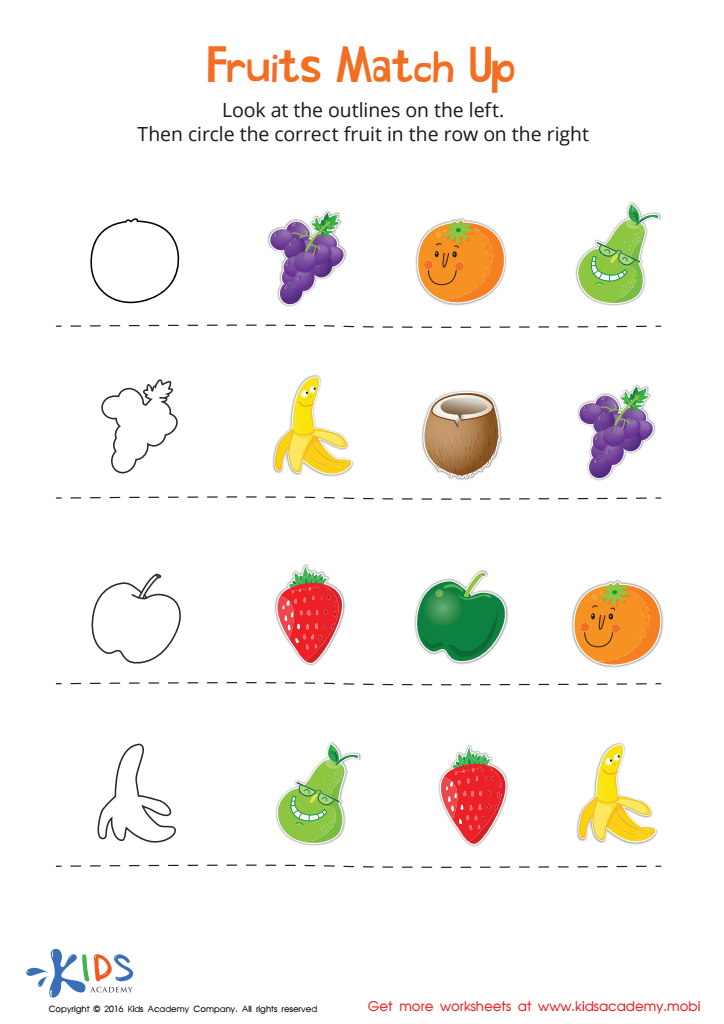
Fruits Match Up Worksheet
 Assign to My Students
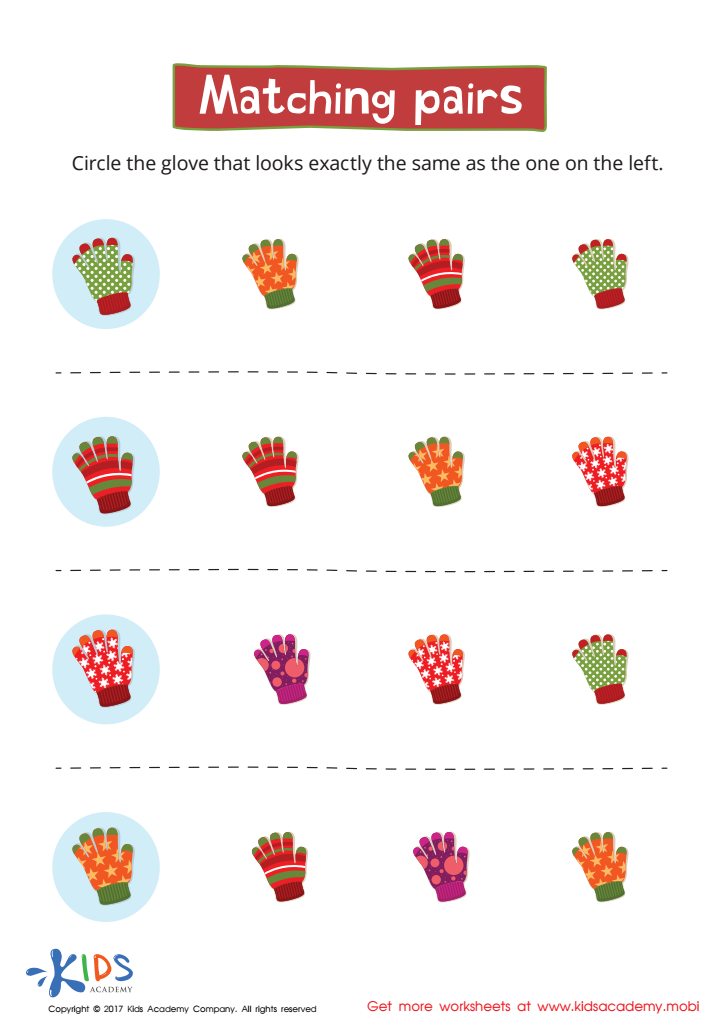
Matching: Matching Pairs Worksheet
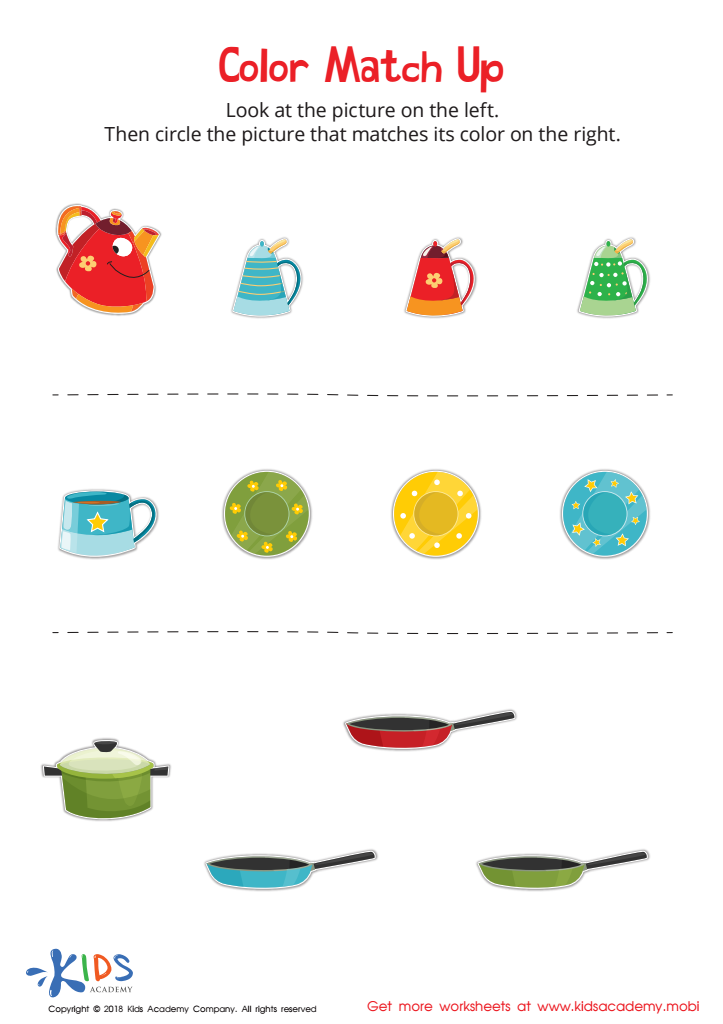
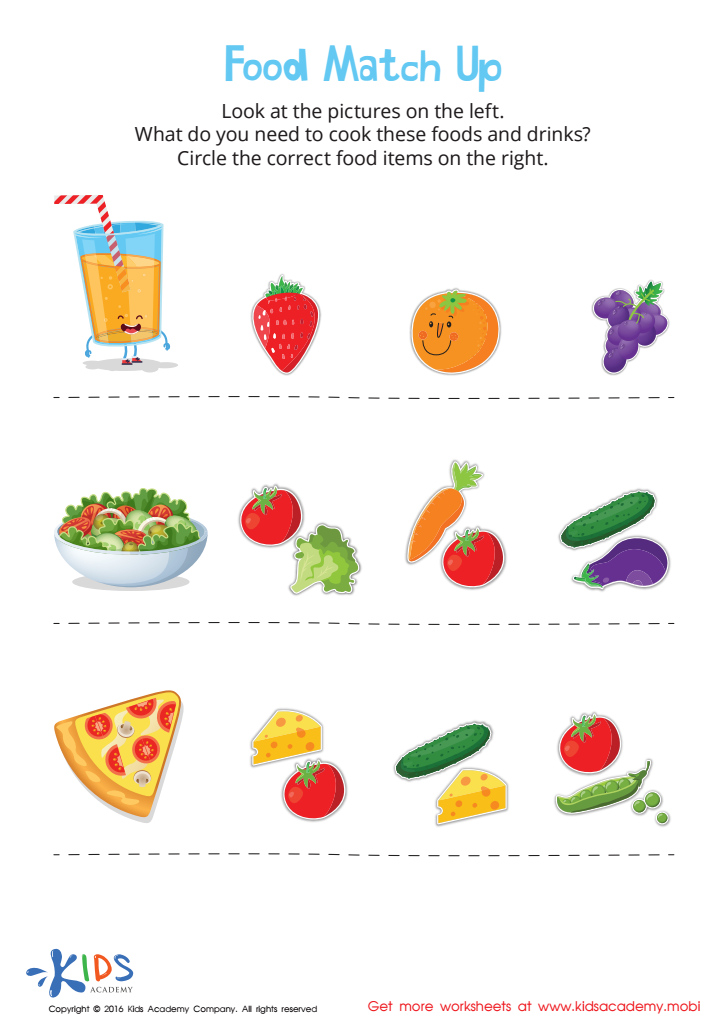
Food Match Up Worksheet







Matching skills are crucial for children aged 5-8 as they serve as foundational cognitive abilities that support a child's overall learning and development. These skills involve identifying similarities and differences, recognizing patterns, and pairing objects or concepts. Fostering these abilities has numerous benefits that both parents and teachers should value.
Firstly, matching skills enhance cognitive development. By engaging in matching activities, children improve their memory, concentration, and attention to detail. They learn to sort and categorize information, which is critical for problem-solving and logical thinking.
Secondly, matching exercises aid in the development of early literacy and numeracy skills. When children match letters, words, or numbers, they become more familiar with these symbols, which facilitates reading and arithmetic proficiency.
Thirdly, matching activities boost visual discrimination and fine motor skills. This visual-motor integration is essential for tasks such as writing and handling objects, directly impacting academic success and day-to-day activities.
Lastly, matching activities can be a source of enjoyment and confidence-building. Successfully completing these tasks gives children a sense of accomplishment, motivating them to tackle more complex challenges.
In essence, matching skills are integral to a child's educational journey and overall development. Prioritizing these activities equips children with the tools necessary for academic achievement and everyday problem-solving.