Number Recognition Normal Matching Worksheets for Ages 5-8
6 filtered results
-
From - To
Our "Number Recognition Normal Matching Worksheets for Ages 5-8" are expertly crafted to enhance your child's mathematical foundation. Designed by educational professionals, these engaging worksheets help children practice matching numbers with corresponding quantities, objects, or number words. Ideal for young learners, they support cognitive development and numerical fluency through fun and interactive activities. Perfect for classroom use or at-home practice, our worksheets feature colorful visuals and are aligned with educational standards to ensure your child not only learns but enjoys the learning process. Foster confidence in math with our comprehensive worksheets aimed at ages 5 to 8.
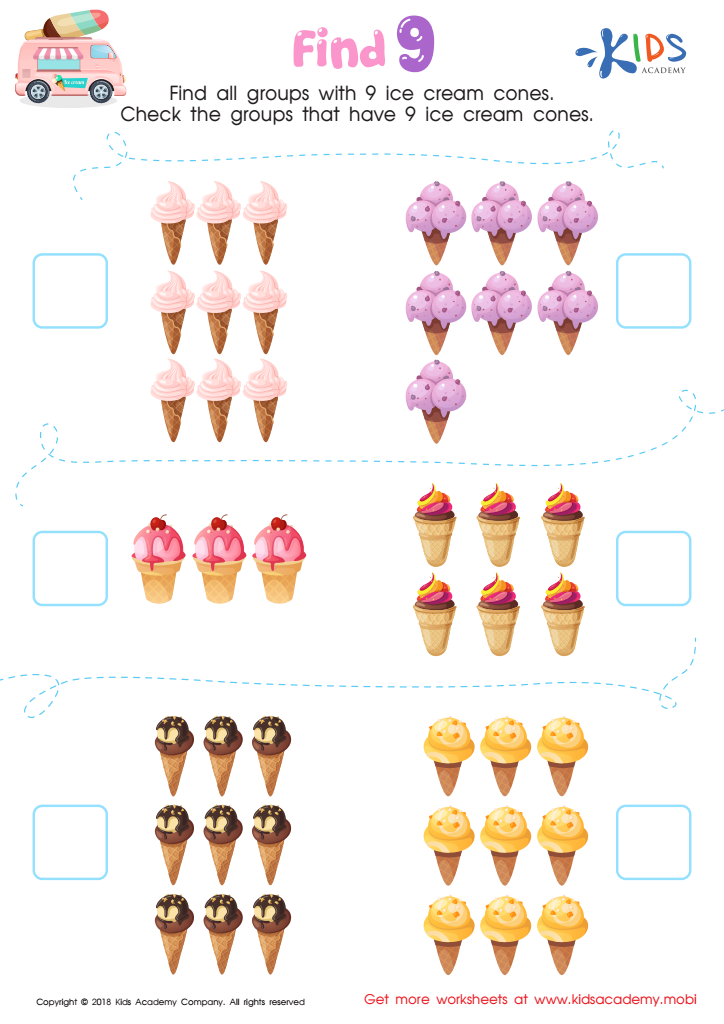
Find 9 Worksheet
 Assign to My Students
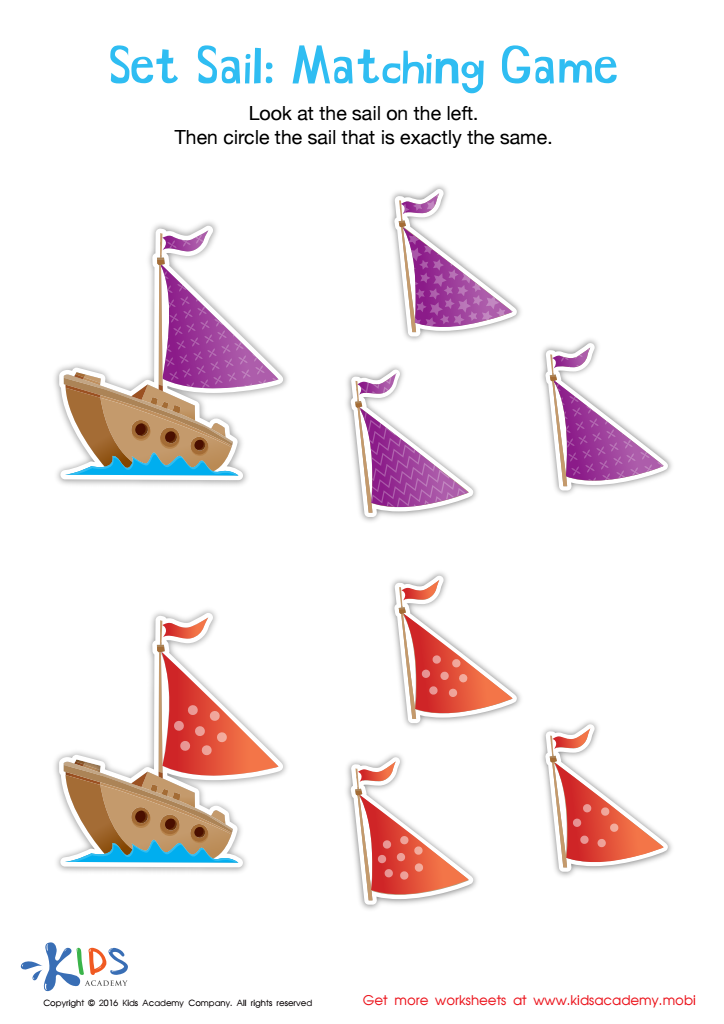
Set Sail Worksheet
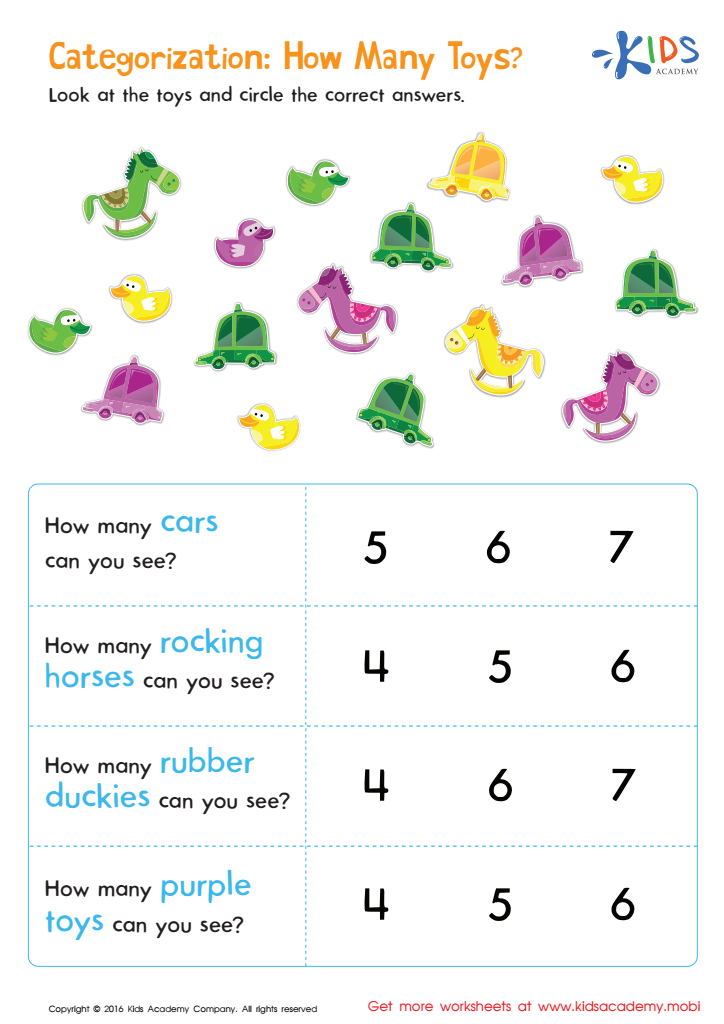
Classifying Toys by Type and Color Sorting Worksheet
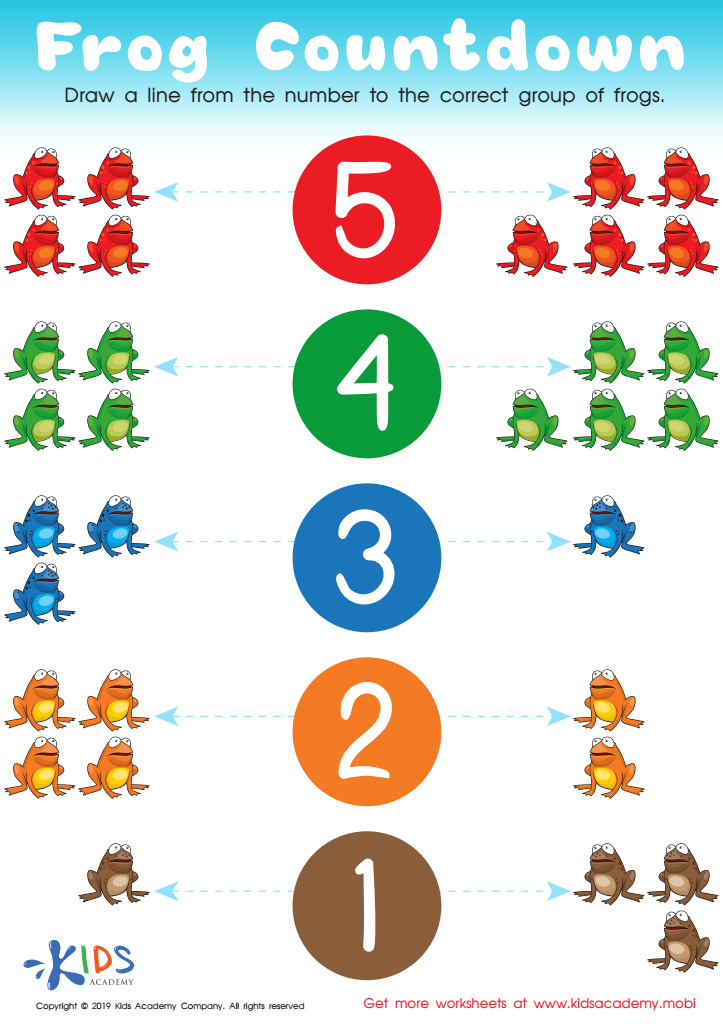
Frog Countdown Worksheet
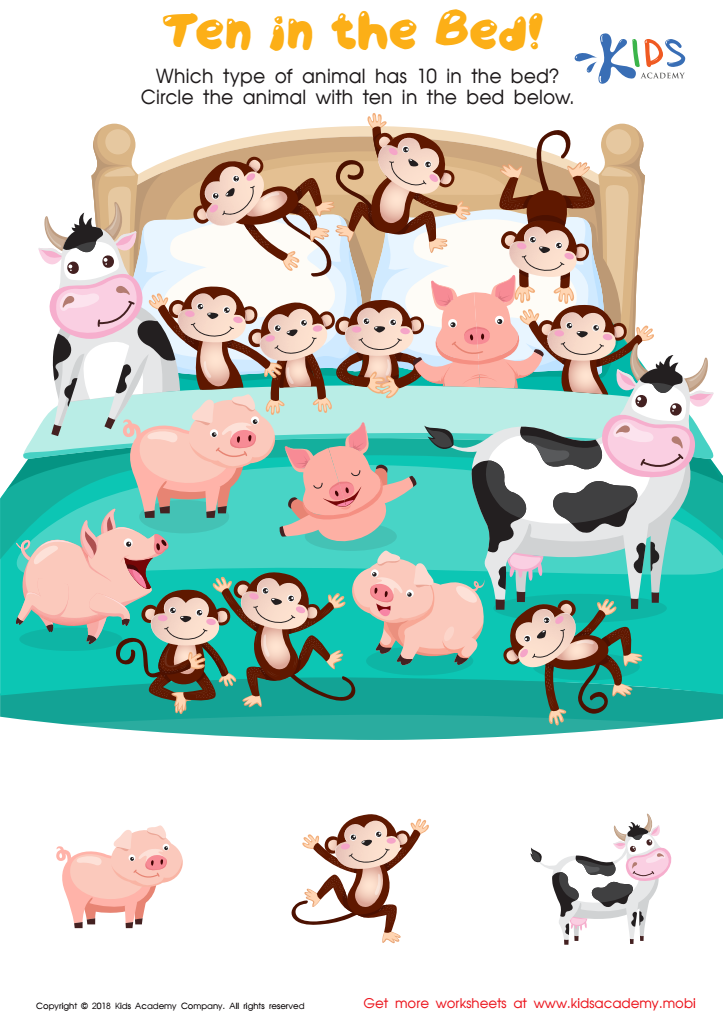
Ten in the Bed Worksheet
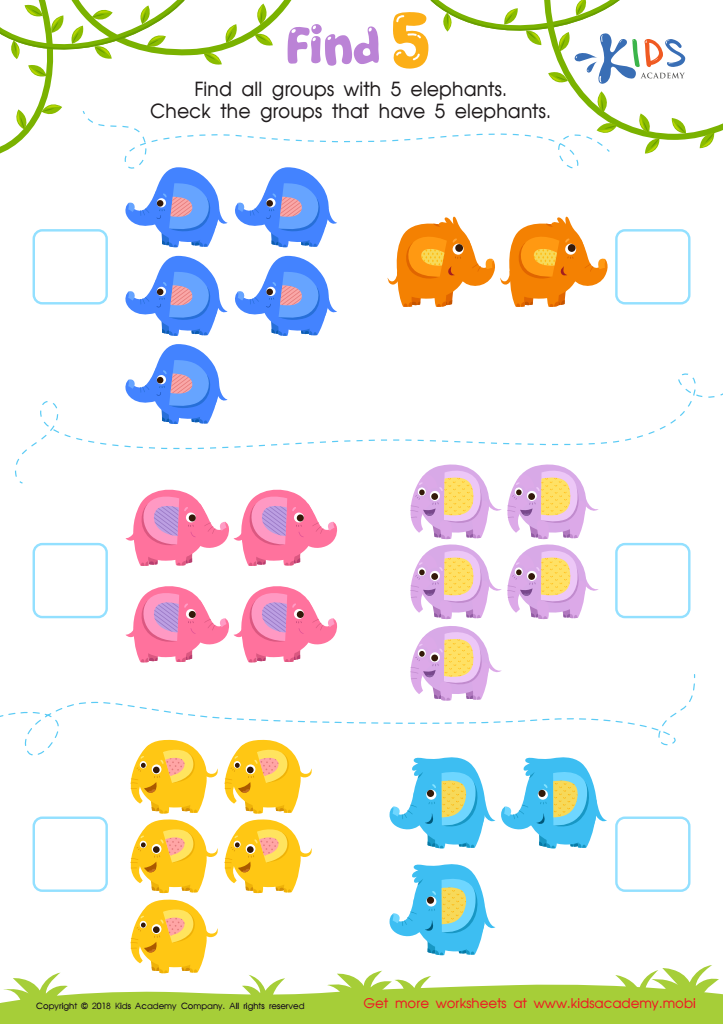
Find 5 Worksheet








Number Recognition and Normal Matching are fundamental building blocks in a child's early education, particularly between the ages of 5-8. During this critical developmental stage, children are laying the groundwork for advanced numeracy skills that are essential for their academic success and everyday life.
Firstly, number recognition involves identifying and naming numbers, which is crucial for daily tasks like counting, comparing quantities, or understanding time. Mastery of number recognition allows children to participate in classroom activities confidently and act independently in real-world scenarios.
Normal matching, which pairs numbers with their corresponding quantities or other related elements, fosters cognitive development by enhancing problem-solving skills and logical thinking. This practice helps children understand the concept of quantity and improves their ability to perform basic arithmetic operations like addition and subtraction.
Moreover, proficiency in these areas directly supports literacy development. Many educational activities, stories, and games incorporate numbers. When children are comfortable recognizing and matching numbers, they can fully engage with these resources, enhancing their overall learning experience.
Teachers and parents should care deeply about nurturing these skills, as they are foundational for more complex mathematical concepts, like multiplication, division, and fractions, which children will encounter in higher grades. Providing a strong early foundation in number recognition and normal matching sets the stage for future academic achievements and a lifelong appreciation for learning.








