
Enhancing observation skills Normal Measurement Worksheets for Ages 5-8
3 filtered results
Difficulty Level
Grade
Age
-
From - To
Subject
Activity
Standards
Enhance your child's observation skills with our Normal Measurement Worksheets, designed for ages 5-8, available at Kids Academy. These engaging worksheets are crafted to help young learners practice essential measurement skills through fun and interactive activities. By tackling tasks that involve comparing lengths, heights, and quantities, kids will develop keen observation abilities critical for their academic growth. Our worksheets are perfect for reinforcing classroom learning, supporting homeschooling, or keeping young minds active and productive after school. Explore our carefully curated selection to give your child a solid foundation in measurement and observation while igniting their curiosity and interest in math.
Favorites
With answer key
Interactive
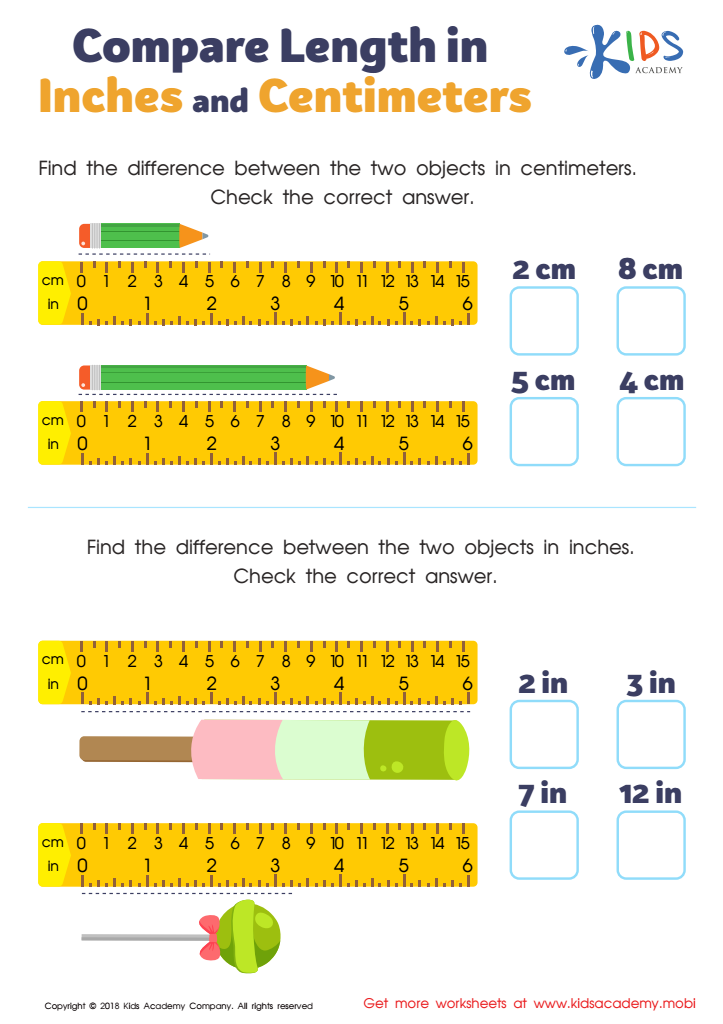
Compare Length in Inches and Centimeters Worksheet
This worksheet has your child measuring objects in both centimeters and inches. The first task requires measuring both objects in centimeters, then finding their difference. The second task is the same but in inches.
 Assign to My Students
Compare Length in Inches and Centimeters Worksheet
Worksheet
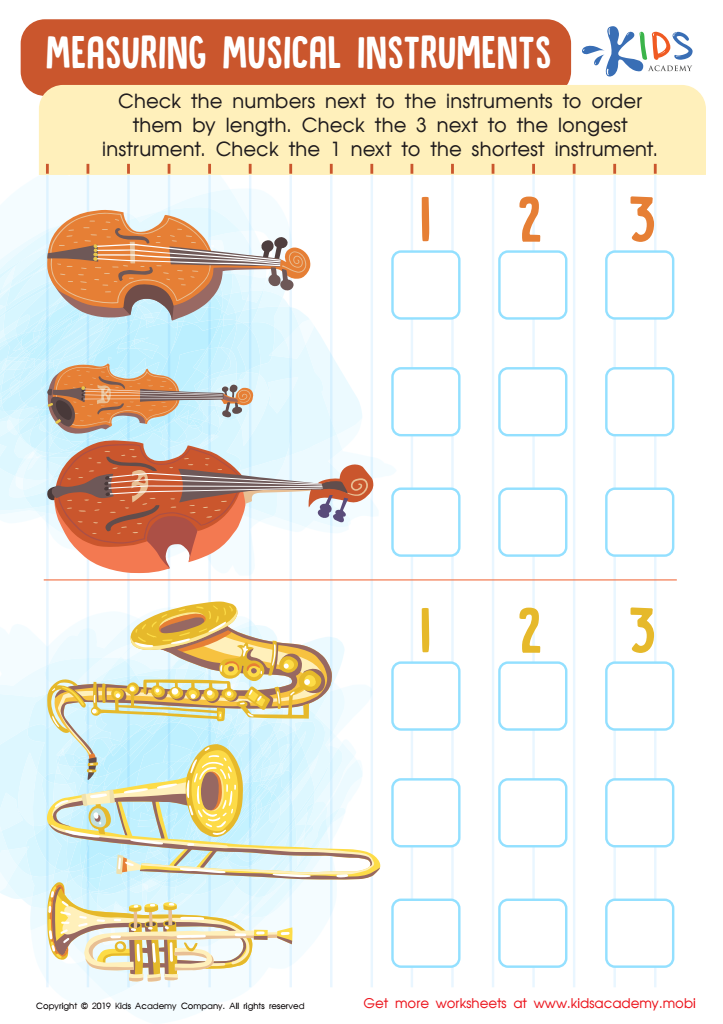
Measuring Musical Instruments Worksheet
Learning measurements can be tricky, but this worksheet makes it easy. Ask your child to identify the instruments in the pictures. Then, order them by length using the numbers. 3 is the longest, 1 is the shortest. Simple exercises like this will help them understand the different metric systems.
Measuring Musical Instruments Worksheet
Worksheet
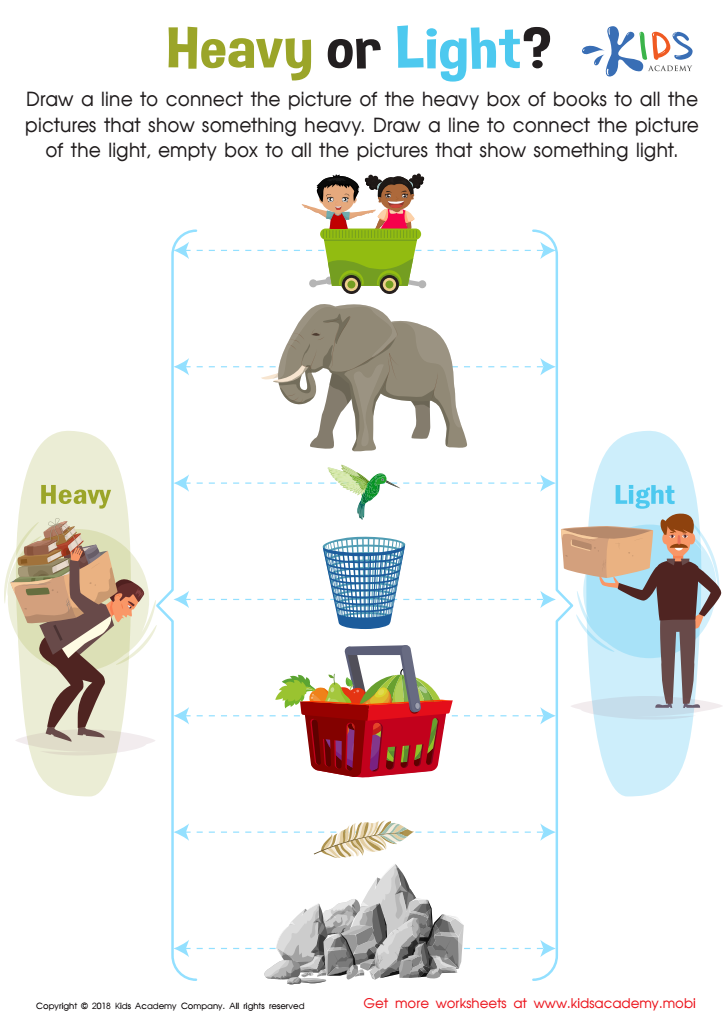
Heavy or Light? Worksheet
Kids can struggle to understand weight comparison, as size and mass matter. This free PDF helps develop fine-motor and hand-eye skills as kids trace lines to match pictures. The familiar pictures create concrete representations, ideal for learning more complex concepts.
Heavy or Light? Worksheet
Worksheet
Join Kids Academy for Free
Who is primarily going to use this learning content?








Enhancing observation skills in children aged 5-8 is crucial for their cognitive, social, and emotional development. At this formative stage, children's brains are highly absorbent and malleable, making it the perfect time to nurture keen observational abilities. These skills form the foundation for learning and understanding the world, influencing their academic success, creativity, and problem-solving capabilities.
For parents and teachers, fostering strong observation skills can lead to more engaged and inquisitive learners. Kids who are adept at observing are more likely to notice details, ask relevant questions, and make connections between different pieces of information. This can significantly enhance their learning in subjects like science, math, and literacy, where attention to detail is vital.
Moreover, developing observational skills can improve social and emotional awareness. Children who can observe facial expressions, body language, and social cues tend to be more empathetic and better at interacting with their peers, leading to healthier relationships.
Encouraging these skills involves simple everyday practices: nature walks, puzzle games, descriptive storytelling, and interactive play. By integrating these activities into daily routines, parents and teachers not only boost observation but also inspire a lifelong love of learning and curiosity, which are invaluable traits in today's ever-evolving world.








