
Understanding times tables Normal Multiplication Worksheets for Ages 5-8
3 filtered results
Difficulty Level
Grade
Age
-
From - To
Subject
Activity
Standards
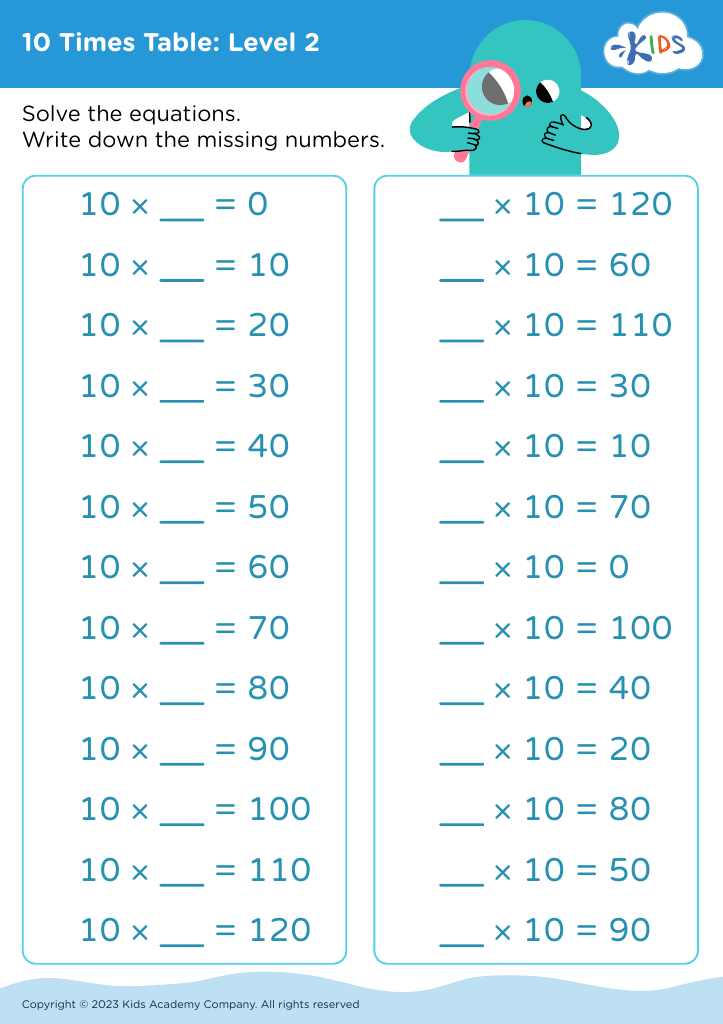
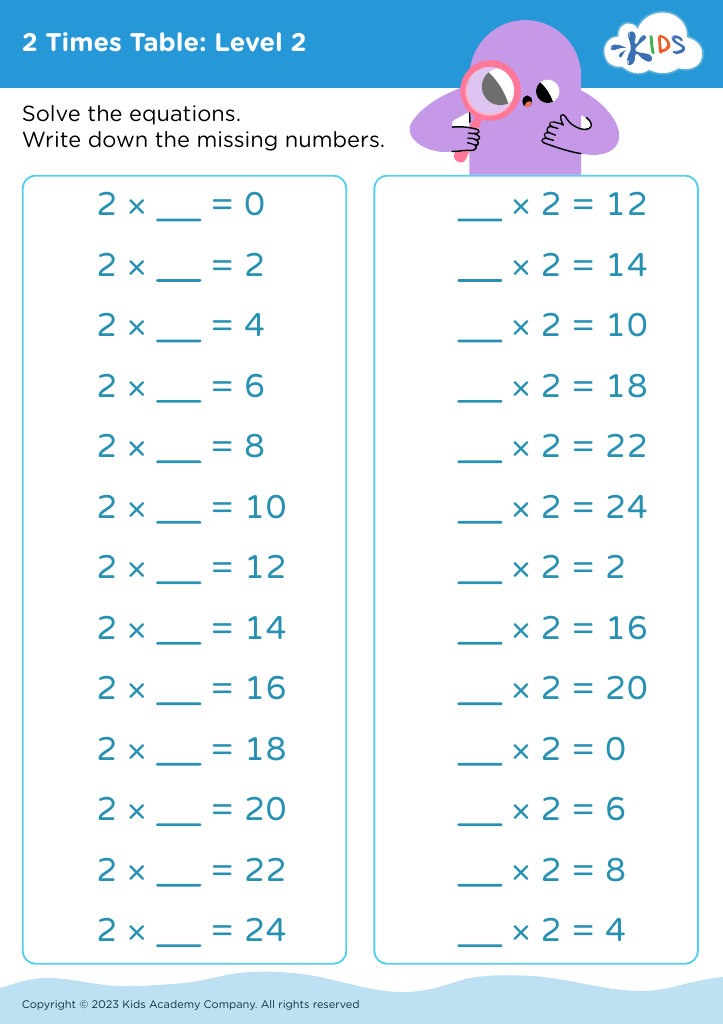
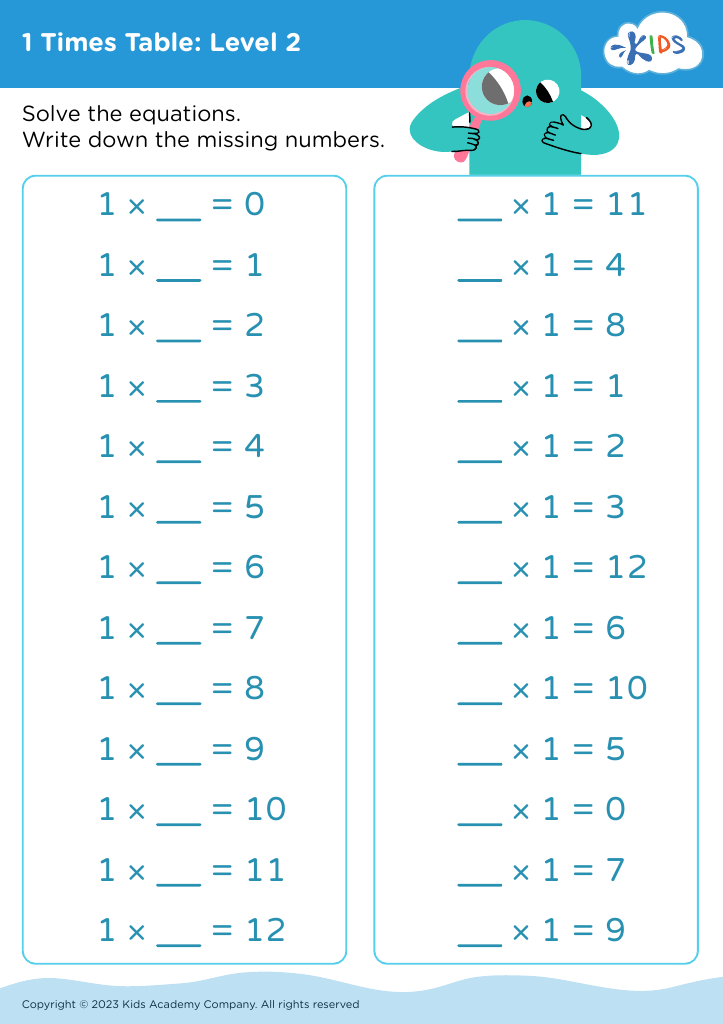
Welcome to our "Understanding Times Tables Normal Multiplication Worksheets" designed specifically for children ages 5-8. These engaging and easy-to-follow worksheets help young learners grasp the fundamentals of multiplication in a fun and supportive way. With visually appealing layouts and age-appropriate exercises, students will build their confidence as they practice number patterns and develop essential math skills. Our resources encourage early math fluency, focusing on understanding the structure of times tables rather than rote memorization. Perfect for classroom activities or homework assignments, these worksheets will make multiplication an enjoyable learning experience for your child! Let’s embark on this mathematical journey together!
Favorites
With answer key
Interactive
Join Kids Academy for Free
Who is primarily going to use this learning content?








Understanding times tables and normal multiplication is crucial for children aged 5 to 8 as it lays the foundation for their future mathematics learning and overall academic success. Mastery of these concepts not only supports arithmetic skills but also enhances problem-solving abilities, critical thinking, and logical reasoning.
When parents and teachers prioritize understanding multiplication, they help students make sense of grouping and repeated addition concepts, which are essential for number sense. This concept is fundamental before progressing to more complex math subjects, including division, fractions, and algebra. Children who struggle with multiplication often face challenges in higher-level math, leading to anxiety and a lack of confidence.
Additionally, learning multiplication enhances cognitive development. Engaging with times tables through games and hands-on activities promotes engagement and retention, making math a fun experience. It also facilitates discussions around patterns in numbers, which fosters curiosity and analytical skills.
In conclusion, supporting children in grasping multiplication not only reinforces their mathematical foundation but also encourages positive attitudes towards math, setting them up for success throughout their educational journey and beyond. Parents and teachers play a pivotal role in ensuring children develop these essential skills during these formative years.








