Identifying story elements Normal Reading Worksheets for Ages 5-8
3 filtered results
-
From - To
Unlock the magical world of stories with our "Identifying Story Elements" worksheets, specially designed for children aged 5-8. These engaging activities help young readers recognize essential components such as characters, settings, plots, and themes, fostering a deeper understanding of narrative structure. Perfect for at-home or classroom use, our printable worksheets are filled with fun illustrations and interactive tasks, guiding students to analyze and discuss stories effectively. By developing these critical reading skills early on, we lay the foundation for a lifelong love of literature. Enhance your child's learning experience and spark their imagination with our thoughtfully crafted resources today!
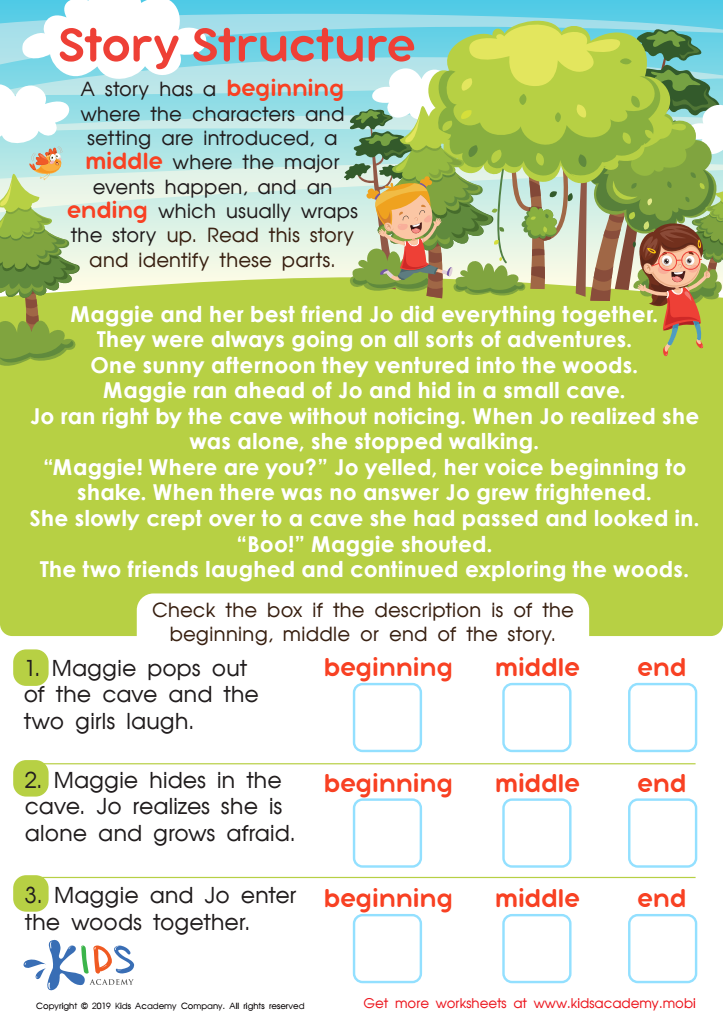
Story Structure Worksheet
 Assign to My Students
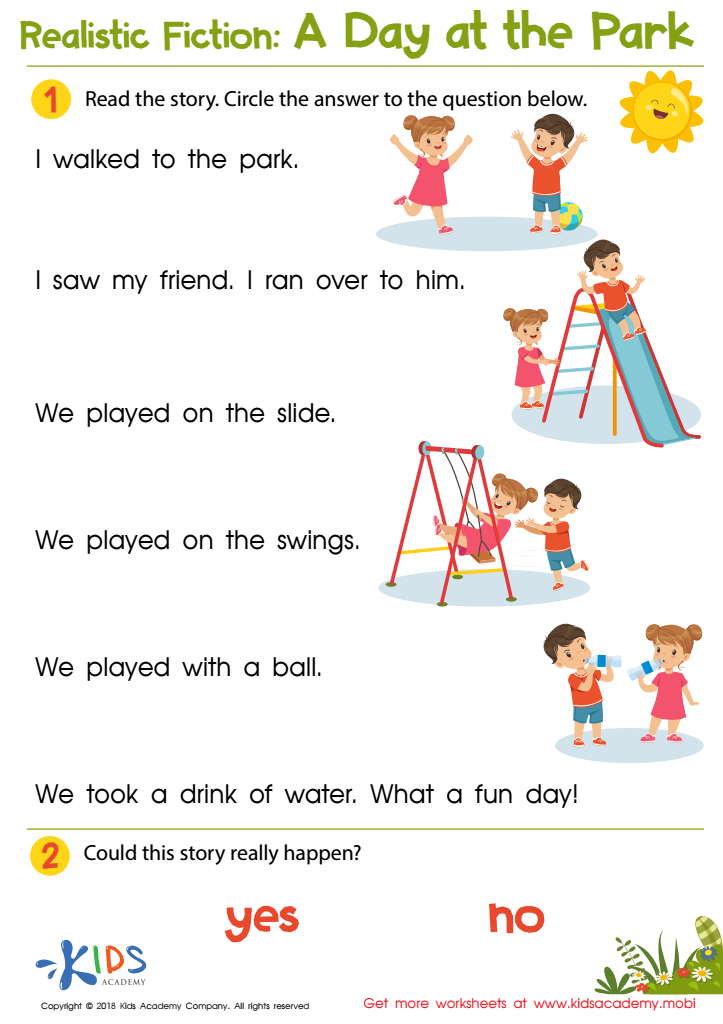
A Day at the Park Worksheet
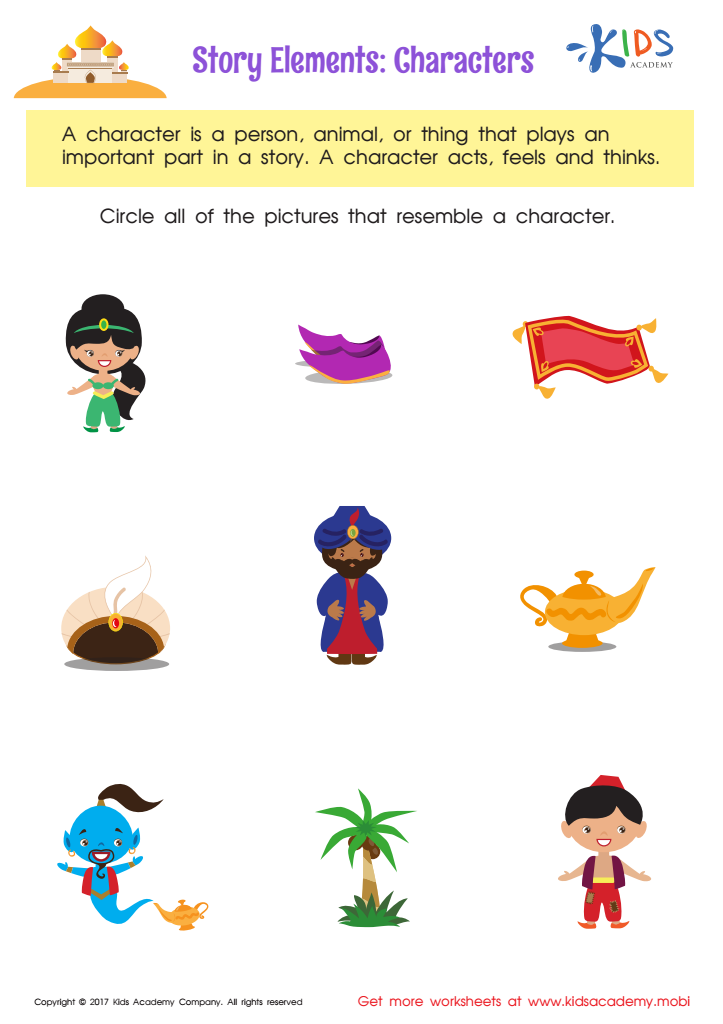
Story Elements Printable







Identifying story elements is crucial for children aged 5-8 as it lays the foundation for critical reading and comprehension skills. When teachers and parents emphasize story elements—such as characters, setting, plot, conflict, and resolution—they help children understand the structure of narratives. This understanding enhances their ability to engage with texts, facilitating better retention and enjoyment of reading.
Grasping these elements encourages children to think critically about what they read, fostering discussions about why characters make certain choices and how different settings impact the story's events. In turn, this strategy cultivates imagination, as children begin to appreciate storytelling techniques and may even create their own stories.
Additionally, identifying story elements can boost vocabulary and language skills, as children encounter various materials and literary structures. Parents and teachers play a vital role in guiding this process by asking open-ended questions and providing relatable examples.
By caring about story elements, adults can foster a lifelong love of reading in children, enhancing not only their academic skills but also their socio-emotional development. Encouraging young readers to explore narratives deeply prepares them for more complex texts as they grow, ensuring ongoing improvement in their literacy journey.








