Moral lesson understanding Normal Reading Worksheets for Ages 5-8
5 filtered results
-
From - To
Discover our engaging "Moral Lesson Understanding Normal Reading Worksheets" designed for children ages 5-8. Perfect for nurturing young minds, these worksheets help students grasp the importance of moral lessons through interactive reading activities. Each worksheet features age-appropriate texts that highlight essential life values, encouraging kids to think critically about the messages within stories. With appealing visuals and guided questions, children will enhance their reading comprehension while learning to identify moral themes. Inspire your child's growth and character development with these invaluable educational resources, fostering empathy and understanding from an early age. Elevate their reading skills today with our thoughtfully curated materials!
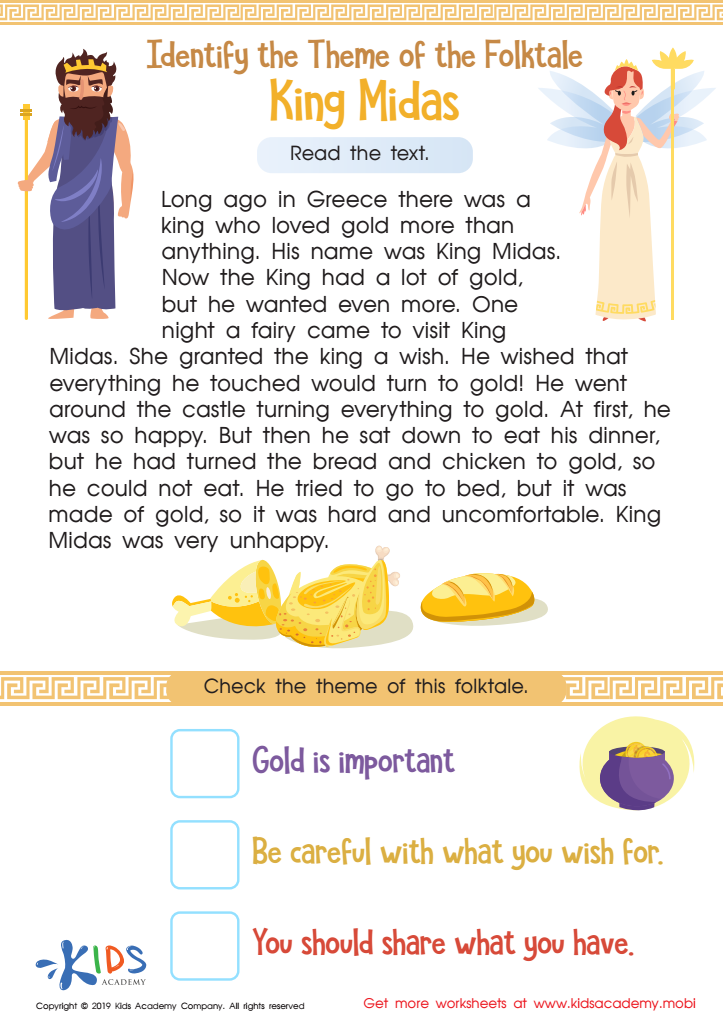
King Midas Worksheet
 Assign to My Students
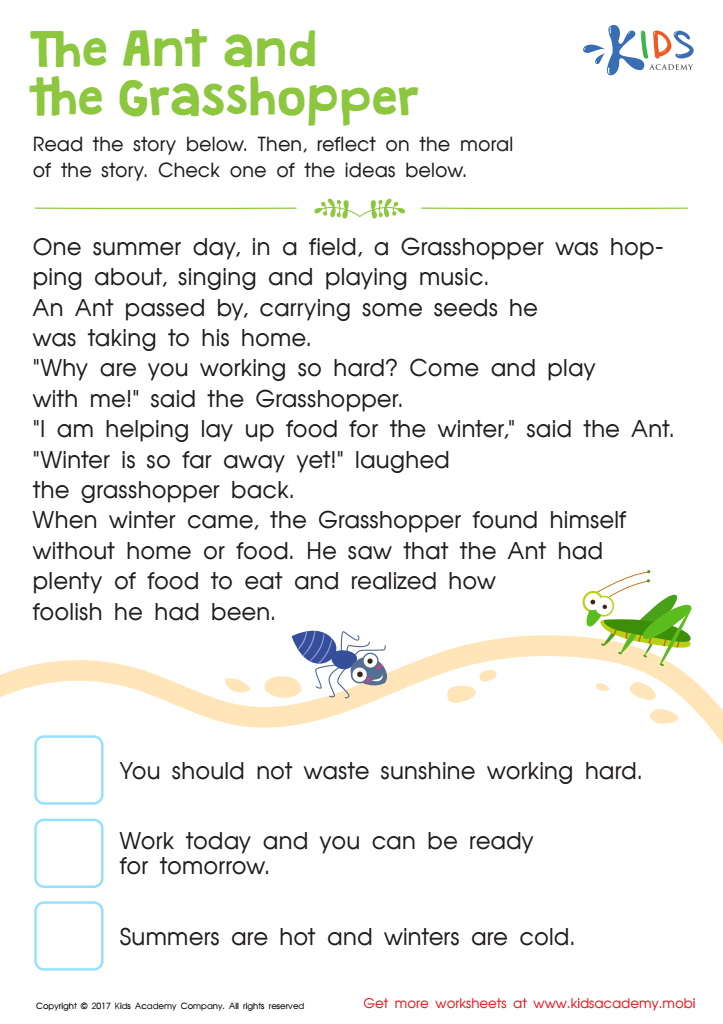
The Ant and The Grasshopper Printable
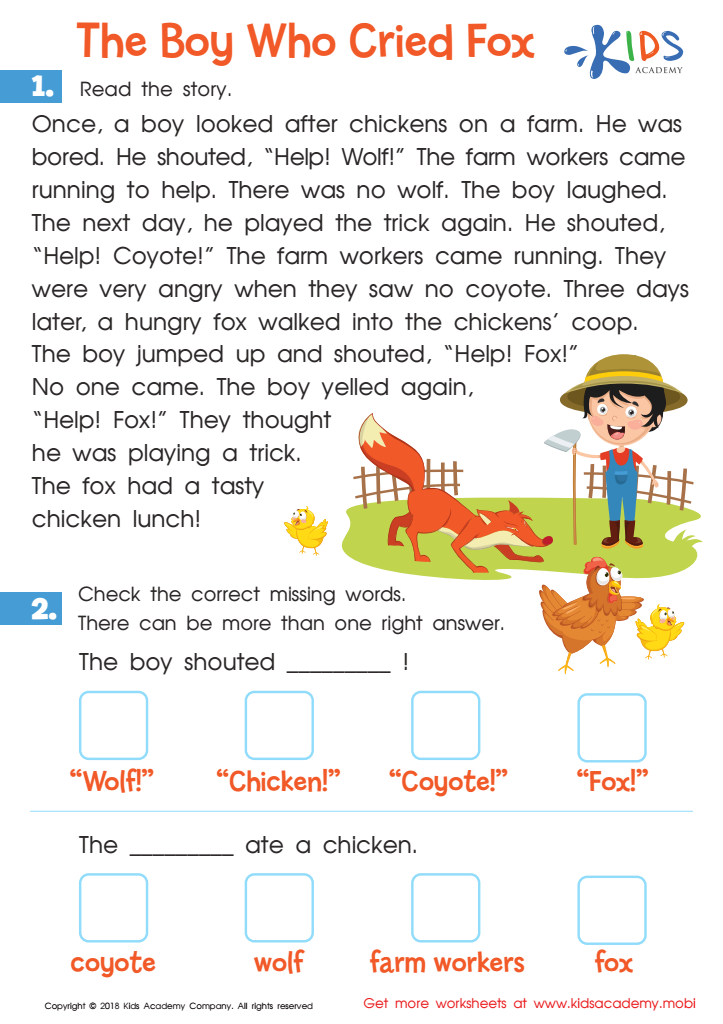
The Boy Who Cried Fox Worksheet
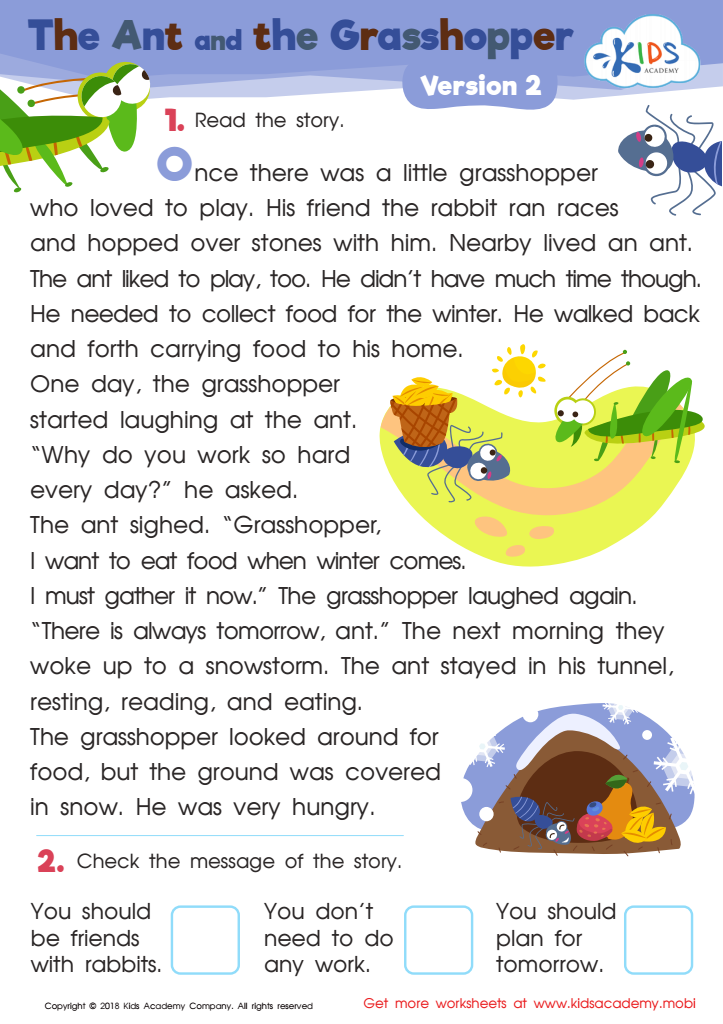
The Ant and The Grasshopper Version 2 Worksheet
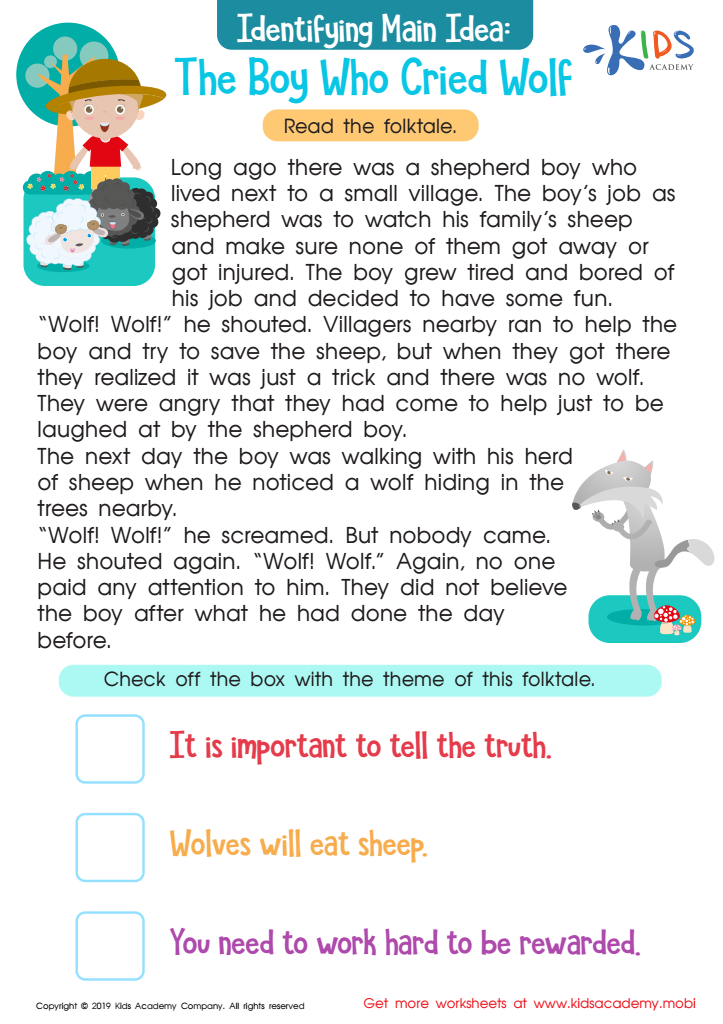
The Boy Who Cried Wolf Part 2 Worksheet








Understanding moral lessons through reading is crucial for children aged 5-8 as it plays a significant role in their emotional and social development. At this age, children are particularly receptive to stories that convey morals, helping them differentiate right from wrong and fostering empathy. Engaging with tales featuring ethical dilemmas can equip children with problem-solving skills and encourage critical thinking.
When parents and teachers stress the importance of moral lessons in reading, they provide children with foundational language and comprehension skills while simultaneously addressing emotional intelligence. Through relatable characters and scenarios, children learn life skills, such as sharing, honesty, and kindness.
Additionally, reading moral stories can initiate conversations about values and ethics, providing an opportunity for adults to reinforce positive behaviors. It also nurtures active listening skills and stimulates imagination, which are essential for overall literacy development.
By focusing on moral lesson understanding, parents and teachers encourage children to reflect on their actions and the impact they have on others, laying the groundwork for becoming responsible, caring, and socially aware individuals. Thus, promoting moral understanding through reading is not just about literacy, but about developing well-rounded, empathetic future citizens.








