Moral understanding Normal Reading Worksheets for Ages 5-8
5 filtered results
-
From - To
Unlock the power of moral understanding with our Normal Reading Worksheets designed for children ages 5-8. These engaging and age-appropriate worksheets promote critical thinking as young learners explore essential values like honesty, kindness, and respect. Through captivating stories and relatable scenarios, children will develop empathy and the ability to make moral decisions. Our resources aim to enhance reading skills while instilling important life lessons, fostering both academic and emotional growth. Perfect for at-home learning or classroom settings, these worksheets are a valuable addition to any educational journey. Help your child build a strong foundation for understanding the world around them today!
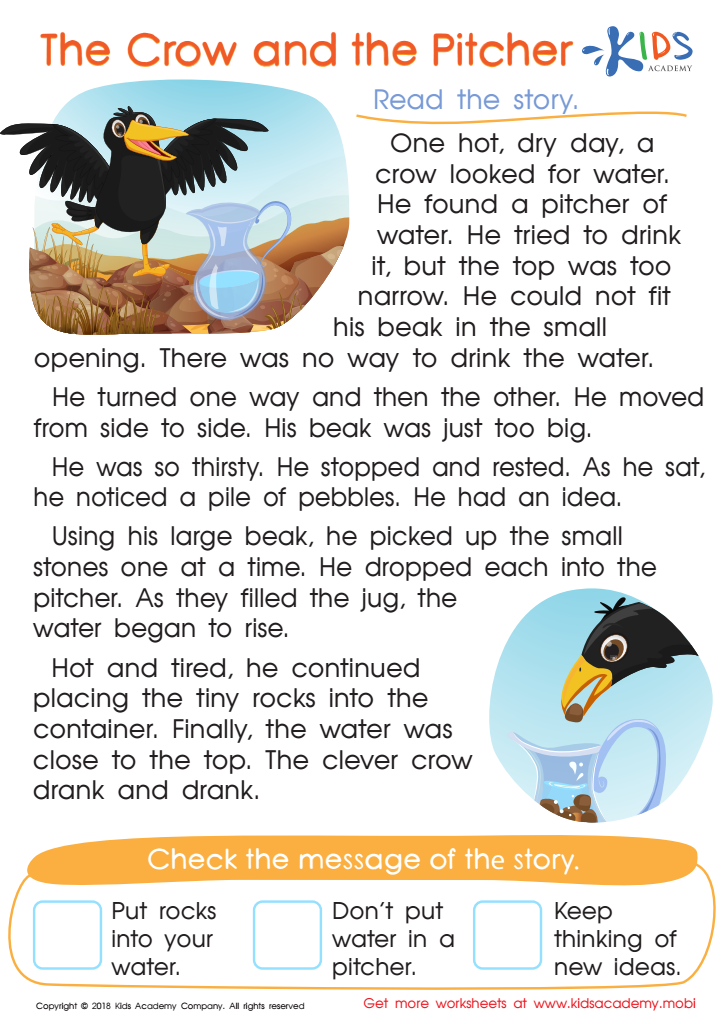
The Crow and the Pitcher Worksheet
 Assign to My Students
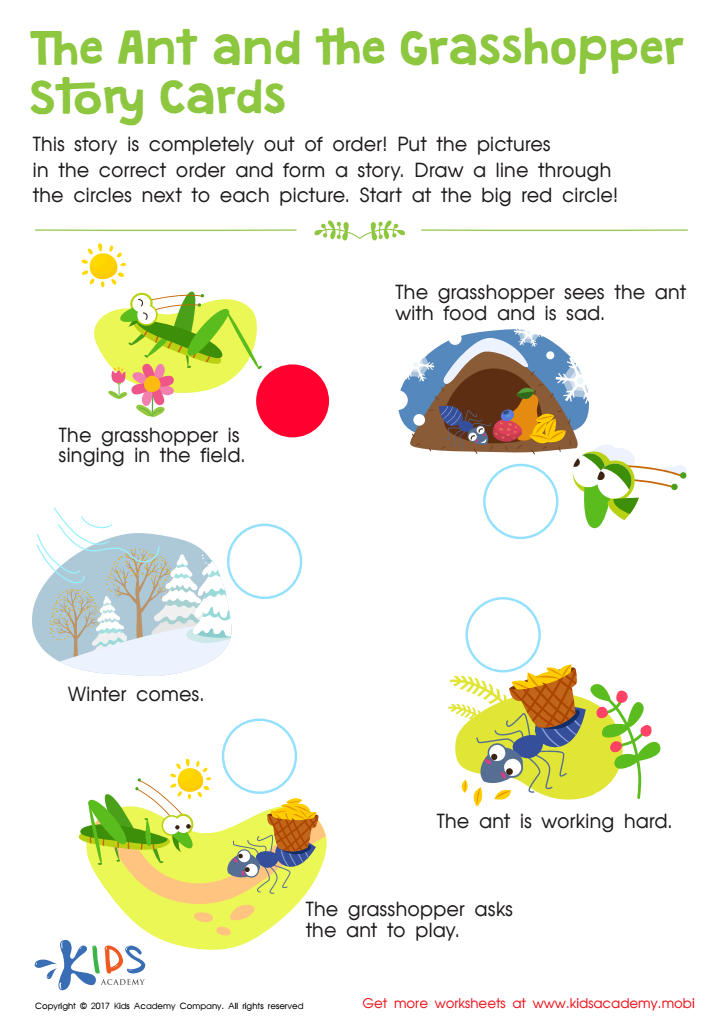
The Ant and The Grasshopper Worksheet
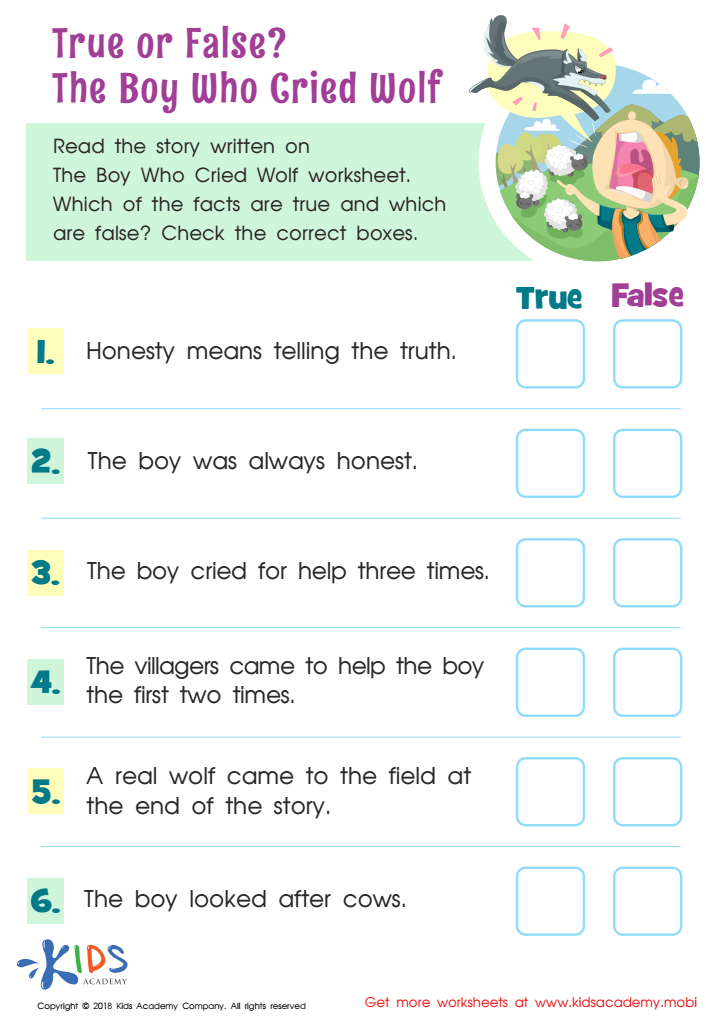
True or False? The Boy Who Cried Wolf Worksheet
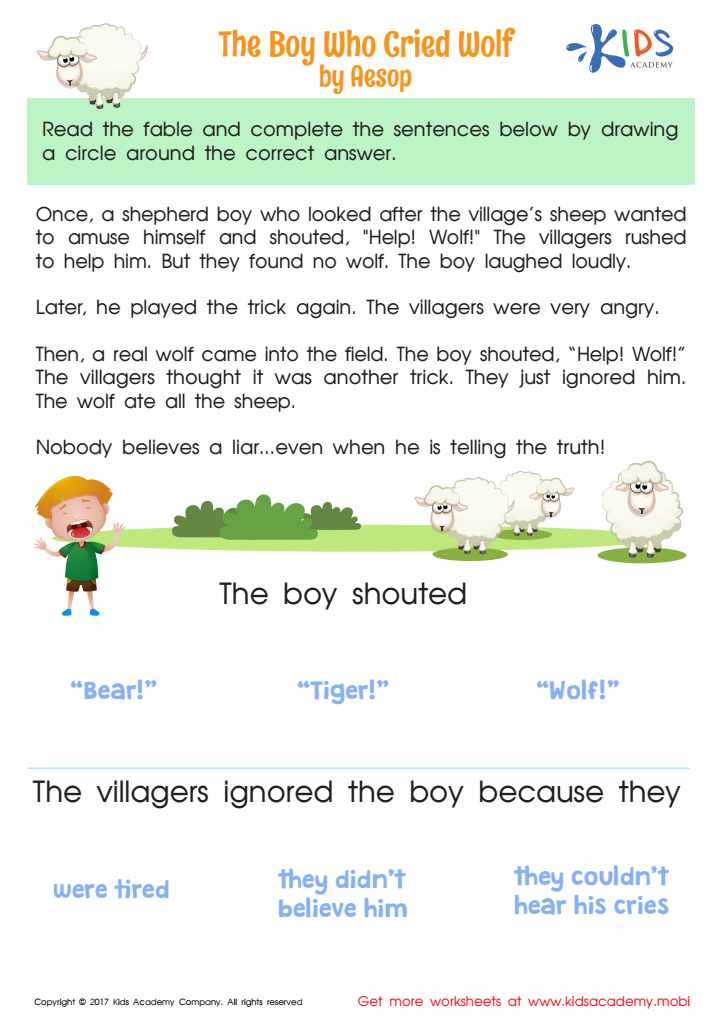
The Boy Who Cried Wolf Worksheet
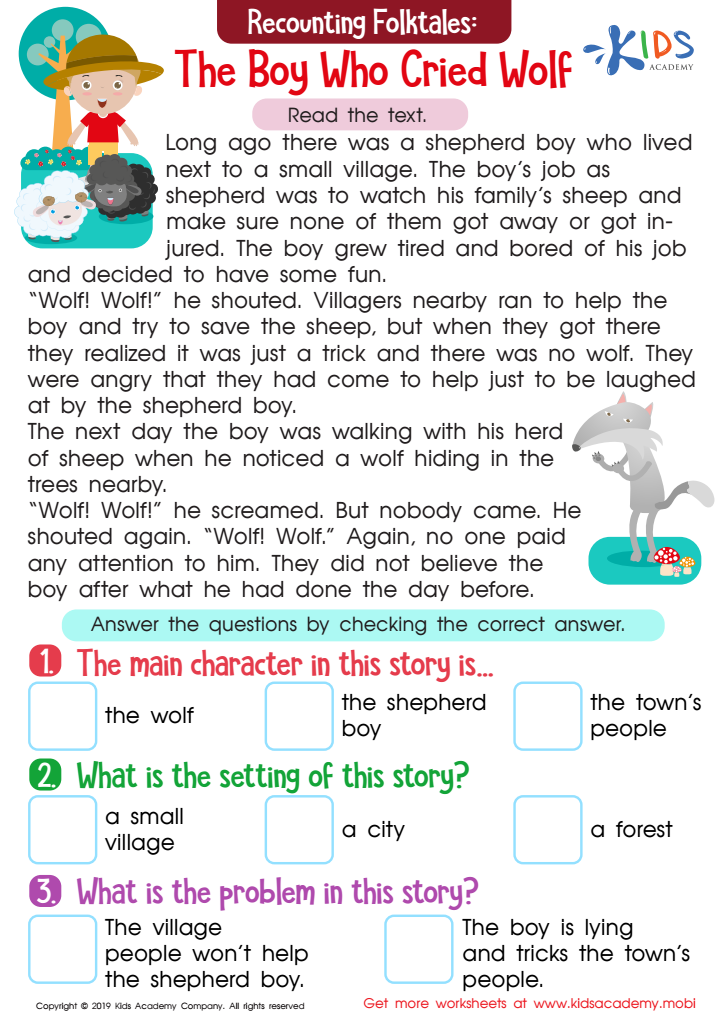
The Boy Who Cried Wolf Part 1 Worksheet






Moral understanding is crucial for children aged 5-8, as it lays the foundation for their social behavior and emotional development. During these formative years, children are highly impressionable and begin to explore concepts of right and wrong. By fostering moral understanding, parents and teachers can guide children in making ethical decisions and developing empathy for others.
At this age, children are often engaged in storytelling and role-playing, which serve as powerful tools for teaching moral values. When adults introduce stories with moral dilemmas or different perspectives, they lay the groundwork for critical thinking and reflection. Engaging children in discussions about these topics encourages them to articulate their thoughts, understand contrasting viewpoints, and cultivate strong problem-solving skills.
Moreover, promoting moral understanding grows healthy relationships among peers, helping children navigate their social environments effectively. When they recognize the impact of their behavior on others, they learn cooperation, fairness, and respect.
In summary, nurturing moral understanding in young children not only benefits their individual growth but also creates a harmonious and empathetic community, making it essential for parents and teachers to prioritize these lessons in their everyday interactions.








