Understanding vowel sounds Normal Reading Worksheets for Ages 5-8
3 filtered results
-
From - To
Discover the essential "Understanding Vowel Sounds Normal Reading Worksheets for Ages 5-8" by Kids Academy. These engaging worksheets help young learners recognize and differentiate between short and long vowel sounds, enhancing their reading fluency and pronunciation skills. Perfectly tailored for children aged 5-8, each worksheet offers fun, interactive activities designed to solidify foundational reading skills and build confidence. Join the journey to mastering vowel sounds through captivating exercises, illustrations, and comprehensive practice. Make learning exciting and effective with Kids Academy's expertly crafted resources, ensuring your child's success in reading development. Download today and start exploring vowel sounds!
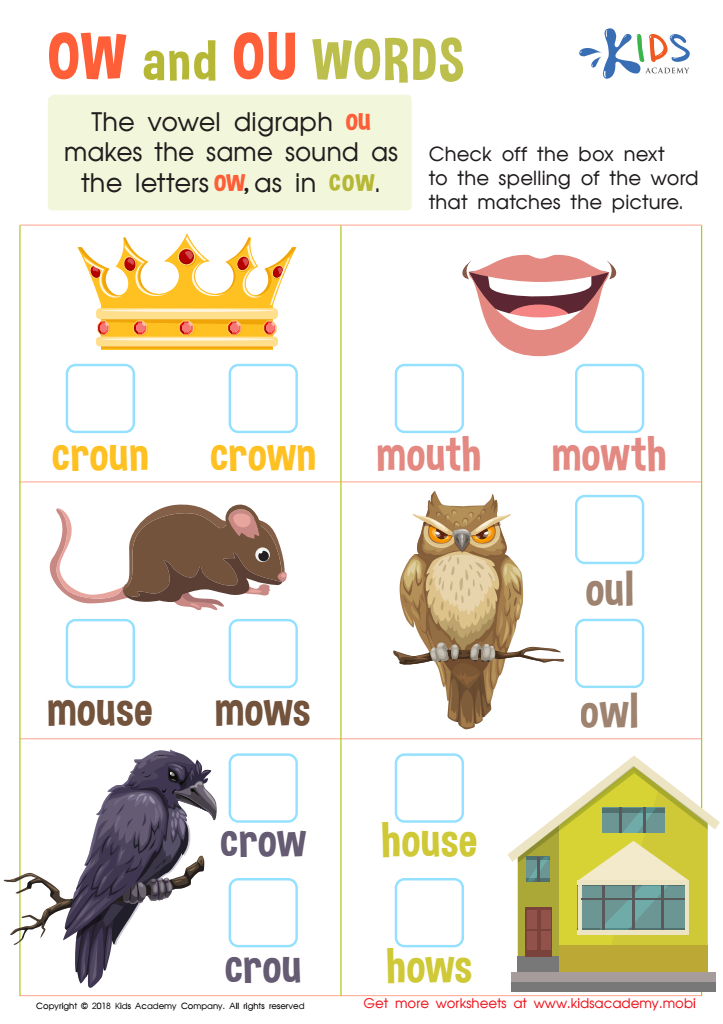
Reading: OW and OU Words Worksheet
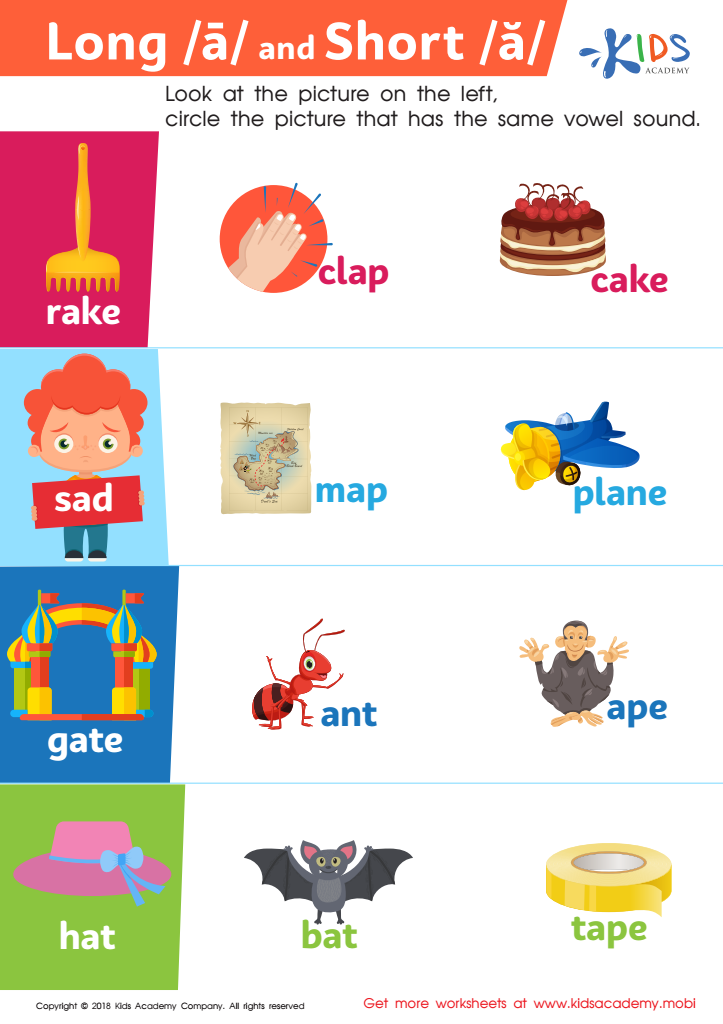
Reading: Long a and Short a Worksheet
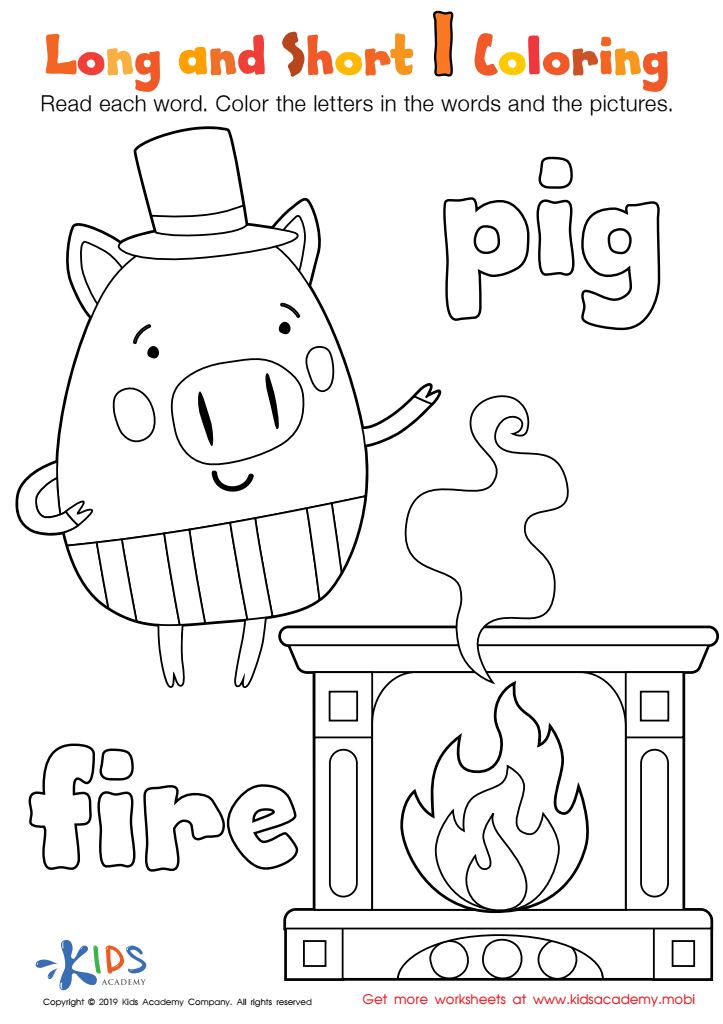
Long and Short I Worksheet
 Assign to My Students







Understanding vowel sounds is fundamental for children aged 5-8 as it forms the backbone of their reading and language development. During these formative years, children transition from recognizing letters to decoding words, and vowels play a crucial role in this process. Each vowel has multiple sounds, including long, short, and sometimes even unique sounds, and grasping these variations directly impacts a child's ability to read fluently.
Firstly, vowels appear in nearly every word, serving as the glue that binds consonants together. Without a strong grasp of vowel sounds, children may struggle to sound out words, which can inhibit their ability to read smoothly. This can lead to frustration and a lack of confidence, potentially causing a lifelong aversion to reading.
Secondly, understanding vowel sounds aids in developing phonemic awareness—the ability to hear, identify, and manipulate individual sounds in words. This skill is critical not only for reading but also for spelling and comprehension. Proficiency in phonemic awareness is a strong predictor of later reading success.
Lastly, familiarizing young children with vowel sounds helps them recognize patterns and word families, enhancing their ability to decode new words independently. This empowerment builds both their vocabulary and cognitive skills.
Both parents and teachers have essential roles to play: by nurturing a child's understanding of vowel sounds, they lay a firm foundation for academic success and a lifelong love of reading.








