Vocabulary Enrichment Normal Reading Worksheets for Ages 5-8
3 filtered results
-
From - To
Unlock your child's vocabulary potential with our Vocabulary Enrichment Normal Reading Worksheets, designed specifically for ages 5-8. These interactive and engaging worksheets enhance reading comprehension by introducing new words in context, making learning both fun and effective. With a variety of exercises that focus on word meanings, synonyms, antonyms, and context clues, your child will develop essential language skills while building confidence in their reading abilities. Perfect for at-home practice or classroom use, our resources support early literacy development and lay the groundwork for future academic success. Explore our collection today and watch your child's vocabulary flourish!
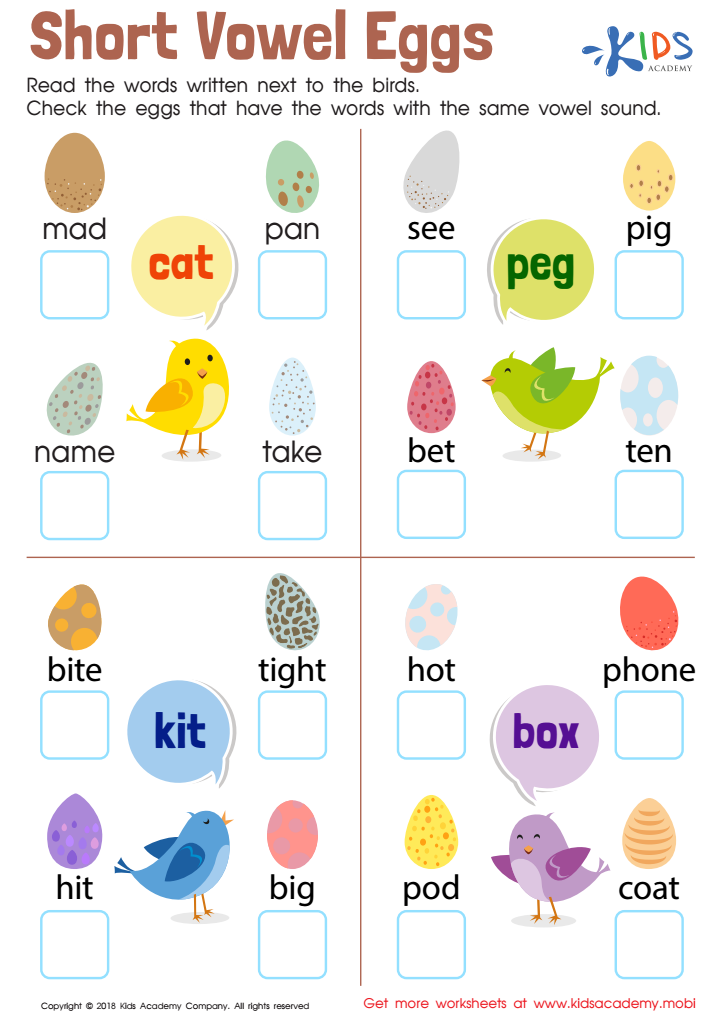
Short Vowel Eggs Worksheet
 Assign to My Students
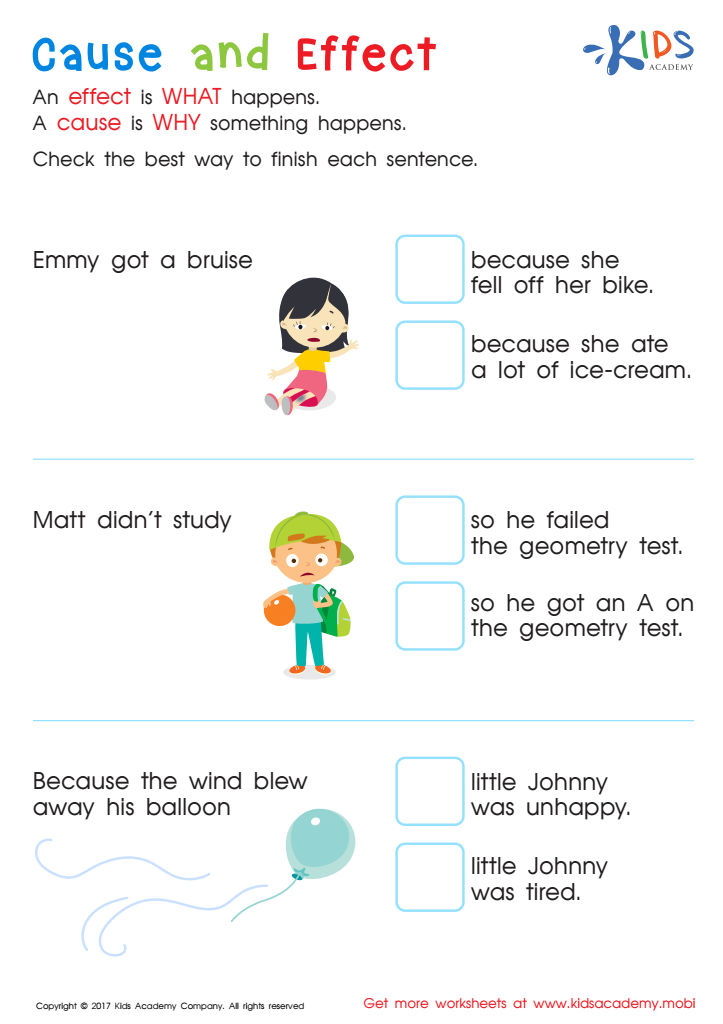
Cause and Effect Worksheet
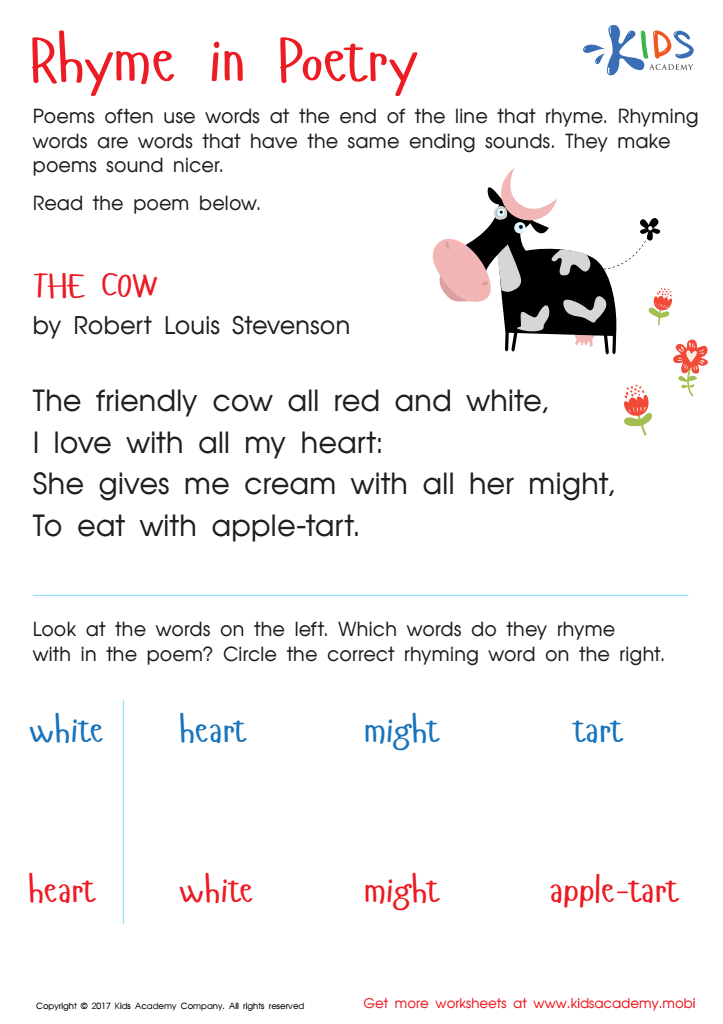
Rhyme In Poetry Worksheet








Vocabulary enrichment during ages 5-8 is critical for developing foundational literacy and cognitive skills. During this stage, children are eager learners, absorbing language at a rapid pace. Expanding their vocabulary enhances comprehension, enabling them to engage more deeply with texts and foster better communication skills. Parents and teachers play a vital role in this process, as they can provide rich, diverse language experiences through reading books, engaging in conversations, and using new words in everyday scenarios.
Enhanced vocabulary directly correlates with academic success. Children equipped with a broader word bank are often better able to understand and perform in subjects like reading and writing, where comprehension is key. Additionally, students with robust vocabularies typically demonstrate improved critical thinking and problem-solving skills.
Moreover, vocabulary enrichment promotes social skills and emotional intelligence. As children learn to articulate their thoughts and feelings more effectively, they can foster positive relationships with peers and adults. Engaging with vocabulary also encourages a love for reading, laying the groundwork for lifelong learning. Consequently, parents and teachers should actively prioritize vocabulary development, ensuring a well-rounded education that supports children's overall growth and prepares them for future academic challenges.








