Moral understanding Normal Reading Comprehension Worksheets for Ages 5-8
5 filtered results
-
From - To
Welcome to our Moral Understanding Reading Comprehension Worksheets designed specifically for children ages 5-8! These engaging worksheets help young learners enhance their reading skills while exploring essential moral lessons. Each activity focuses on relatable themes, encouraging kids to think critically about right and wrong. Our comprehensive materials are perfect for both classroom use and at-home learning, fostering valuable discussions about ethics and empathy. As students read and answer thoughtfully crafted questions, they practice comprehension skills crucial for their literary development. Encourage your child's moral growth and literacy with our fun and insightful resources today! Perfect for teachers and parents alike.
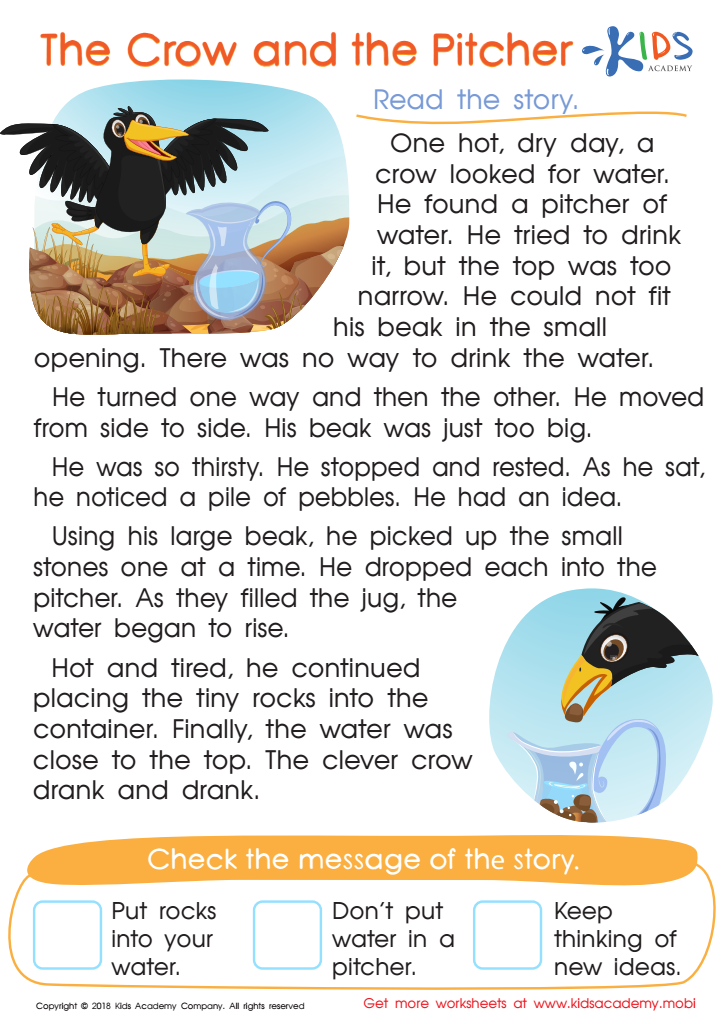
The Crow and the Pitcher Worksheet
 Assign to My Students
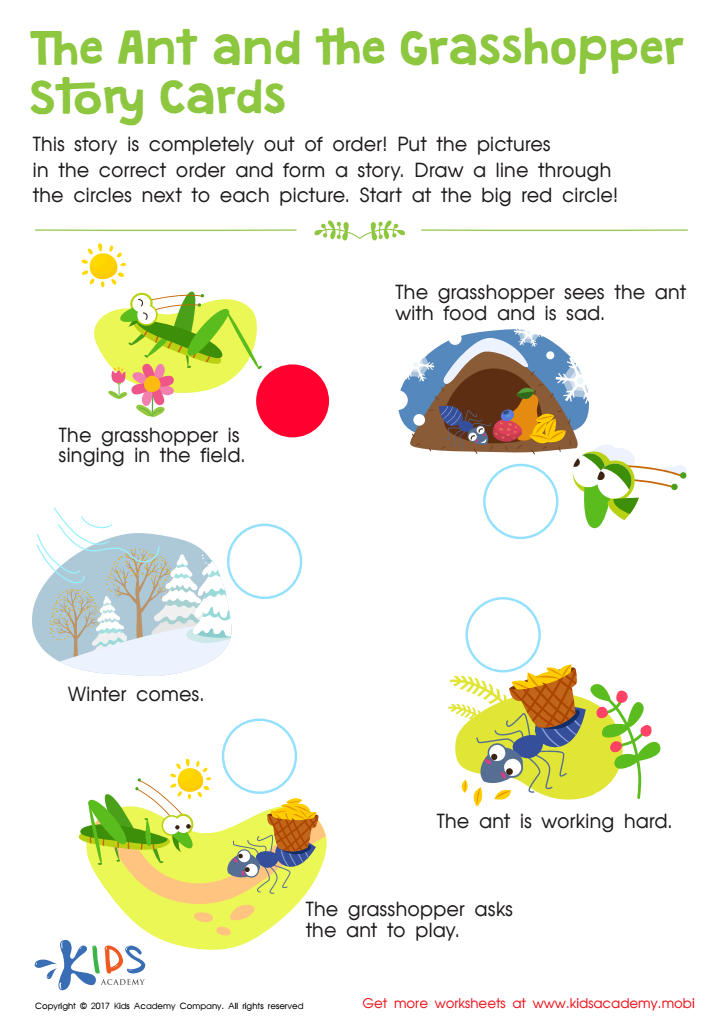
The Ant and The Grasshopper Worksheet
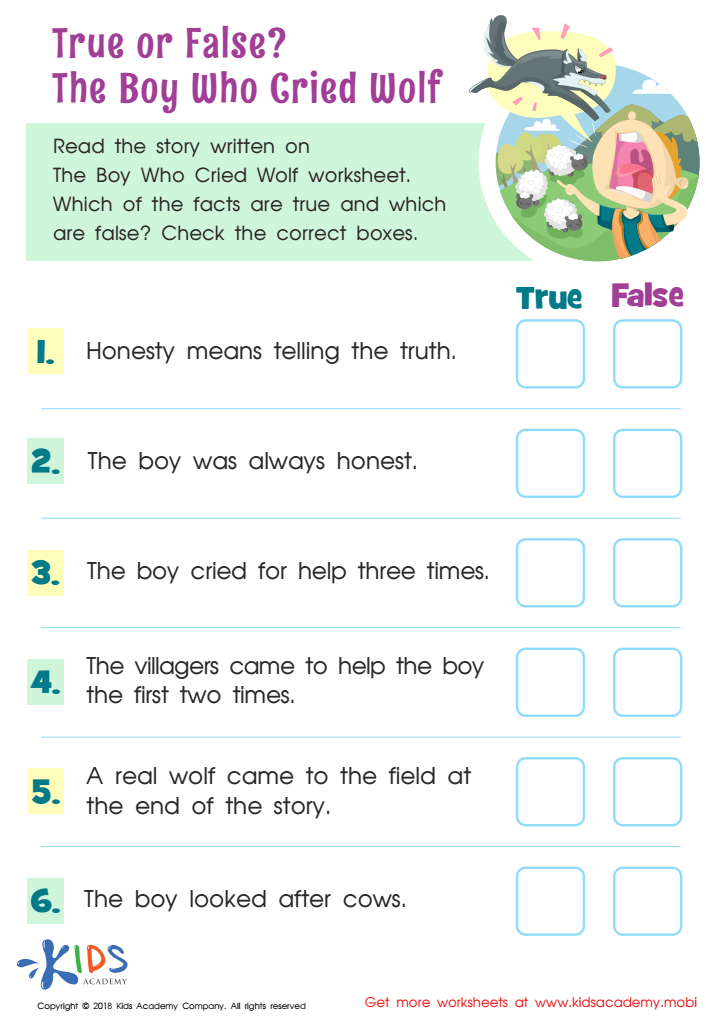
True or False? The Boy Who Cried Wolf Worksheet
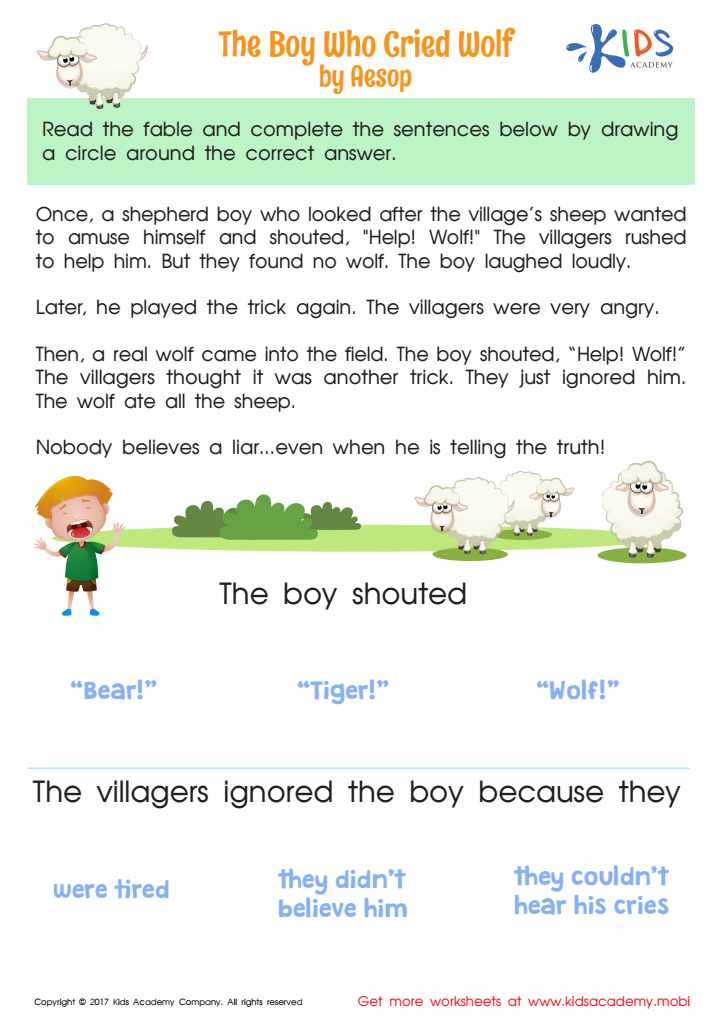
The Boy Who Cried Wolf Worksheet
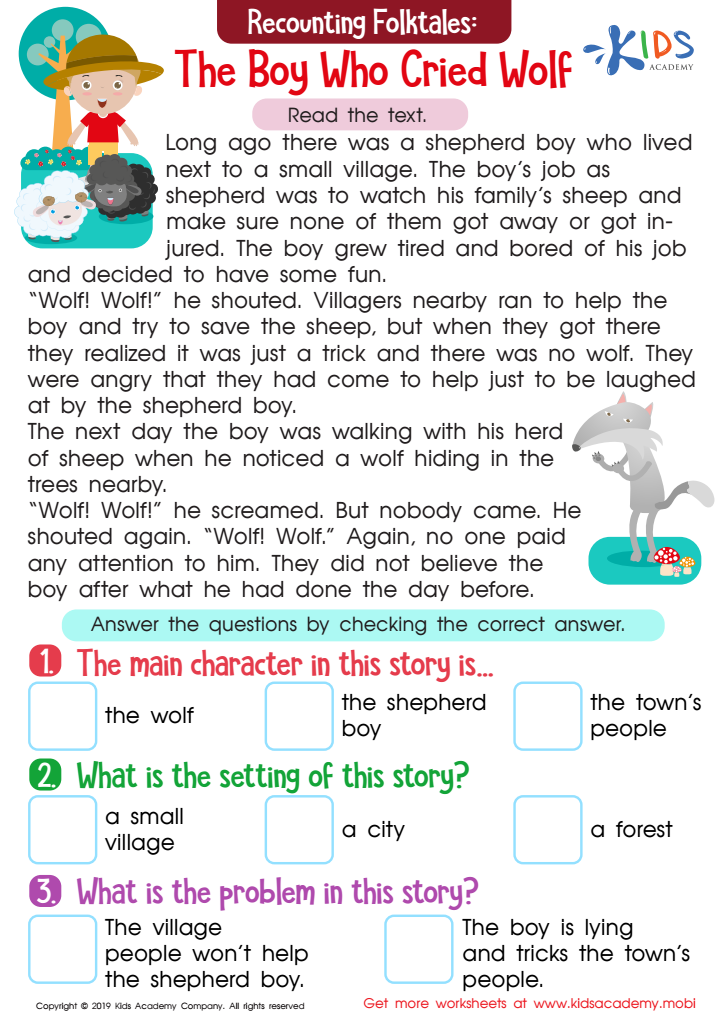
The Boy Who Cried Wolf Part 1 Worksheet


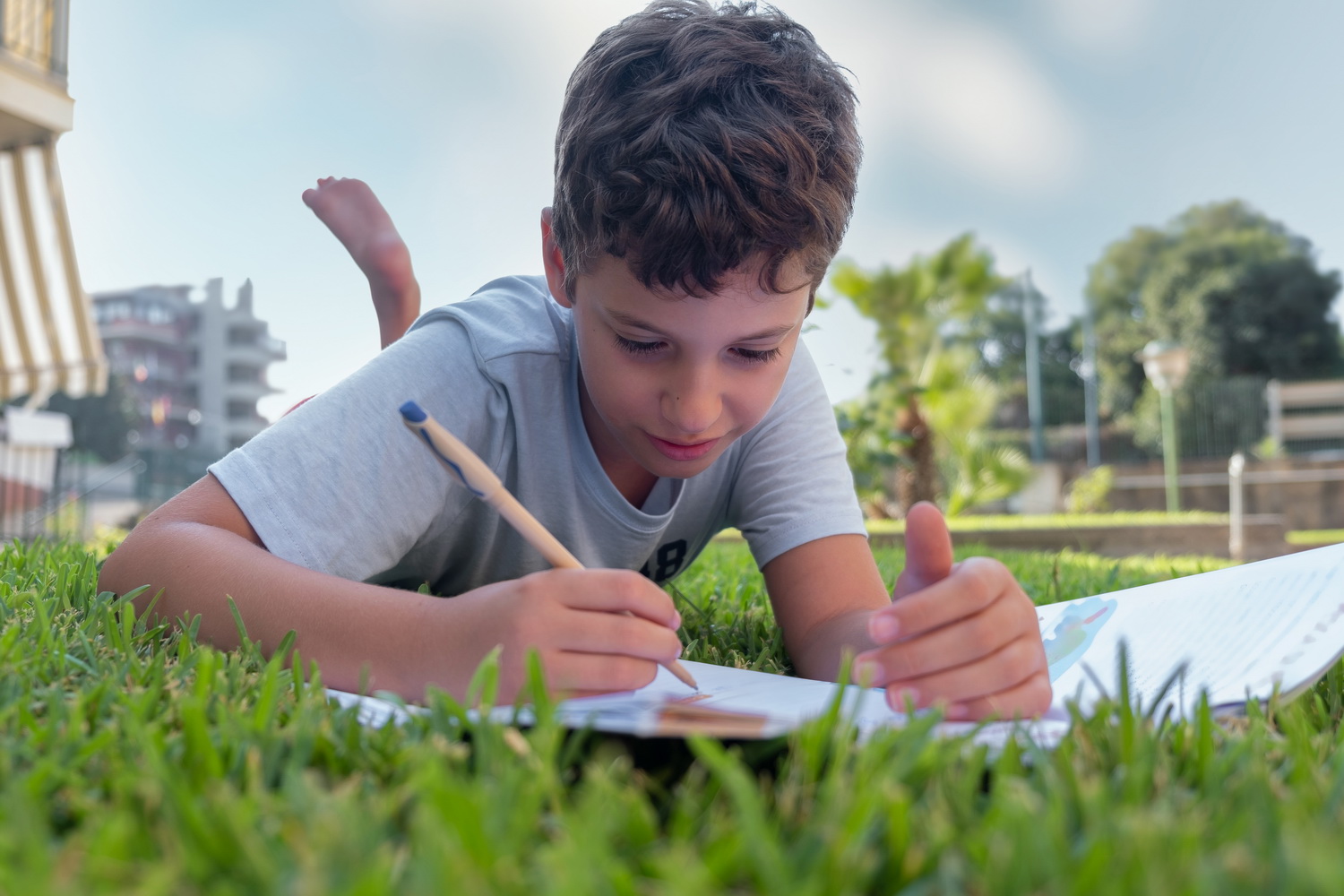





Moral understanding and reading comprehension are crucial components of a child's development, especially for those aged 5-8. At this stage, children begin to grasp the concept of right and wrong, as well as the feelings and perspectives of others. Encouraging moral understanding helps children develop empathy, critical thinking, and social skills. When parents and teachers foster discussions about morals—whether through storytelling, role-playing, or real-life scenarios—they guide children in recognizing ethical dilemmas and making thoughtful decisions.
Reading comprehension at this age is equally important. It lays the foundation for lifelong learning. When children can understand and interpret texts, they engage with content at a deeper level, enhancing their vocabulary, language skills, and overall communication ability. Morally rich stories not only captivate young readers but also serve as valuable tools for discussing ethics and values.
Together, moral understanding and reading comprehension promote a holistic educational experience, helping children not just to excel academically but to grow into compassionate, responsible individuals. By prioritizing these aspects, parents and teachers equip children with the tools needed for both societal integration and personal development. Hence, nurturing both areas is imperative for cultivating well-rounded young learners.








