Story analysis Normal Reading Comprehension Worksheets for Ages 5-8
4 filtered results
-
From - To
Enhance your child’s reading comprehension with our engaging "Story Analysis Normal Reading Comprehension Worksheets" designed for ages 5-8. These worksheets focus on developing critical thinking and analytical skills by encouraging young learners to explore narratives deeply. Kids will gain practice in identifying key story elements, such as characters, settings, and plot, while answering guided questions that promote understanding and retention. Fun and interactive, these printable resources make reading enjoyable, fostering a love for literature while building essential skills early on. Perfect for parents and educators, they provide an invaluable tool for nurturing confident, thoughtful readers in the foundational years. Enjoy storytime like never before!
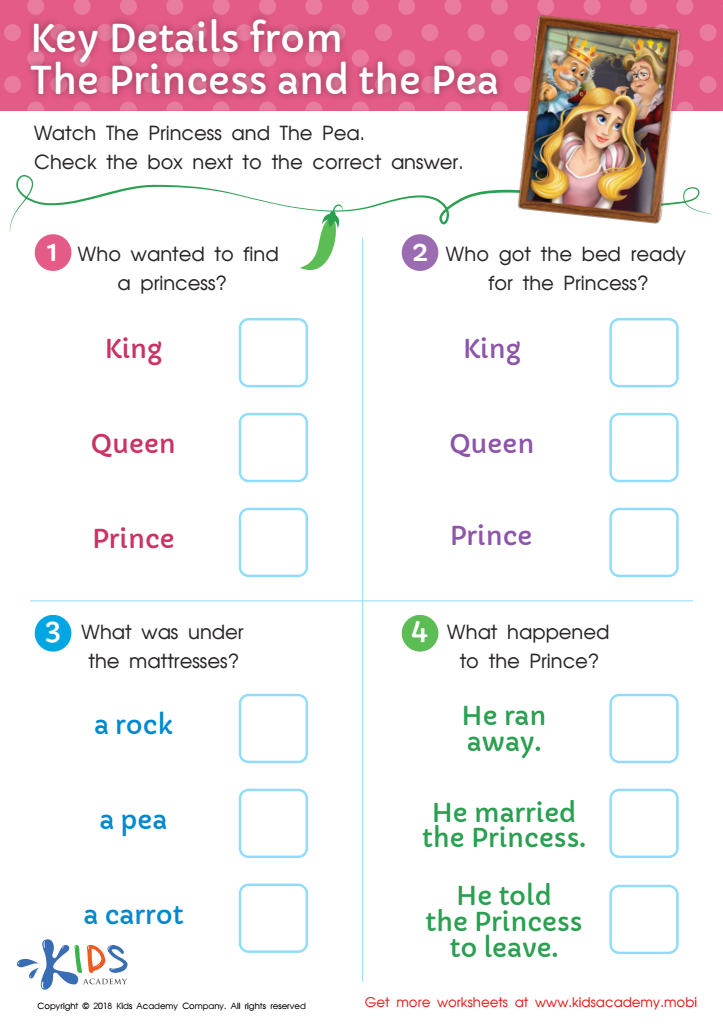
Key Details from the Princess and the Pea Worksheet
 Assign to My Students
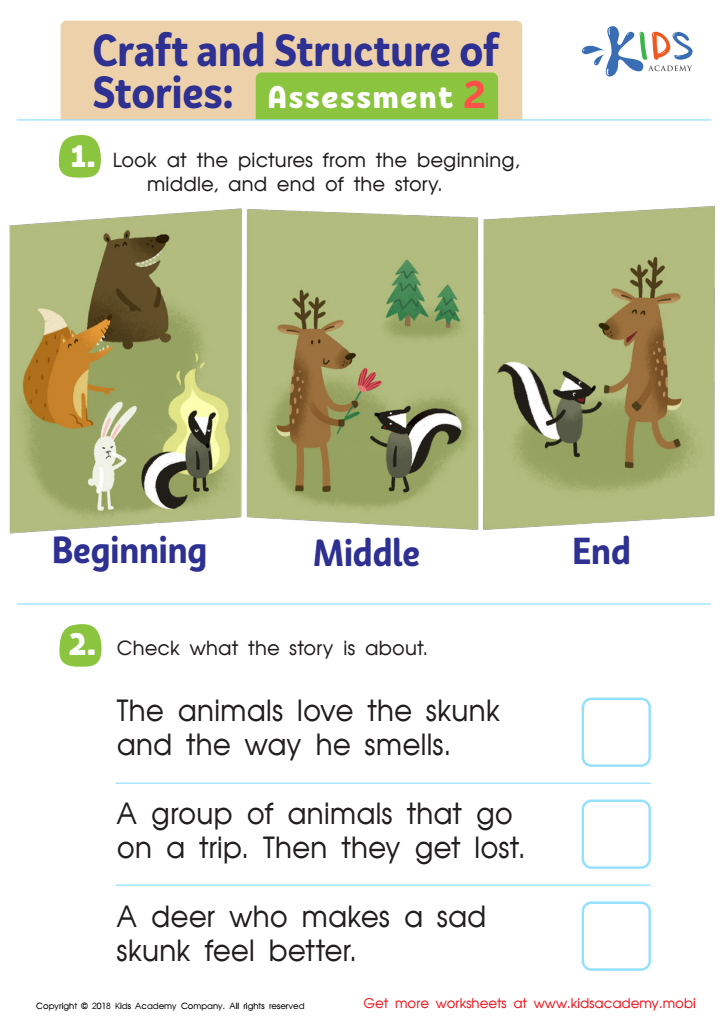
Craft and Structure of Stories: Assessment 2 Worksheet
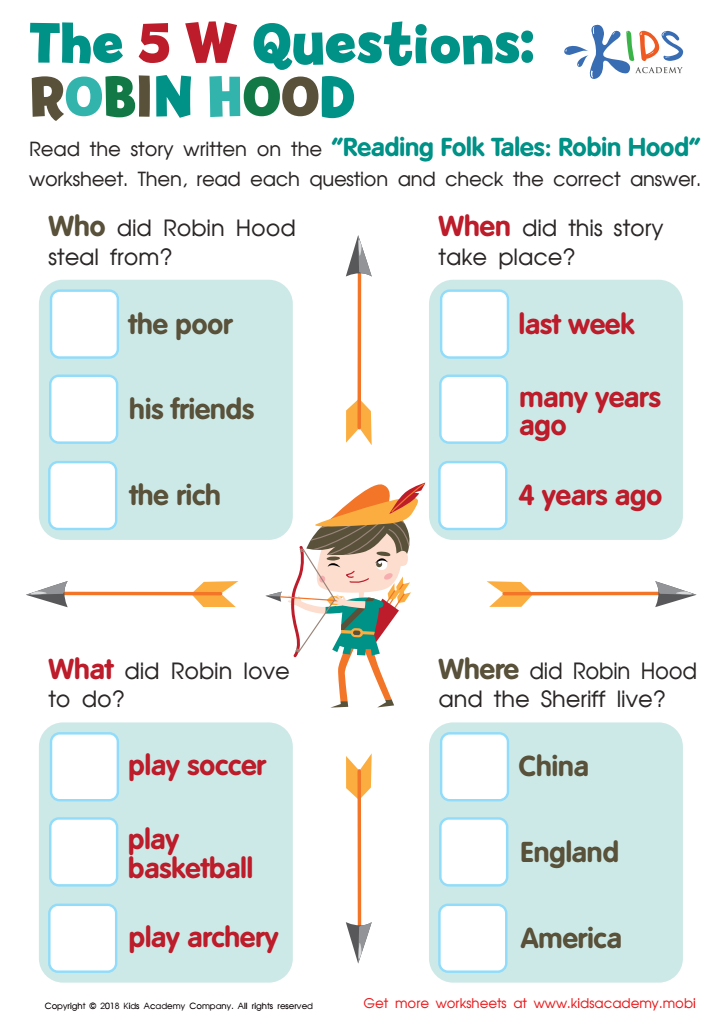
The 5 W Questions: Robin Hood Worksheet
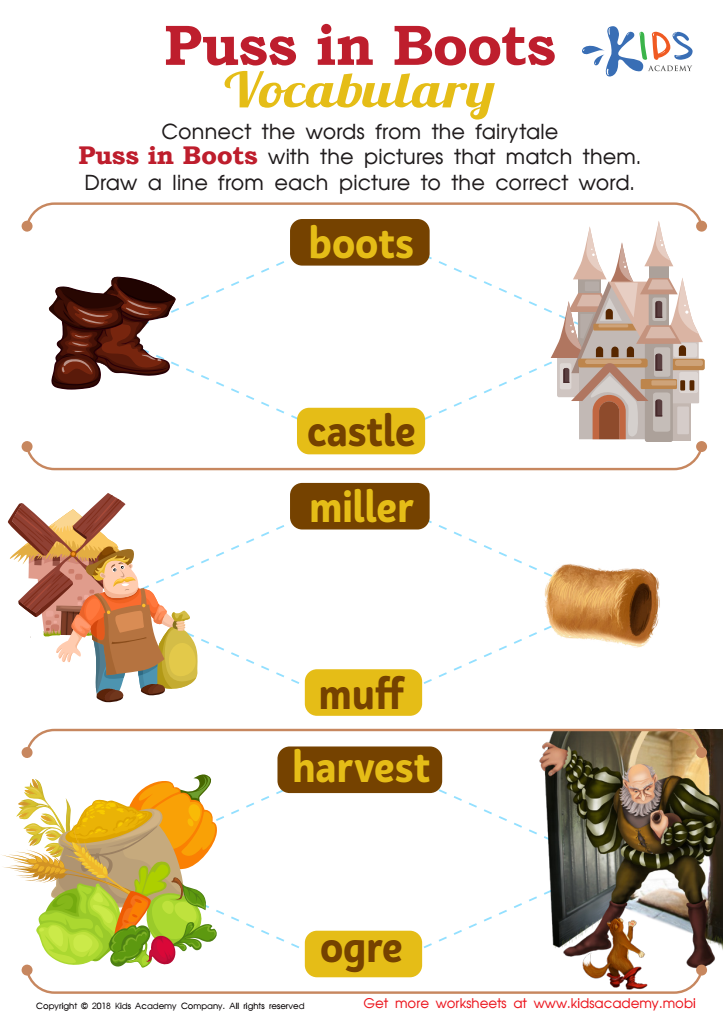
Puss in Boots Vocabulary Worksheet








Story analysis and normal reading comprehension are crucial for children aged 5 to 8, laying a foundational skill set that supports lifelong learning and cognitive development. During these formative years, children not only learn to read but also to understand stories, which fosters critical thinking and imagination. Analyzing story elements such as characters, settings, and plots enhances their ability to make connections with the text, enriching their understanding of literature and the world around them.
Parents and teachers should prioritize comprehension skills since they directly impact a child’s academic success. Mastery in reading comprehension enables children to relay information accurately, express their thoughts effectively, and critically evaluate situations – skills essential in both academic settings and daily life. Moreover, engaging with books enhances vocabulary development, which is vital for effective communication.
Additionally, story analysis promotes empathy and emotional intelligence by allowing children to explore diverse perspectives through characters’ experiences. This understanding encourages open-mindedness and interpersonal skills, preparing children for collaboration and social interactions. By nurturing these competencies early on, caregivers not only boost children’s confidence in literacy but also equip them with the essential tools to navigate complex narratives, making it imperative for parents and educators to support story analysis in young learners.








