Identifying story elements Normal Reading Fiction Worksheets for Ages 5-8
3 filtered results
-
From - To
Our "Identifying Story Elements" fiction reading worksheets for ages 5-8 are designed to enhance young readers' comprehension skills. These engaging worksheets help children identify crucial story elements such as characters, setting, plot, and conclusion, fostering a deeper understanding of fictional tales. With fun illustrations and diverse stories, children will enjoy practicing their reading skills while learning to pinpoint key elements that make up a great narrative. Perfect for early readers, these printables are ideal for both classroom and at-home learning, promoting literacy development in an exciting and interactive way. Start making reading adventures even more enjoyable today!
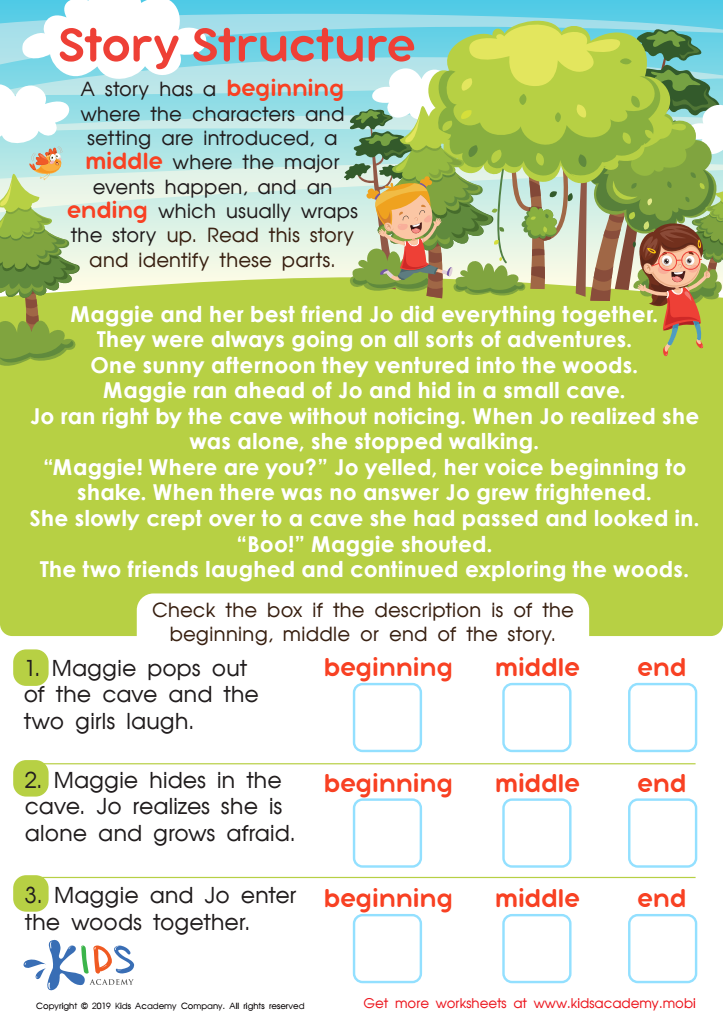
Story Structure Worksheet
 Assign to My Students
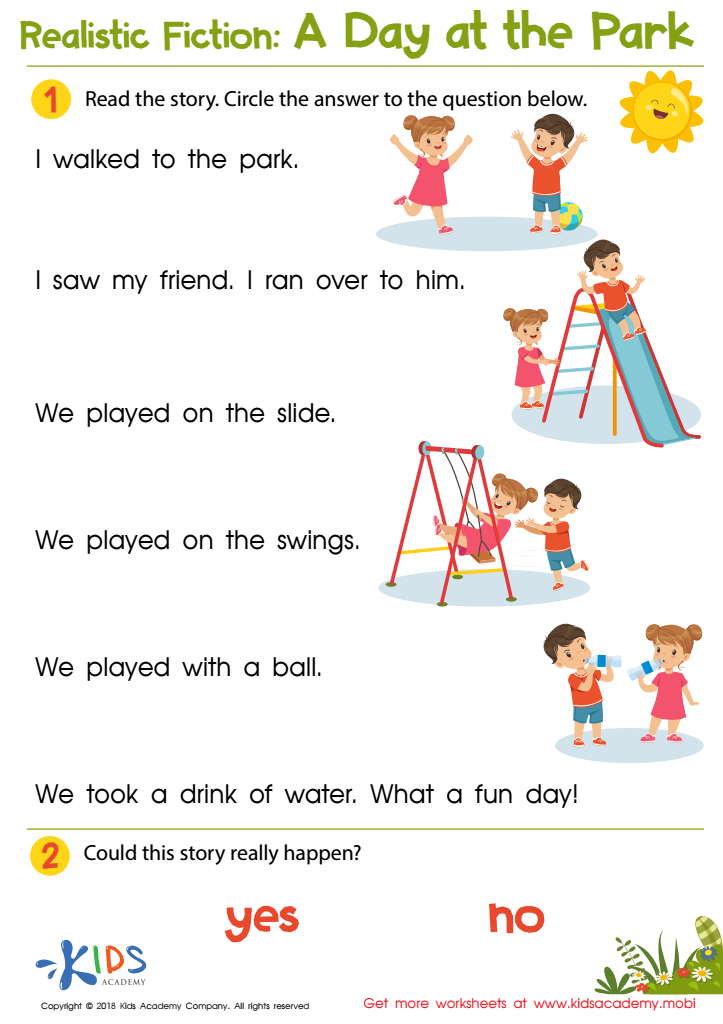
A Day at the Park Worksheet
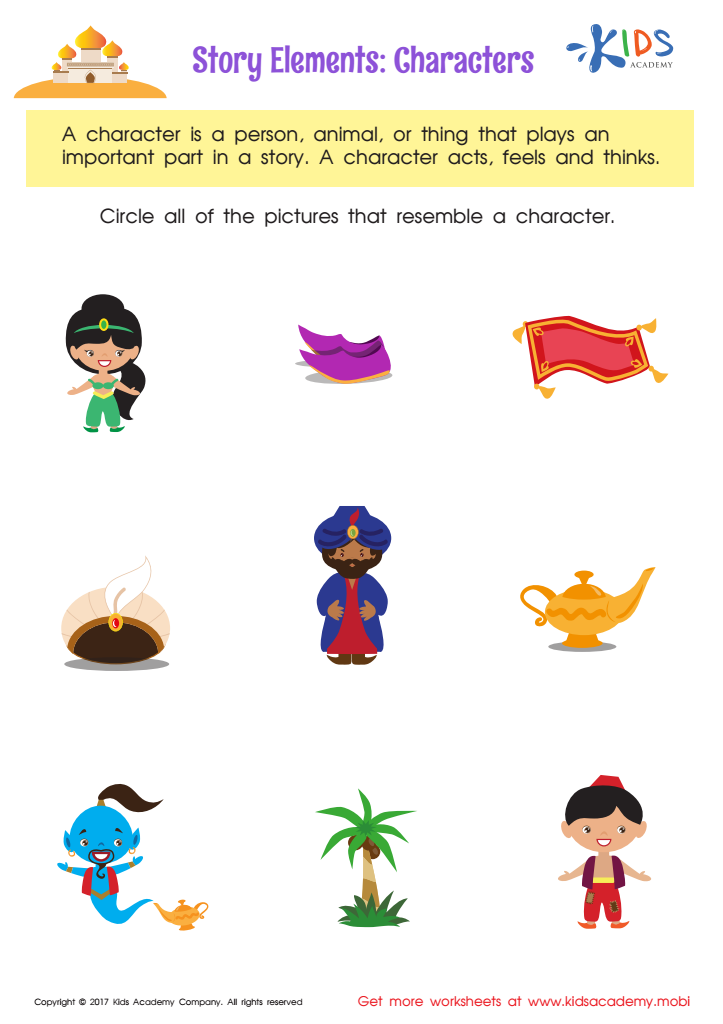
Story Elements Printable







Identifying story elements in fiction is crucial for young readers, aged 5-8, as it lays the foundation for strong reading comprehension skills. Story elements such as characters, setting, plot, conflict, and resolution help children understand and engage with the narrative more deeply. When parents or teachers emphasize these elements, it aids in children’s cognitive development and enhances their ability to recognize patterns, make predictions, and connect events.
Understanding characters fosters empathy, as kids learn to see the world from different perspectives. Recognizing the setting encourages spatial awareness and helps children visualize stories vividly, enhancing imagination. Grasping the plot enables sequencing skills, helping kids understand the chronological unfolding of events. Acknowledging conflicts and their resolutions teaches problem-solving and critical thinking, invaluable skills for real-life situations.
Early identification of story elements also supports language development. Discussing these components expands vocabulary, improves syntax, and hones expressive oral and written communication. Additionally, it promotes a love for reading by making the experience more enriching and enjoyable.
In summary, emphasizing story elements in early reading exercises builds essential literacy skills, supports academic achievement, and fosters a lifelong appreciation for literature. It equips children with tools to understand, interpret, and appreciate the vast world of stories and beyond.







