Observational skills development Normal Science Worksheets for Ages 5-8
3 filtered results
-
From - To
Enhance your child’s observational skills with our engaging Normal Science Worksheets, designed for ages 5-8. These worksheets offer a fun and interactive way for young learners to observe, compare, and analyze their surroundings. Through a variety of activities—including identifying colors, shapes, and patterns—children will develop critical thinking and attention to detail. Perfect for homeschooling or classroom use, our resources support early science education by fostering curiosity and encouraging exploration. Each worksheet is tailored to promote hands-on learning, making science exciting and accessible. Help your child become a keen observer and ignite a lifelong love of discovery with our thoughtfully crafted worksheets!
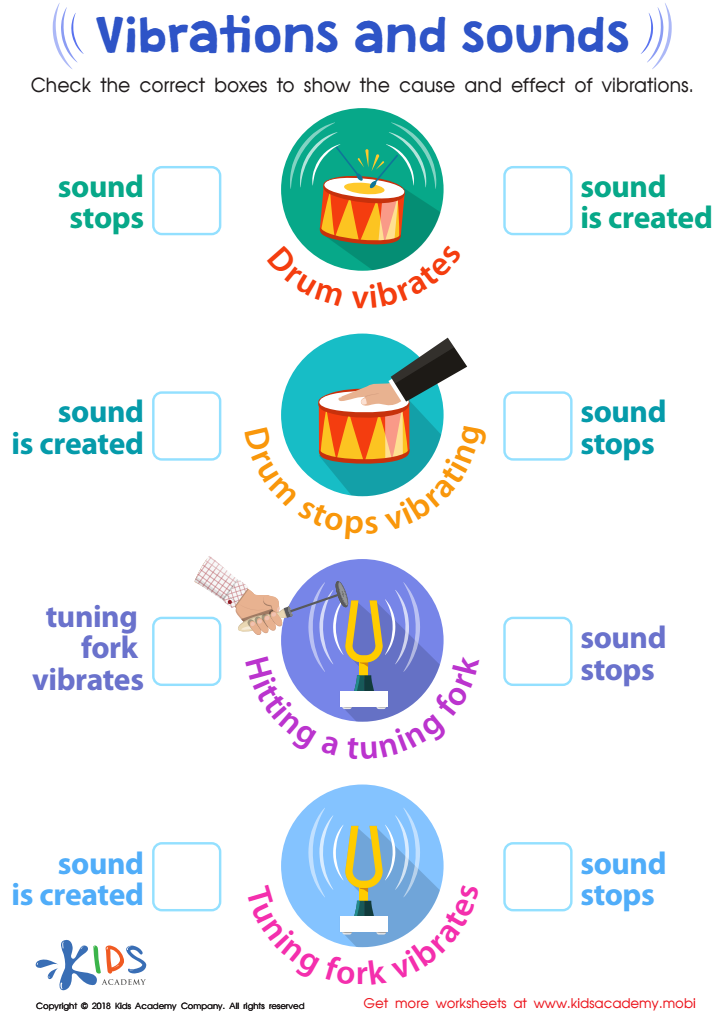
Vibrations and Sounds Worksheet
 Assign to My Students
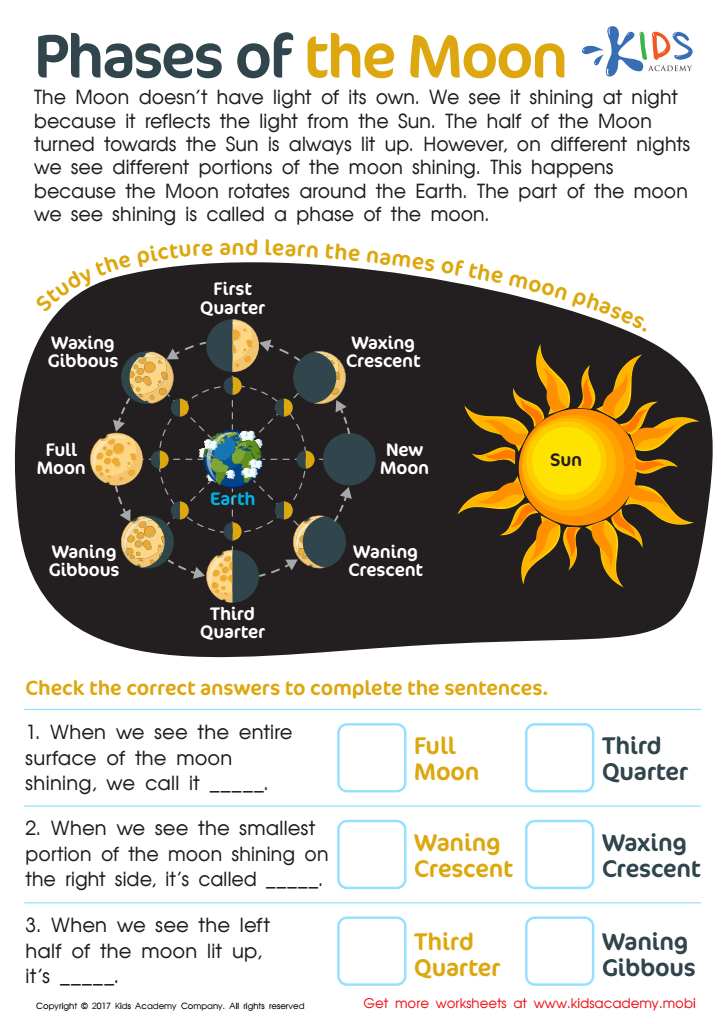
Phases of The Moon Worksheet
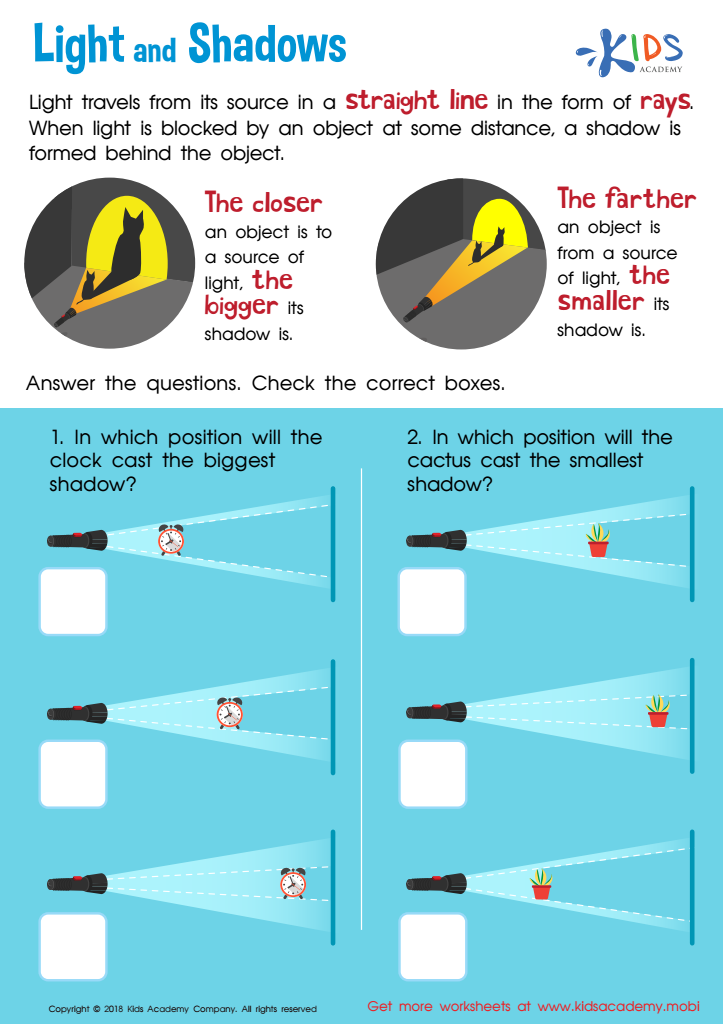
Light and Shadow Worksheet for Grade 3







Observational skills are crucial for children ages 5-8, as they form the foundation for scientific understanding and general learning. When parents and teachers prioritize the development of these skills, children learn to notice details, formulate questions, and synthesize information based on what they see. This process fosters critical thinking, problem-solving, and creativity.
At this age, children are naturally curious, eager to explore the world around them. Enhancing their observational skills allows them to engage with their environment more deeply, leading to experiences that promote inquiry and experimentation. For instance, when children observe changes in nature or physical properties of objects, they can learn scientific concepts through hands-on experiences, rather than rote memorization.
Furthermore, nurturing observational skills contributes to emotional and social development. As children learn to observe and interpret both their surroundings and the behaviors of others, they become more empathetic and communicative.
Lastly, fostering these skills lays the groundwork for successful future learning experiences in science, mathematics, and literacy. By cultivating a culture of observation, parents and teachers not only support academic success but also inspire a lifelong love for learning and exploration.







