Space knowledge Normal Science Worksheets for Ages 5-8
5 filtered results
-
From - To
Explore our engaging Space Knowledge Normal Science Worksheets designed for children ages 5-8! These thoughtfully crafted activities help young learners discover the wonders of the universe, from planets and stars to astronauts and rockets. Each worksheet encourages curiosity and critical thinking through fun, interactive exercises that enhance comprehension of key scientific concepts. Perfect for classrooms or at-home learning, our worksheets are tailored to suit various learning styles and ensure an exciting educational experience. Foster a love for science while igniting imaginations about outer space! Download instantly and take your child’s cosmic exploration to new heights today!
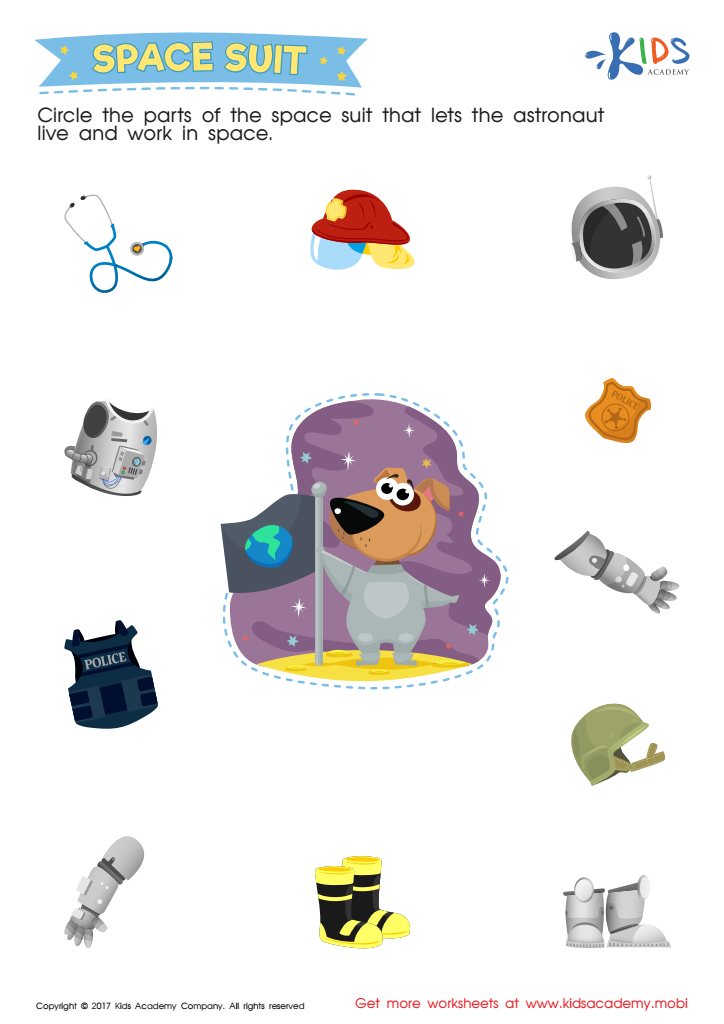
 Assign to My Students
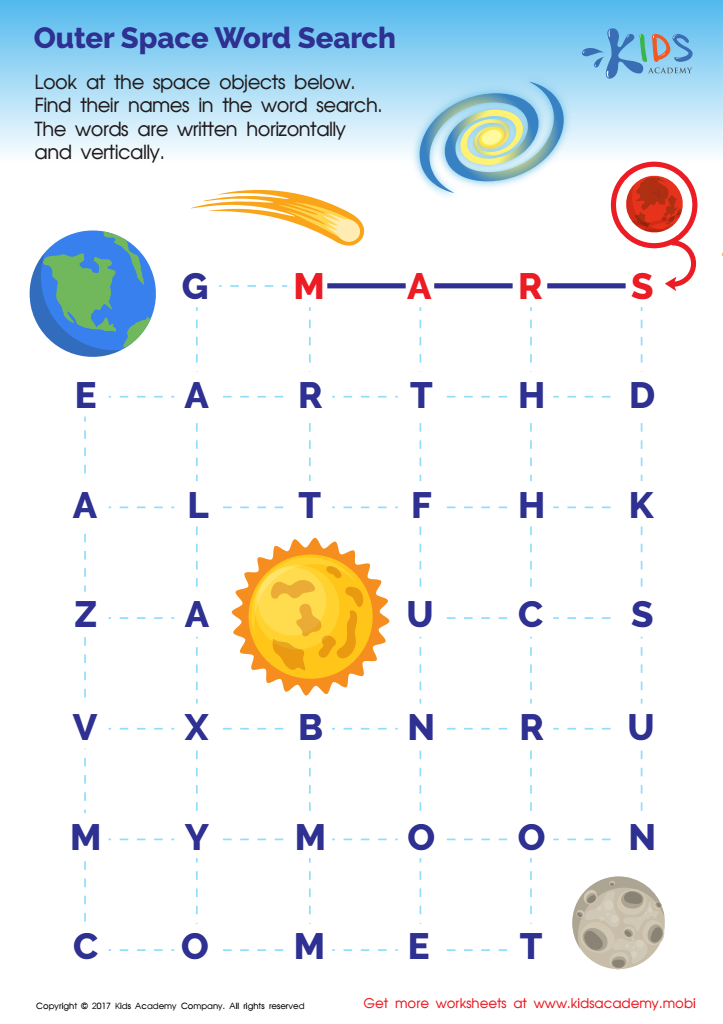
Outer Space Word Search Printable
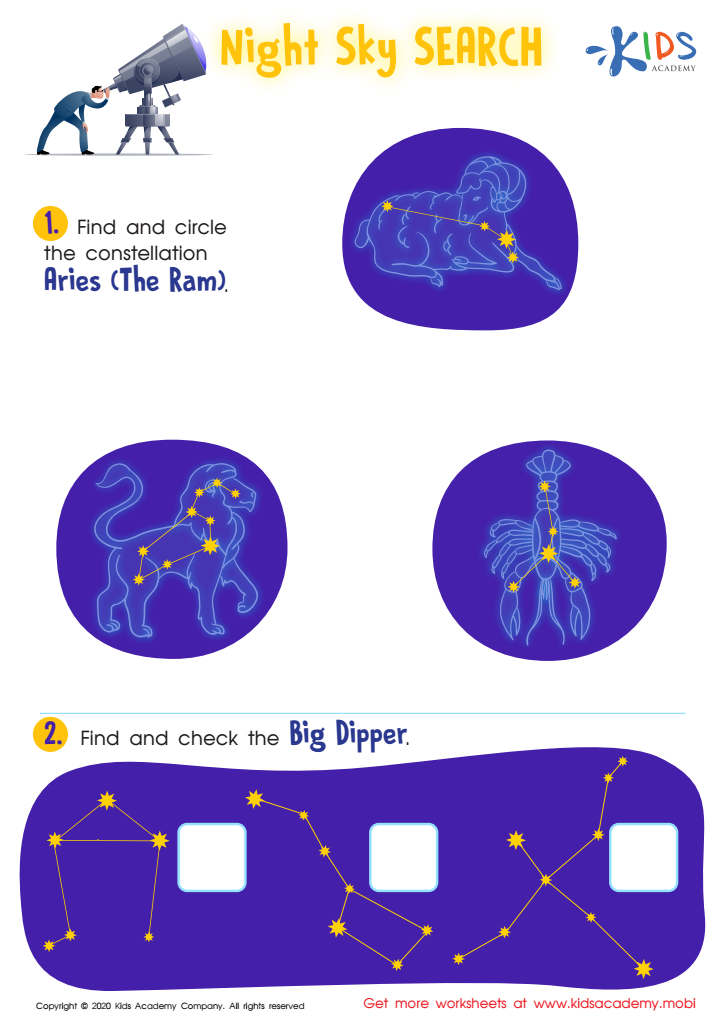
Night Sky Search Worksheet
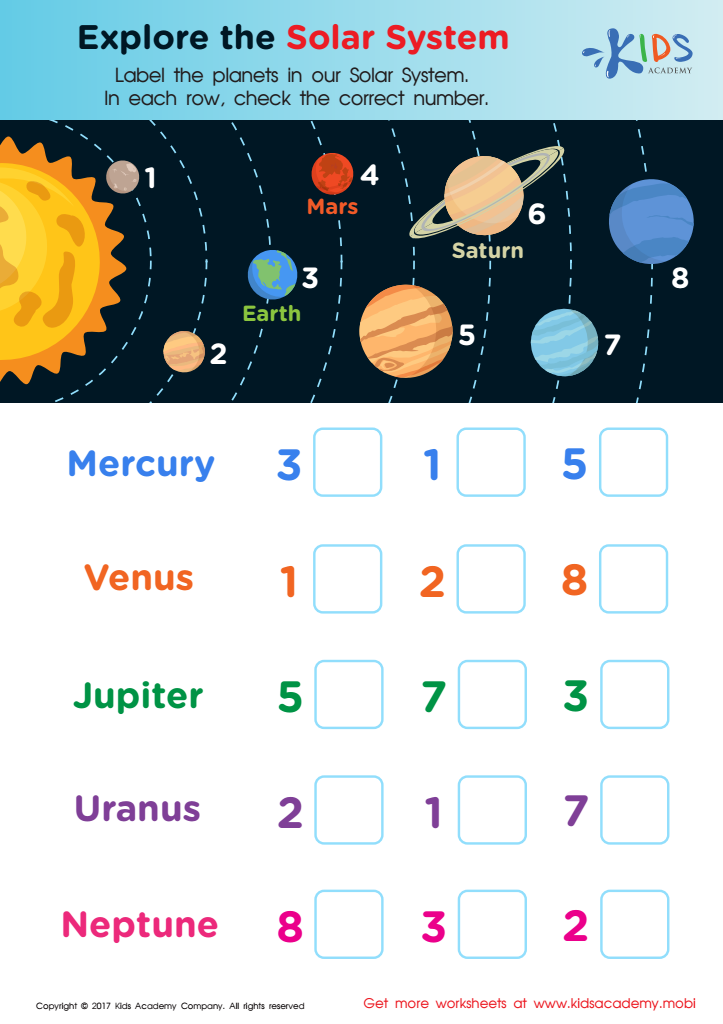
Solar System Planets Worksheet
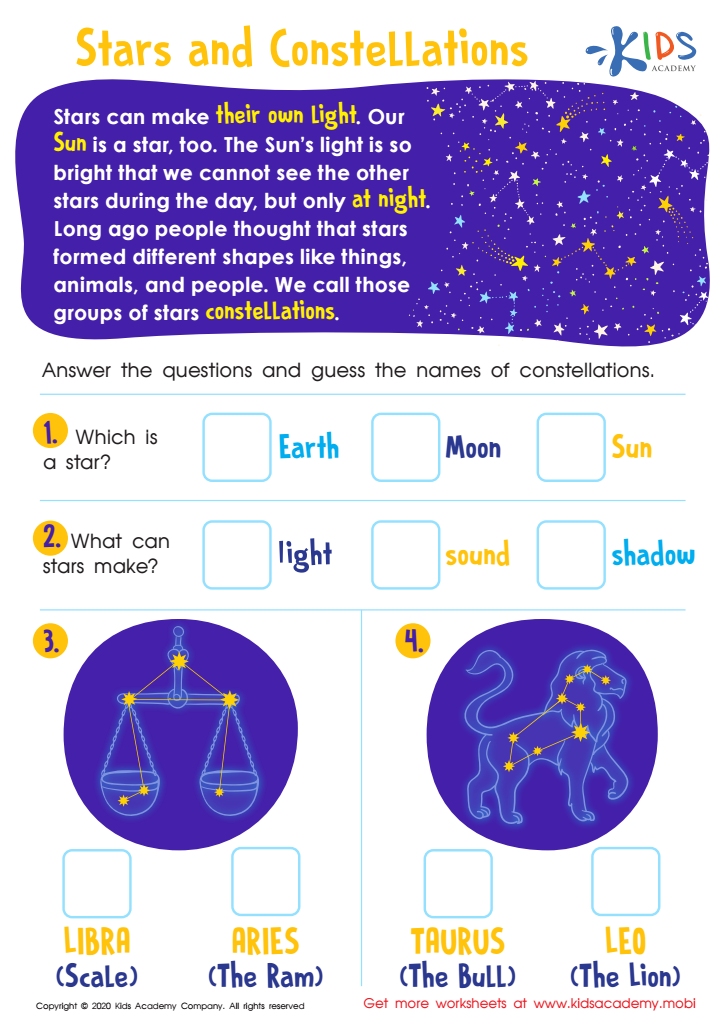
Stars and Constellations Worksheet








Understanding space knowledge and normal science for children aged 5-8 is crucial for several reasons. Firstly, these formative years are vital for instilling a sense of curiosity and wonder about the world beyond our planet. Engaging young learners in space-related topics can spark an interest in science, technology, engineering, and mathematics (STEM), which are essential fields for future innovation and problem-solving.
Secondly, learning about the solar system, stars, and the universe encourages critical thinking skills. Children begin to ask questions, seek explanations, and make connections—a foundation for scientific inquiry. This age group is particularly adept at blending imaginative play with learning; introducing space concepts can fuel creativity and storytelling.
Moreover, awareness of socio-environmental issues, like Earth's climate and the importance of preserving our planet, can be embedded in space education. Teaching kids about other planets fosters a sense of stewardship for Earth, emphasizing the preciousness of our home.
Lastly, space exploration teaches collaboration and teamwork. Engaging in group projects about space fosters communication skills and enhances social development. Therefore, cultivating space knowledge in young children not only satisfies their innate curiosity but also prepares them for a future where they can contribute positively to society.







