Understanding forces Normal Science Worksheets for Ages 5-8
6 filtered results
-
From - To
Explore the exciting world of science with our "Understanding Forces" worksheets designed specifically for children aged 5-8. These engaging and interactive resources help young learners discover the concept of forces through fun activities and easy-to-understand explanations. Perfect for classroom use or at-home learning, our worksheets foster critical thinking and curiosity, allowing children to explore themes such as gravity, push and pull, and motion. Packed with colorful graphics and a variety of exercises, these worksheets support early education standards and encourage hands-on experimentation. Empower your child to uncover the mysteries of forces and develop a lifelong love for science!
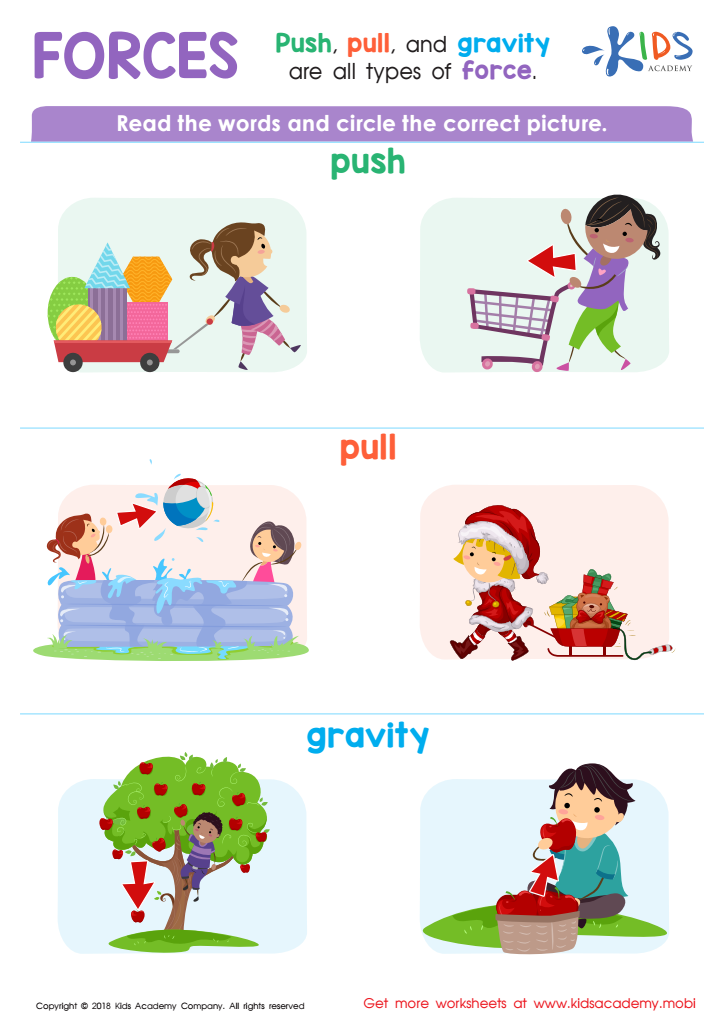
Forces Worksheet
 Assign to My Students
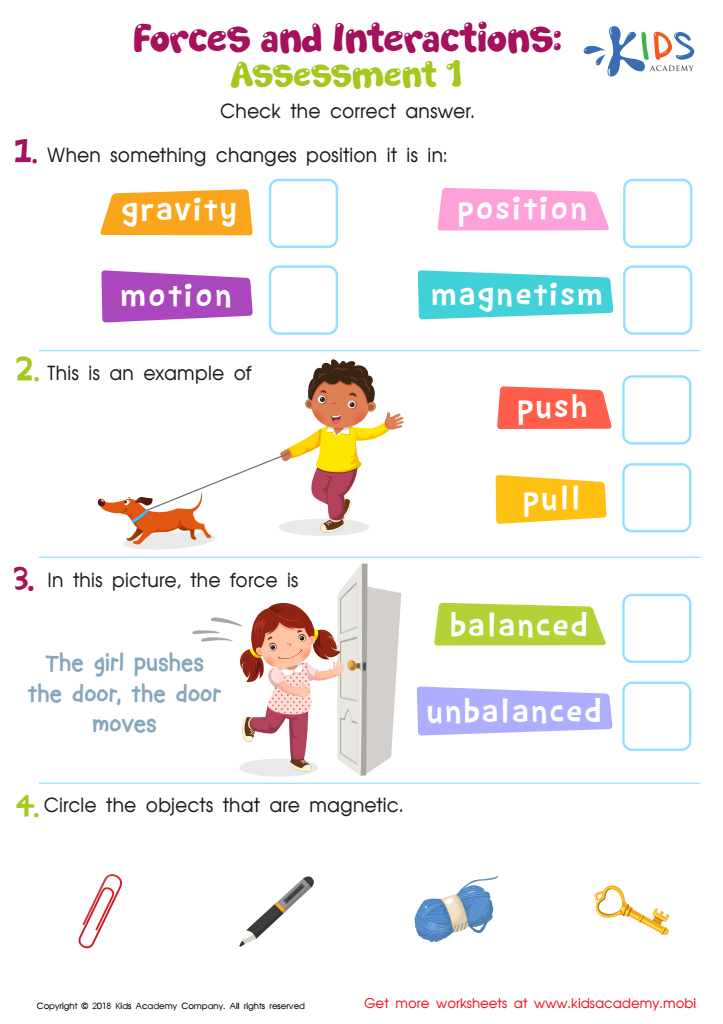
Forces and Interactions Printable
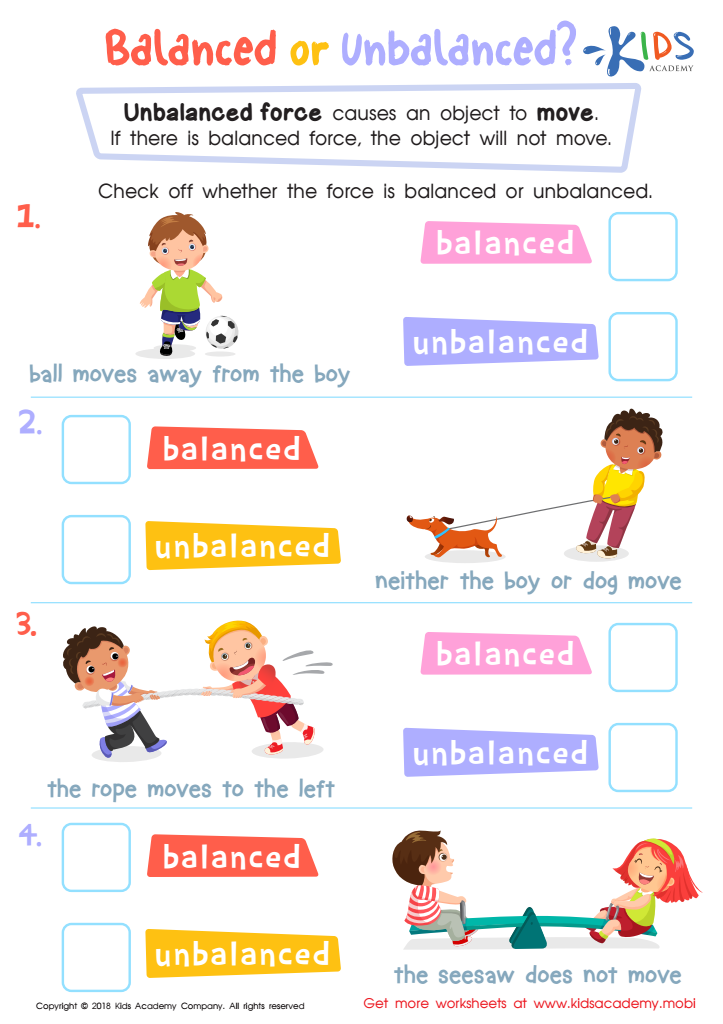
Balanced or Unbalanced Science Worksheet
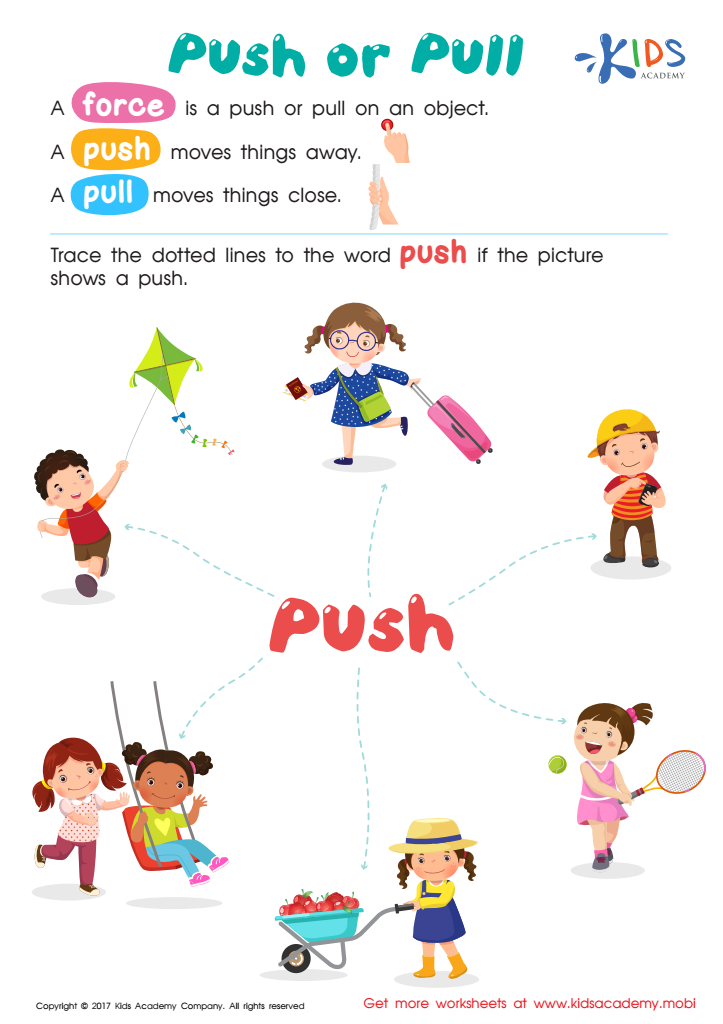
Push or Pull Worksheet
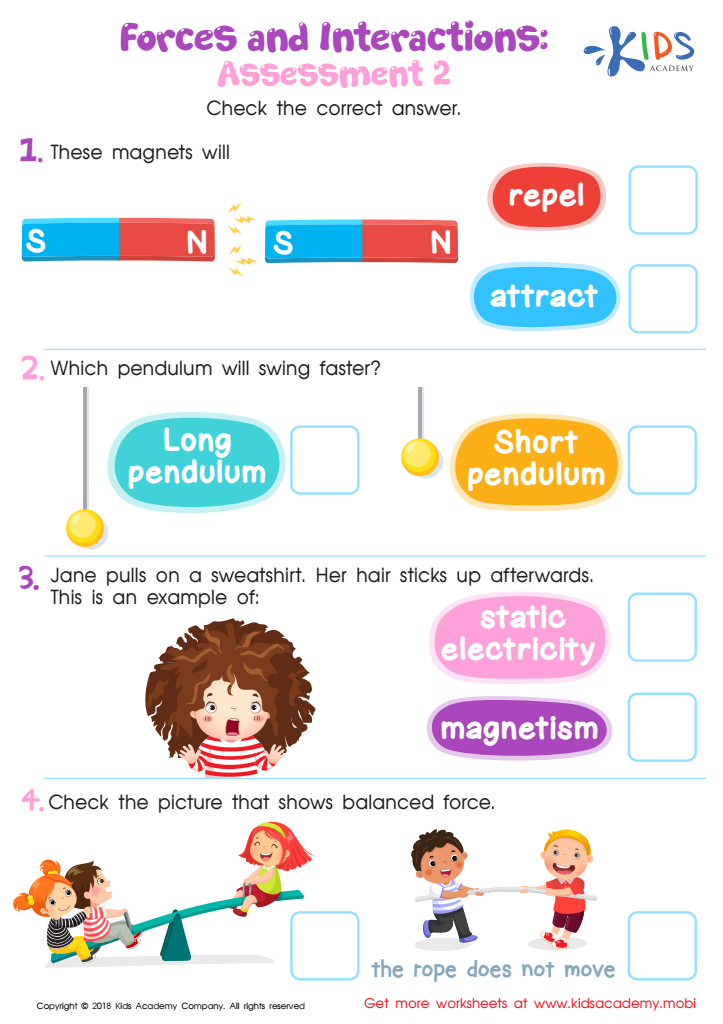
Forces and Interactions Worksheet For 3rd Grade
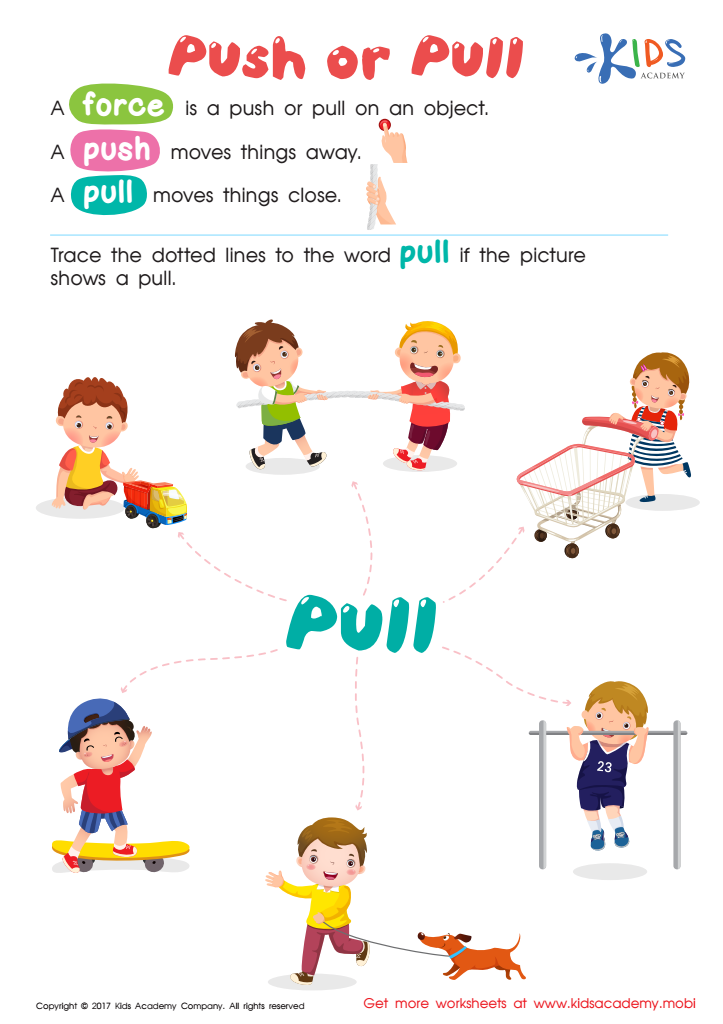
Pull or Push Worksheet








Understanding forces is fundamental for young learners, as it forms the basis for how they comprehend the world around them. Teaching children about different forces, such as push and pull, gravity, and friction, fosters critical thinking and curiosity. At ages 5-8, children are naturally inquisitive, exploring and experimenting through play. By engaging with concepts of force, educators and parents can channel this curiosity into meaningful learning experiences.
Moreover, understanding forces helps develop essential skills like problem-solving, observation, and reasoning. For example, when children learn why a ball rolls or how they can push a toy car further, they're engaging in hands-on learning that enhances their cognitive development. It also encourages teamwork, as they might work together to experiment and discuss findings.
Additionally, grounding children in basic scientific principles like forces builds a foundation for future scientific learning, fostering a lifelong interest in STEM (Science, Technology, Engineering, Mathematics) fields. By integrating forces into everyday conversations and activities, parents and teachers imbue children with a sense of wonder and appreciation for the natural laws that govern their experiences, setting the stage for their future academic success. Ultimately, understanding forces makes learning dynamic, relatable, and enjoyable.







