Understanding landforms Normal Science Worksheets for Ages 5-8
3 filtered results
-
From - To
"Understanding Landforms Normal Science Worksheets for Ages 5-8" offer a fun and engaging way for young learners to explore various natural features. These printable worksheets are designed to introduce kids to mountains, valleys, rivers, and more, aiding their comprehension through interactive activities and vivid imagery. Our carefully crafted exercises foster critical thinking and scientific curiosity, ensuring that children build a solid foundation in geography and earth science. Perfect for both classroom and home use, these worksheets support early science education by making the study of landforms an enjoyable and enriching experience. Start your child's journey of discovery today!
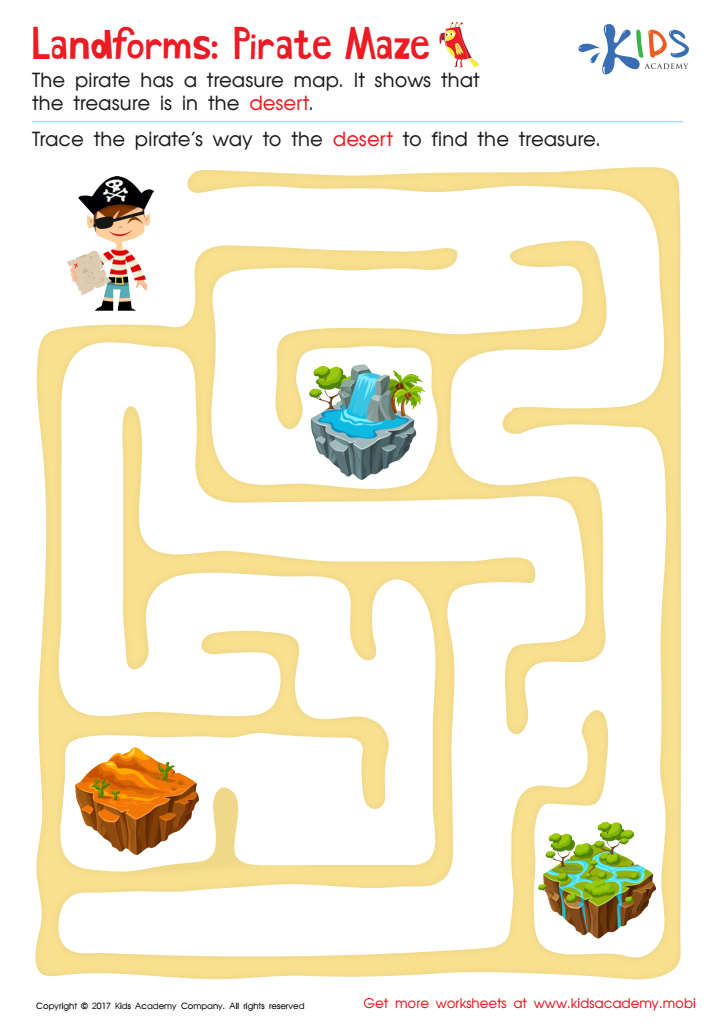
Landforms: Pirate Maze Printable
 Assign to My Students
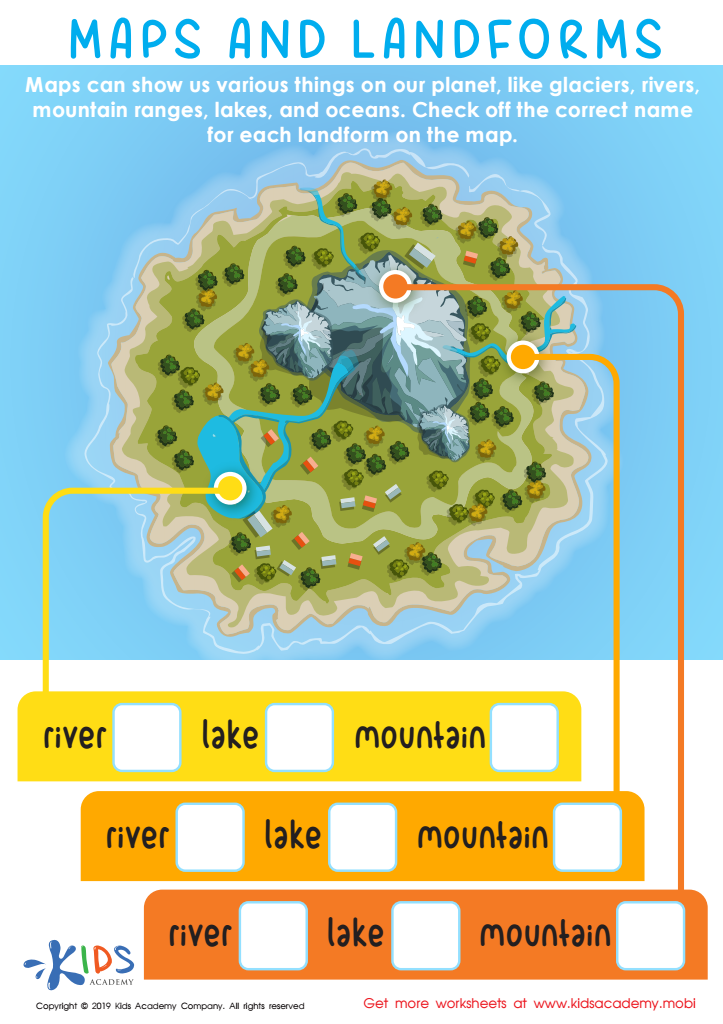
Maps and Landforms Worksheet
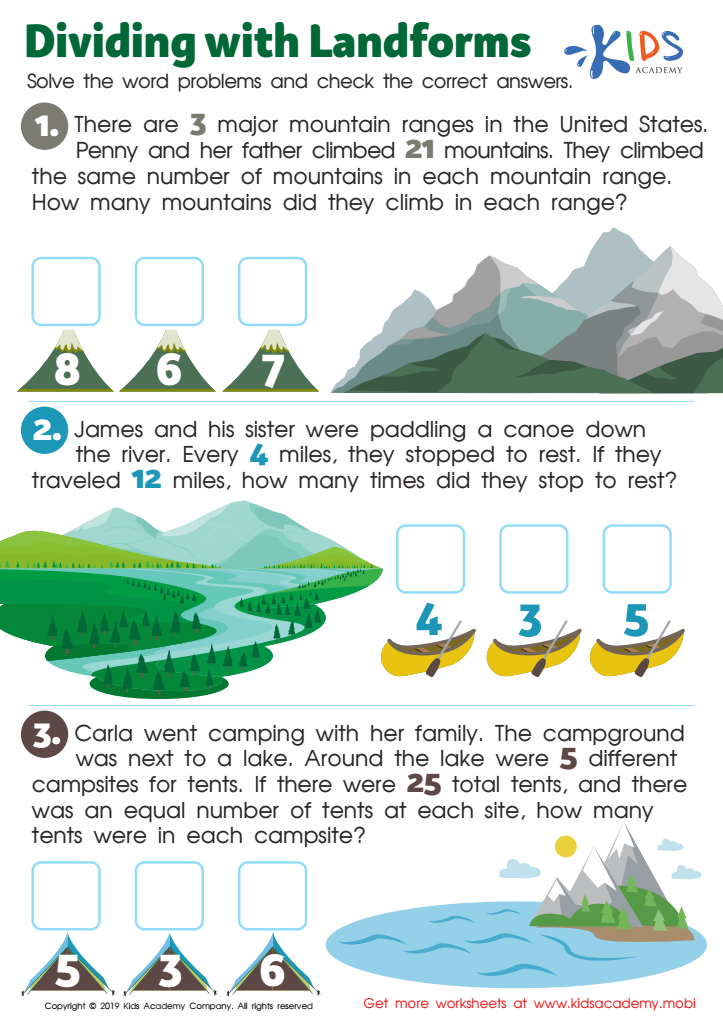
Dividing with Landforms








Landforms are physical features on the Earth's surface, such as mountains, valleys, rivers, and plains, which provide a fundamental understanding of the world kids live in. For children aged 5-8, exploring landforms can be both educational and exciting, fostering a sense of curiosity and connection with the natural environment.
When parents and teachers introduce young learners to landforms, they help lay the foundation for geography, science, and environmental studies. Understanding how landforms are formed and how they affect human life can enhance a child's cognitive skills, critical thinking, and problem-solving abilities. For example, learning what causes a river to flow can make children more curious about weather, water cycles, and ecosystems.
Additionally, teaching kids about landforms promotes an appreciation for nature and instills a sense of responsibility to care for the environment. Knowing that every hill, mountain, or plain has a role in Earth's ecosystem encourages respect for the natural world. It can also be a great starting point for discussions on conservation and sustainability.
Incorporating hands-on activities like creating clay models or exploring local landforms through nature walks helps solidify these concepts, making learning enjoyable and memorable. These early lessons shape a child’s worldview, preparing them for more complex scientific concepts in the future. Therefore, parents and teachers play a crucial role in nurturing a child's curiosity and understanding of landforms.







