Understanding moon phases Normal Space Worksheets for Ages 5-8
3 filtered results
-
From - To
Explore the fascinating world of moon phases with our "Understanding Moon Phases" Normal Space Worksheets, designed specifically for children aged 5-8. These engaging, age-appropriate worksheets encourage young learners to discover the different phases of the moon through fun activities and creative exercises. Each worksheet features colorful illustrations and simple instructions, making it easy for kids to grasp the concepts of waxing, waning, and the lunar cycle. Perfect for classroom use or at-home learning, these worksheets promote critical thinking, observation skills, and a love for astronomy! Spark curiosity about space and help your students shine like the moon with our interactive learning resources.
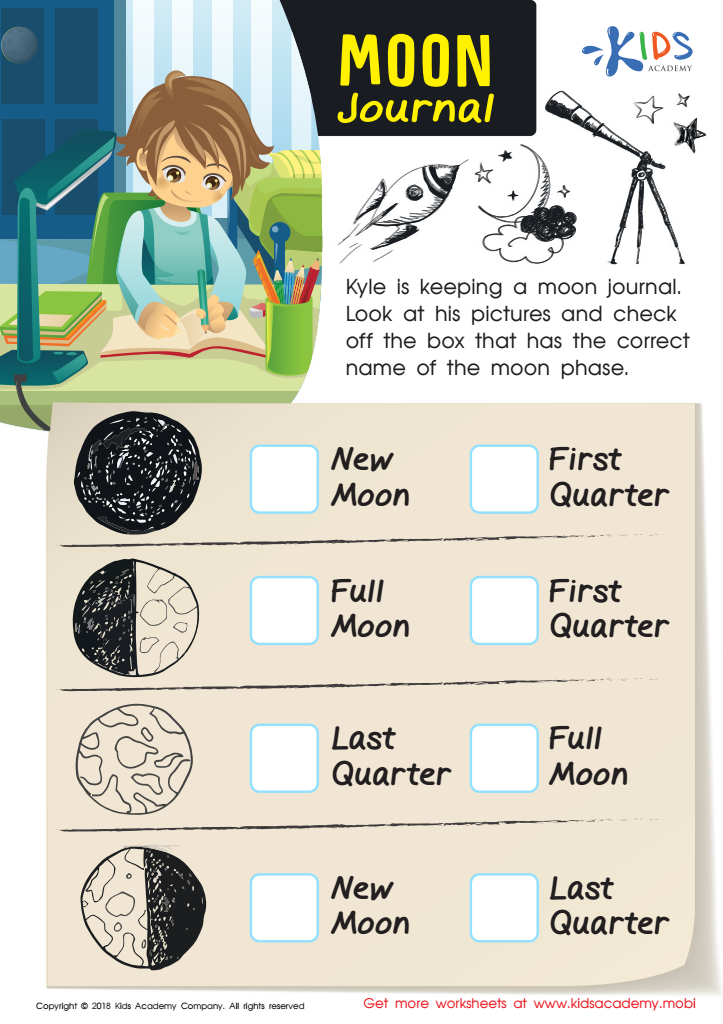
Moon Journal Worksheet
 Assign to My Students
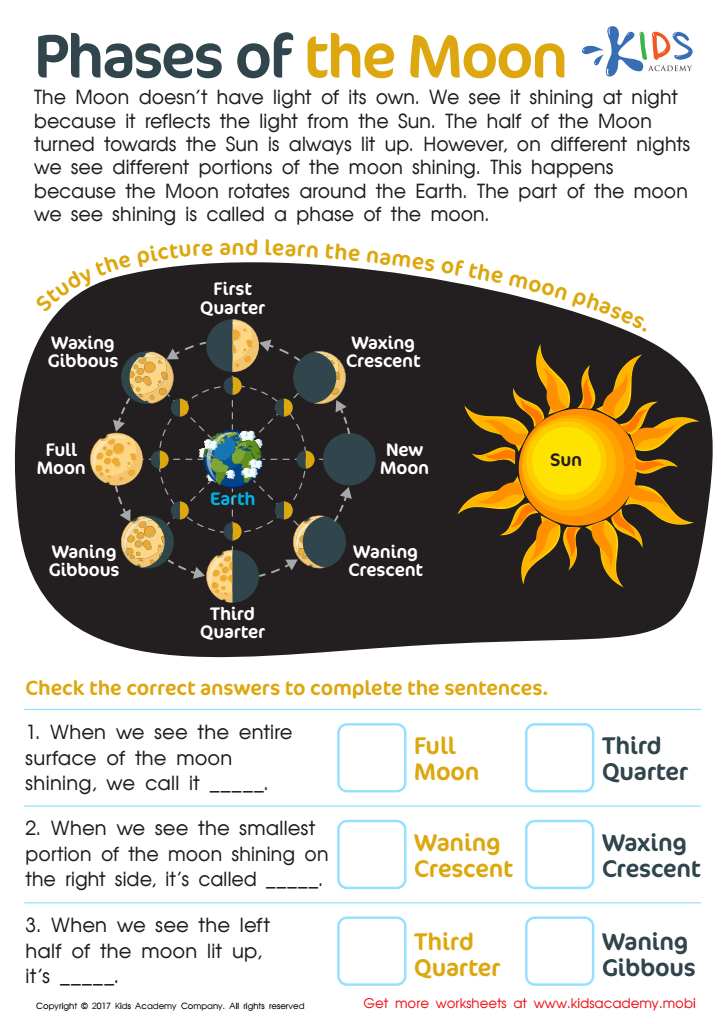
Phases of The Moon Worksheet
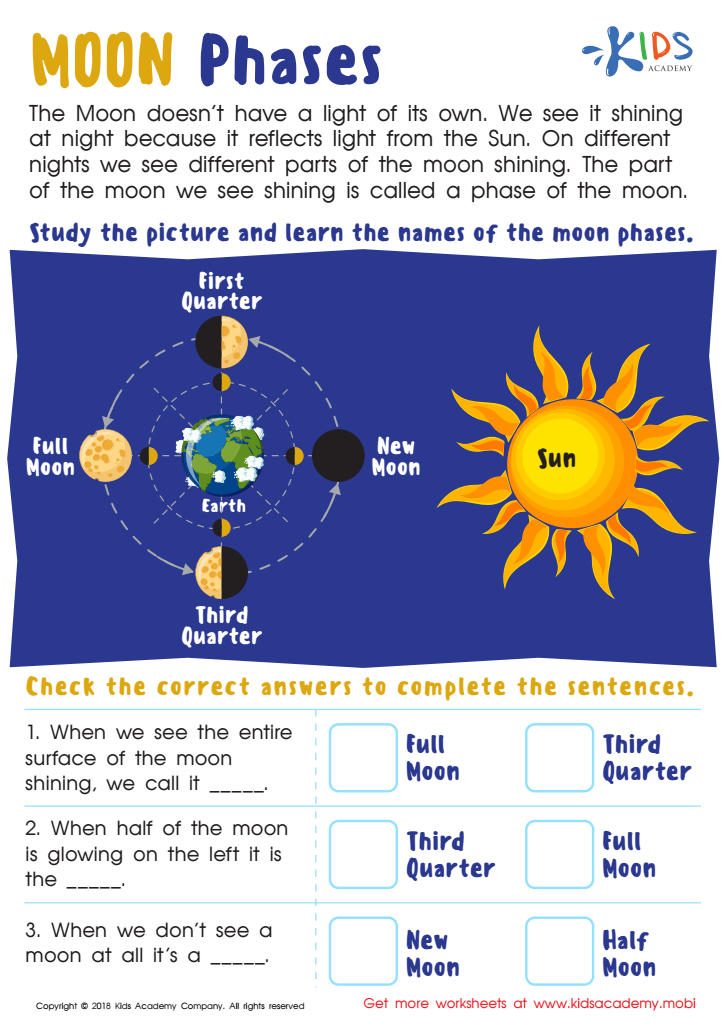
Moon Phases Worksheet






%20(1).jpg)
Understanding moon phases is important for parents and teachers of children ages 5-8 because it nurtures curiosity and engages young minds in the wonders of nature. At this age, children are naturally inquisitive and fascinated by the world around them, making it an ideal time to introduce concepts related to the moon and its cycles.
Learning about moon phases helps children grasp fundamental scientific concepts, such as time, gravity, and the relationship between celestial bodies. Recognizing that the moon changes shape can also foster critical thinking skills as they connect these changes to phenomena like night and day, the seasons, and even different weather patterns.
Moreover, these lessons create opportunities for interdisciplinary learning. Teachers can incorporate art by having students create moon phase models, or explore storytelling, linking mythology and culture to lunar observations. Parental involvement in these activities reinforces learning, allowing parents to share in their child's educational journey and cultivate a lifelong interest in science.
Ultimately, understanding moon phases supports emotional and social development as kids engage in discussions, ask questions, and collaborate on projects, strengthening their communication skills and imagination. By nurturing this knowledge, parents and teachers lay the groundwork for a foundation in curiosity and a love for learning.







