
Color Identification Normal Community Worksheets for Ages 5-8
3 filtered results
Difficulty Level
Grade
Age
-
From - To
Subject
Activity
Standards
Introducing our Color Identification Normal Community Worksheets, specially crafted for children ages 5-8. These engaging worksheets combine education with fun to help young learners easily recognize and identify colors prevalent in their everyday environments. Fostering essential color recognition skills is made delightful through captivating activities featuring common community scenes. Our carefully designed resource aids children in exploring local landmarks, parks, schools, and other familiar places while practicing color identification. Ideal for early learners, parents, and educators, these worksheets support cognitive development and enrich knowledge about community settings. Boost your child's color recognition abilities and community awareness today with our expertly curated worksheets!
Favorites
With answer key
Interactive
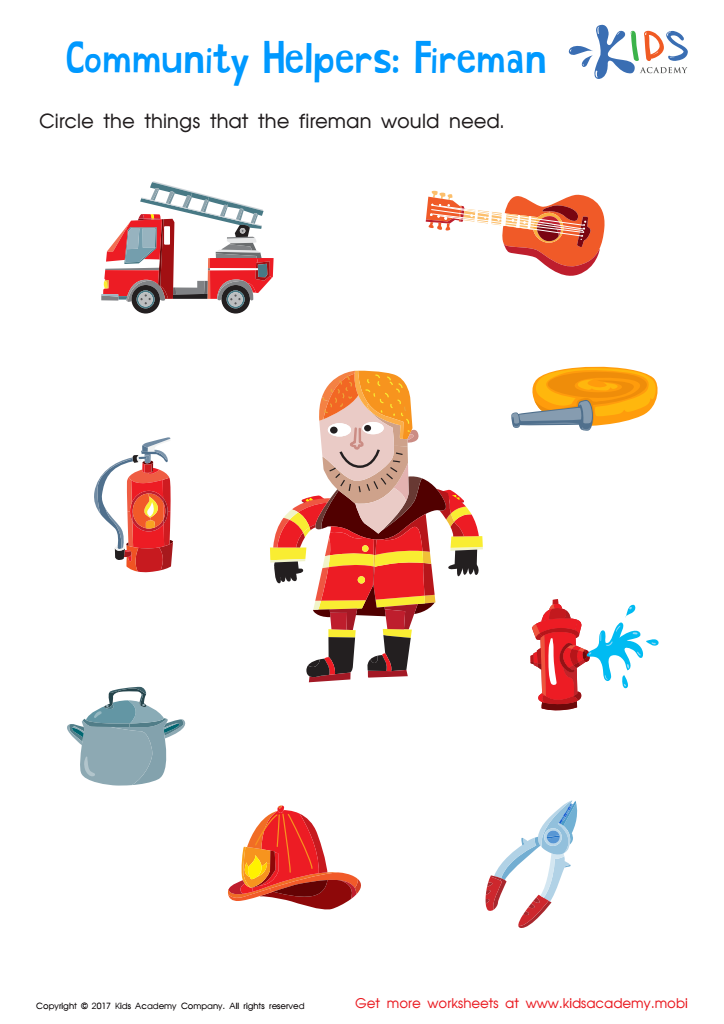
Fireman Worksheet
Kids love firemen and their big fire engines! Inspire your child to learn about their duties with this fun fireman worksheet. It'll help your child understand the role of firemen, as well as develop matching and problem solving skills. Get your kid started on understanding a key role in society and have fun too!
 Assign to My Students
Fireman Worksheet
Worksheet
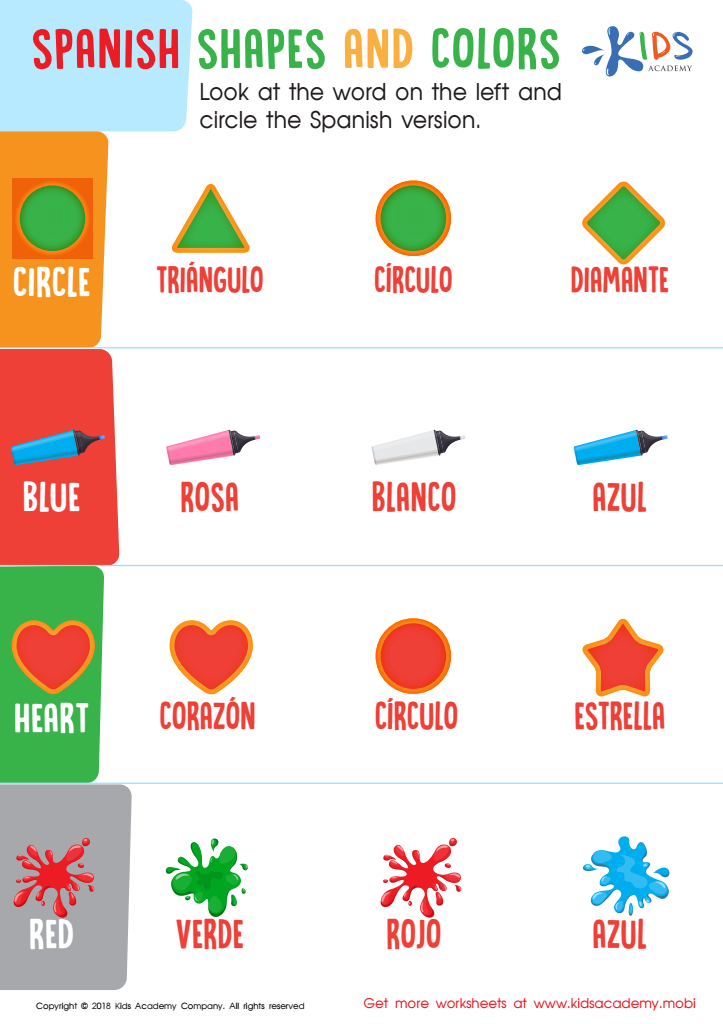
Spanish Shapes and Colors Worksheet
Encourage your children to learn another language from an early age. For example, Spanish - use a worksheet to help with the basics. Point to the English word and ask them to identify and circle the corresponding Spanish word on the right. This way, your kids will grow up with familiarity of the language.
Spanish Shapes and Colors Worksheet
Worksheet
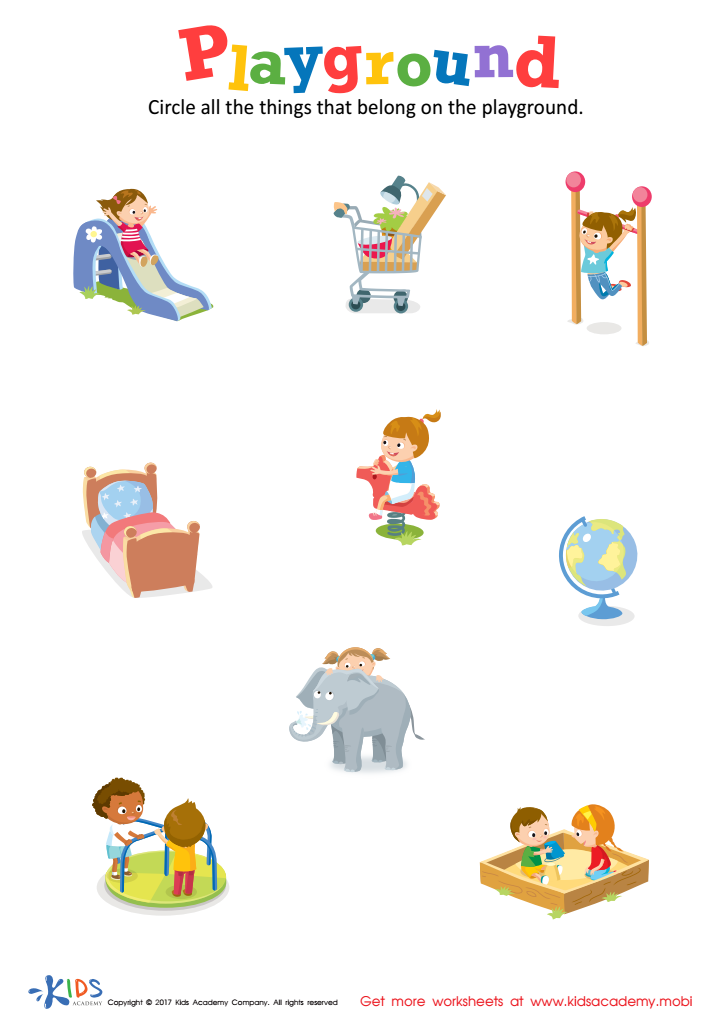
Playground Worksheet
Head to the park with this playground worksheet! It strengthens sorting and cognitive skills while encouraging problem solving. Plus, it's fun-filled and engaging! When finished, head out to the park to see what items your child finds in the playground!
Playground Worksheet
Worksheet
Join Kids Academy for Free
Who is primarily going to use this learning content?








Color identification is a fundamental aspect of early childhood development that significantly influences a child's cognitive and social abilities. For children aged 5-8, mastering color recognition is crucial for several reasons.
Firstly, color identification enhances cognitive skills. It aids in the development of critical thinking and categorization abilities, which are foundational for more advanced learning in subjects like math and science. By determining similarities and differences among colors, children refine their ability to classify information logically.
Secondly, knowing colors broadens language acquisition. Introducing color-related vocabulary empowers children to describe and communicate their surroundings more effectively. Developing a rich language base early on supports reading and writing skills, fostering overall literacy.
Additionally, color recognition supports creativity. Recognizing and applying different colors encourages artistic expression through drawing, painting, and crafts, aiding in fine motor skill development and boosting self-esteem as children create and share their work.
Lastly, colors play a significant role in social interactions and emotional regulation. Children who can identify and discuss colors are better equipped to engage in cooperative play and classroom activities. They can also express their emotions and needs more clearly, leading to improved social and emotional well-being.
In summary, engaging in activities that promote color identification in normal community settings for children aged 5-8 lays a critical foundation for their cognitive, linguistic, creative, and social development.








