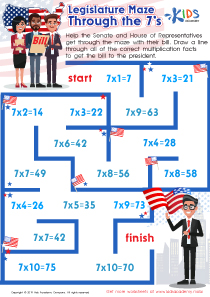
Enhancing observation skills Normal Social Studies Worksheets for Ages 5-8
3 filtered results
Difficulty Level
Grade
Age
-
From - To
Subject
Activity
Standards
Unlock the world of observation with our Normal Social Studies Worksheets for Ages 5-8! Designed to cultivate young learners' observation skills, these engaging worksheets invite children to explore their surroundings and think critically about everyday experiences. Each activity promotes keen attention to detail and encourages essential questioning, helping children to understand their social environment more deeply. Perfect for home or classroom use, our resources make learning fun while reinforcing key concepts in social studies. Dive into a rich world of learning opportunities that will benefit your child's academic journey and spark their natural curiosity about the world around them!
Favorites
With answer key
Interactive
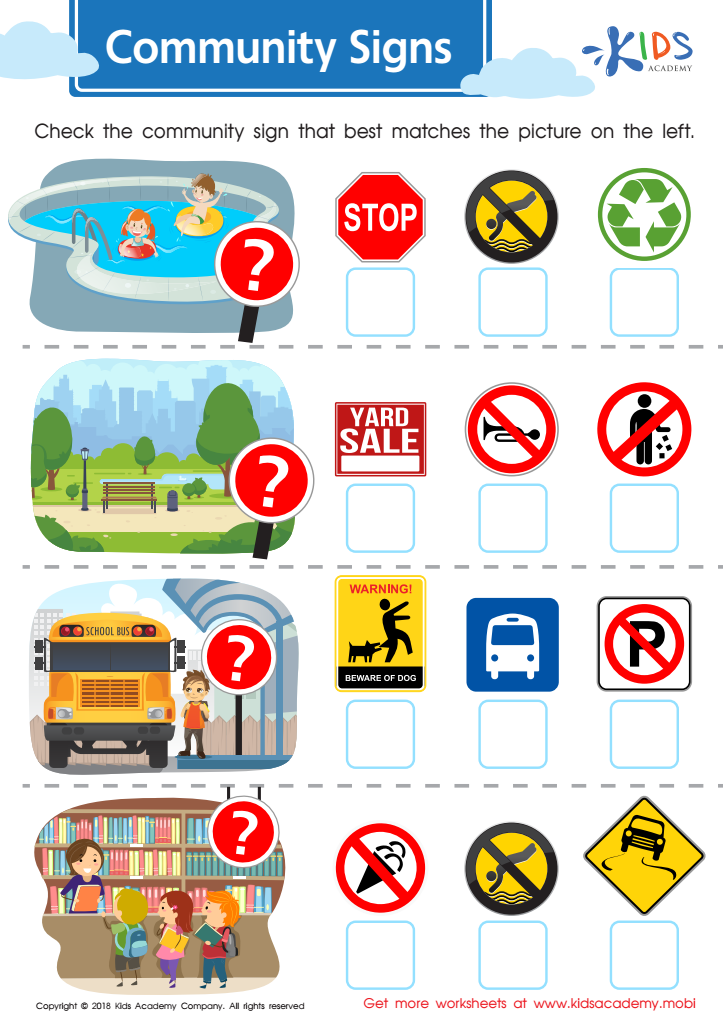
Community Signs Worksheet
To stay safe, our kids need to know community signs. Ask them to name signs at the pool, park, etc. Then, have them check the worksheet for the picture that matches the community signs.
 Assign to My Students
Community Signs Worksheet
Worksheet
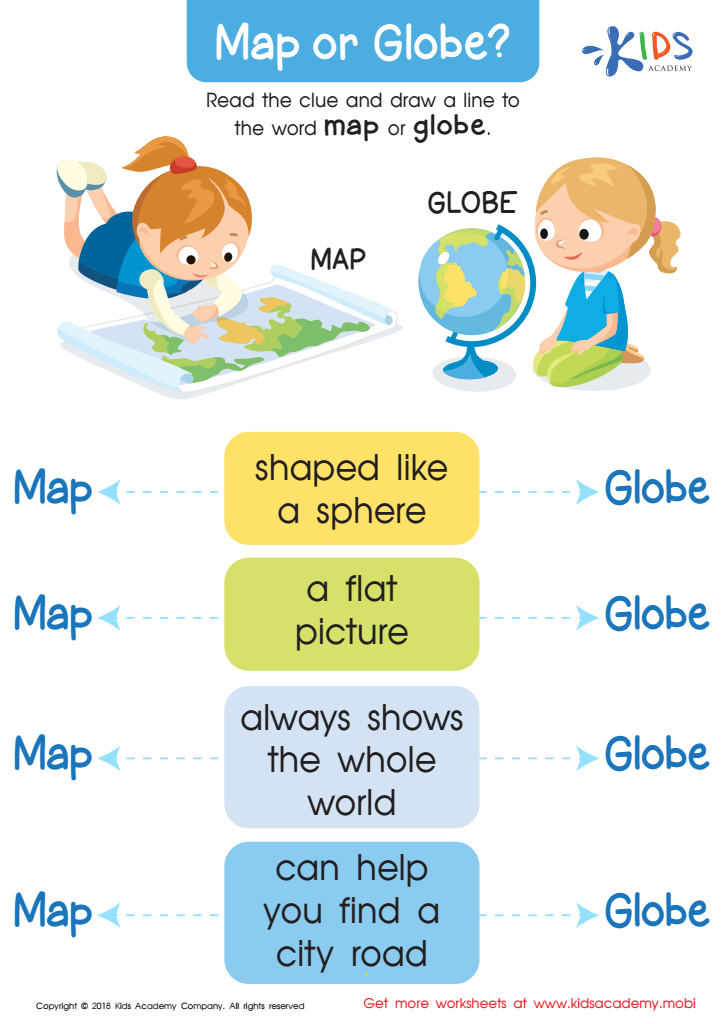
Map or Globe? Worksheet
Learning the difference between maps and globes can be difficult for young children. Get this free worksheet to help them! It offers word and picture clues for them to practice matching. They'll also get to use their fine motor skills as they trace the lines to find the answers.
Map or Globe? Worksheet
Worksheet
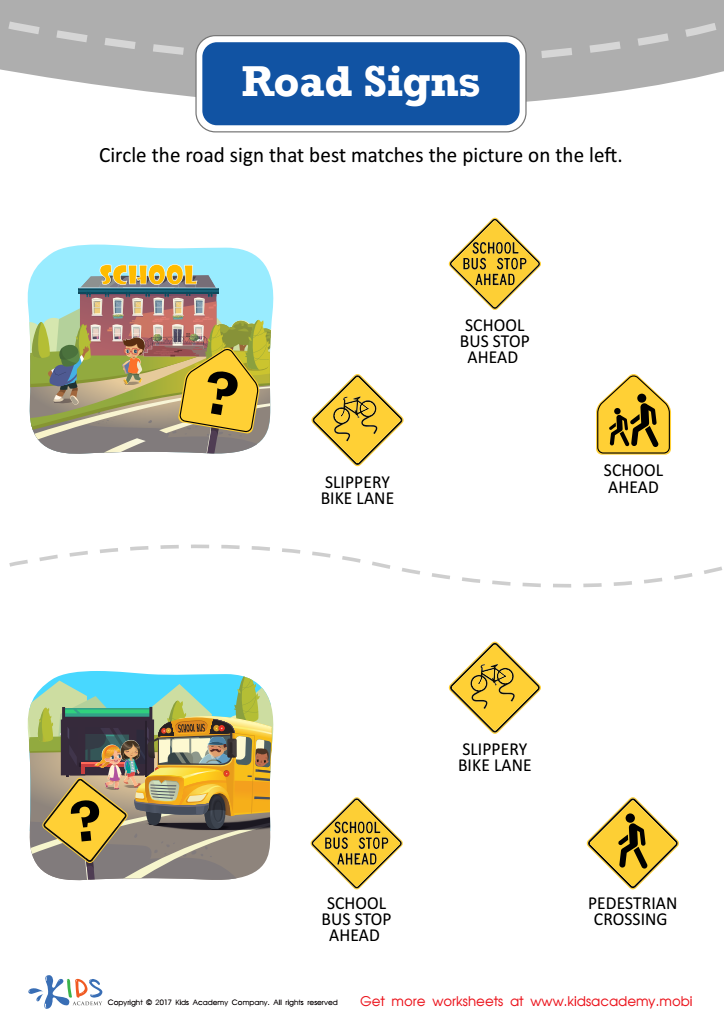
Road Signs (Part 1) Worksheet
Kids are exposed to danger near roads, so help them recognize traffic signs with this printable. It'll foster their reading comprehension and symbol recognition, while keeping them safe.
Road Signs (Part 1) Worksheet
Worksheet
Join Kids Academy for Free
Who is primarily going to use this learning content?




Enhancing observation skills in young children, particularly in the context of social studies, is vital for several reasons. First, observation fosters critical thinking and helps children make connections between their environment and the lessons they learn, particularly in understanding cultures, communities, and their own identities. By honing observation skills, children learn to notice details in their surroundings, enhancing their inquiry-based learning and stimulating curiosity.
Furthermore, these skills support children in building empathy and comprehension of diverse perspectives. By observing social interactions, children can learn about emotions, cooperation, and conflict resolution, which are crucial social competencies.
Teachers and parents who prioritize observation create opportunities for children to engage with their world; when children can articulate what they see and feel, they build language and communication skills essential for effective interaction. Finally, observing and reflecting also promote self-regulation, as children learn to pause, analyze, and discuss their experiences. Combined, these outcomes empower children to be active participants in their communities and to develop a lifelong passion for learning. By investing time in enhancing observation skills, educators and parents can work together in shaping thoughtful, empathetic, and curious young individuals.