Understanding adjectives Normal Writing Worksheets for Ages 5-8
3 filtered results
-
From - To
Explore our engaging "Understanding Adjectives" Normal Writing Worksheets perfect for children aged 5-8. These carefully designed resources help young learners grasp the concept of adjectives, enhancing their writing skills and vocabulary. Through fun activities, kids can identify, describe, and apply adjectives in sentences, fostering creativity and expression. Our worksheets cater to different learning styles, ensuring that every child can grasp the importance of making their writing vivid and detailed. With colorful illustrations and interactive tasks, these worksheets make learning enjoyable. Equip your child with the skills they need to improve their writing and communication confidently. Start their adjective journey today!
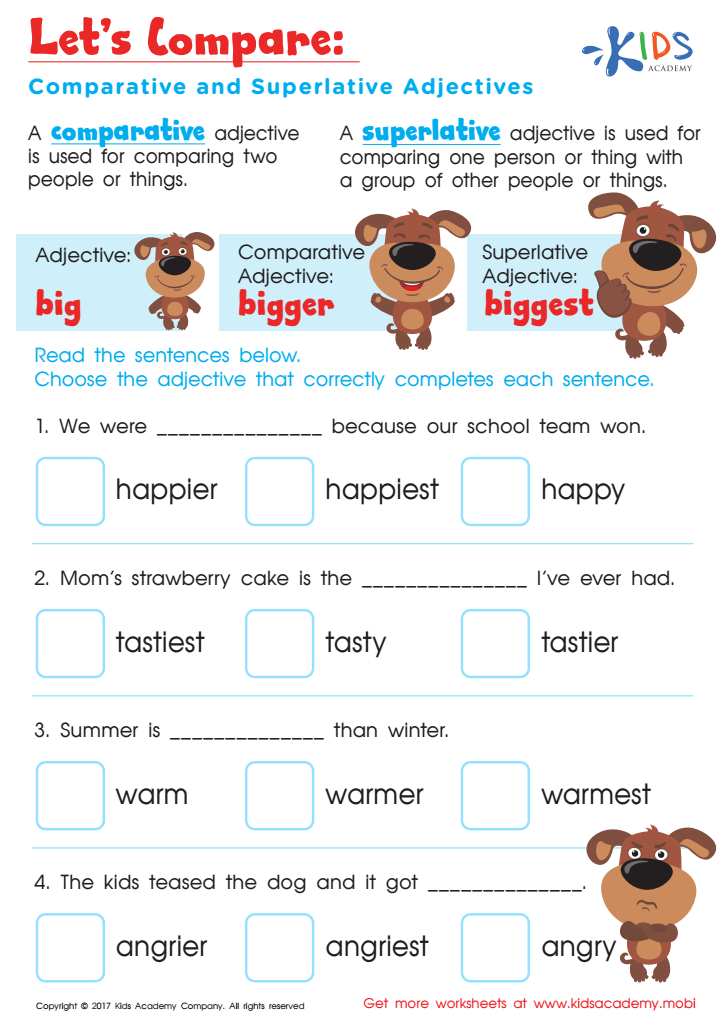
Comparative and Superlative Worksheet
 Assign to My Students
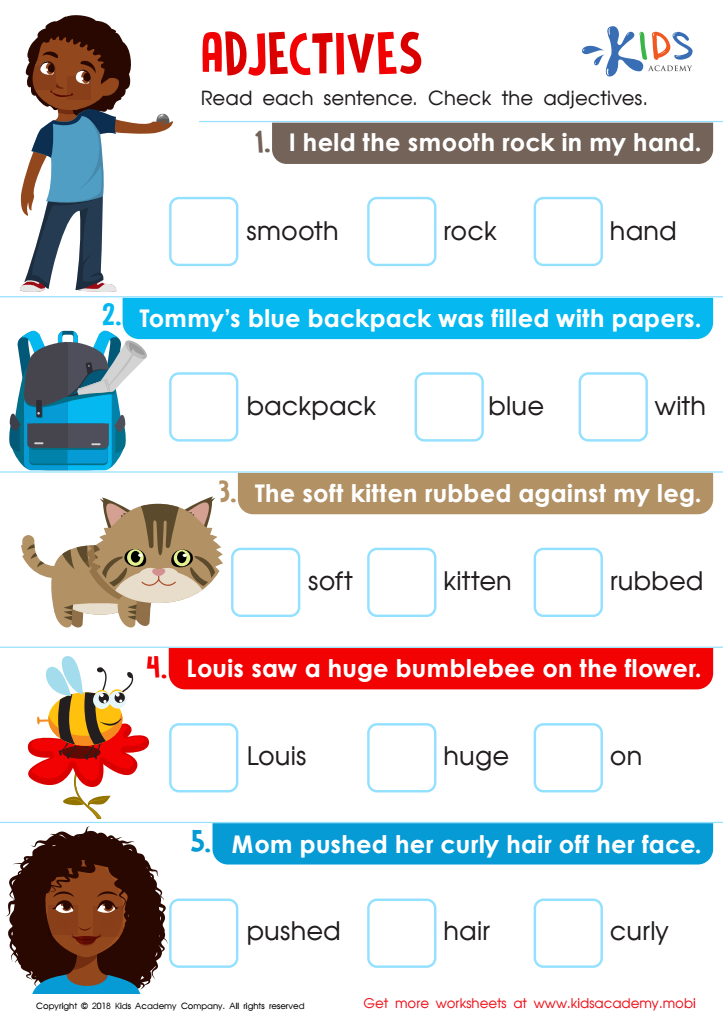
Adjectives Worksheet
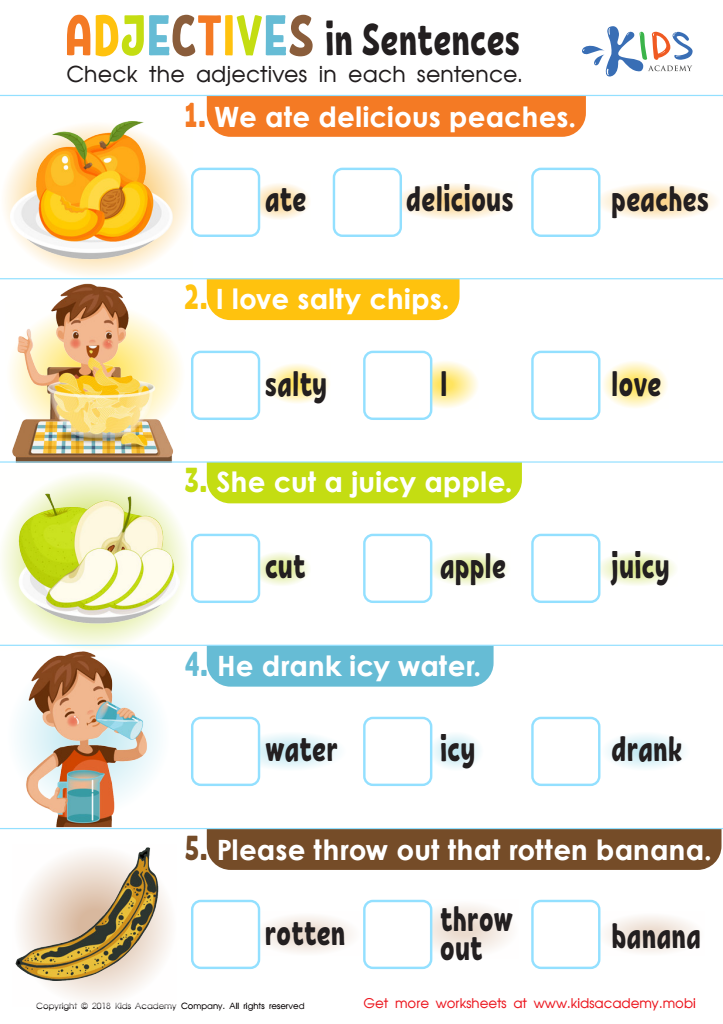
Adjectives in Sentences Worksheet








Understanding adjectives is crucial for young learners aged 5-8 as they form the foundation of effective communication and creative expression. Adjectives help children describe things, making their writing and speech more vivid and engaging. When parents and teachers emphasize the importance of adjectives, they enhance children's vocabulary and improve their ability to convey thoughts and feelings.
At this age, children are developing their literacy skills, and knowing how to use descriptive words allows them to express themselves more fully. For example, instead of saying “the dog,” a child can say “the playful, small dog,” painting a clearer picture for listeners or readers. This specificity fosters imagination and encourages creativity in storytelling and writing.
Furthermore, understanding adjectives helps improve comprehension. When children read, recognizing descriptive words aids in visualizing scenes and characters, leading to greater engagement with the text.
Finally, mastering adjectives supports critical thinking, as children learn to categorize and compare items based on their attributes. For these reasons, parents and teachers should prioritize teaching adjectives, as they contribute significantly to language development and overall academic success for young learners.